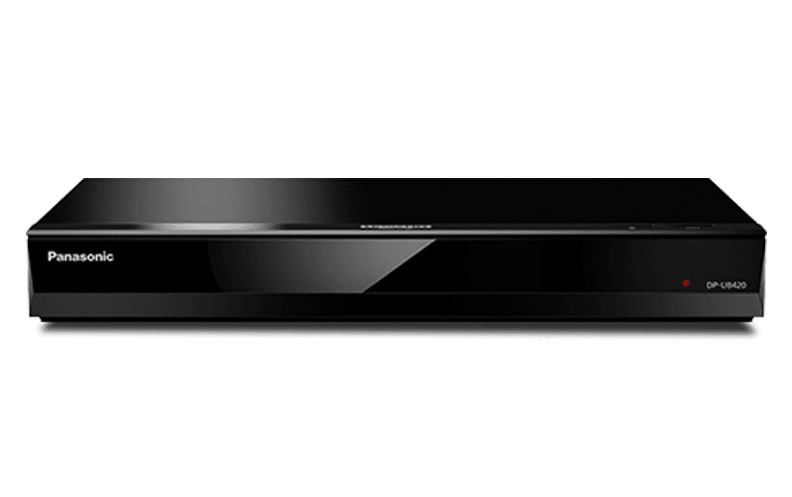
If you’re in the market for a new 4K Blu-ray player, you’ll be disappointed to learn that you've probably timed it rather badly, for Panasonic has just increased the prices of its entire portfolio of players, with some models now costing up to $100 more than before.
The new prices were noticed by Reddit user Harrybalzac71, who reported them on the r/4kbluray subreddit. He said Panasonic’s U.S. website now lists all of the new prices, and has found that many online retailers, such as Amazon, have also implemented the higher prices. But there is still some older stock sites such as Best Buy.
For instance, the entry-level Panasonic DP-UB150 now costs $209.00, while the DP-UB450 and DP-UB154 models now cost $299.99 each. Meanwhile, the DP-UB820 now carries a $649.99 price tag, up 100% from its original price of $499.99.
Unfortunately, Panasonic has also raised its U.K. prices for some of these products, too, with the DP-UB820 now priced at £429, up from £349 before.
While Panasonic hasn’t made any official announcements regarding the price hikes, it’s almost certainly a result of the so-called “RAMageddon,” or the rising cost of the RAM memory chips that are a key ingredient of every consumer electronic product. The price of RAM has gone through the roof because of the AI boom. It’s needed in those AI servers, you see, and they’re being manufactured so fast that RAM suppliers cannot keep pace with the level of demand. As a result, the price of almost every electronic product has gone up this year.
We saw that most recently with Google, which just bumped up the price of its Google TV Streamer set-top box by 50%, following similar increases for Amazon’s Fire TV sticks and Roku’s streaming devices. Walmart’s Onn devices also cost more, and so does the Apple TV 4K.
To be honest, we’re not quite sure why streaming device makers have upped their asking prices when TV brands have not. While the likes of Roku point to higher RAM prices, they’re really no different from TV brands that increasingly make their revenue not from the hardware sales, but from targeted ads enabled by extensive surveillance of people’s viewing habits. TV makers have been determined not to raise prices, and a lot of new TV models are actually cheaper this year than the 2025 models they replaced. So cynics may rightly think that streaming stick makers, who get access to the same ad opportunities, are just using RAM as an excuse to cash in.
For Blu-ray players, though, the increased prices are more understandable. These devices are specifically for physical media and are often not even connected to the web, so they’re not very good vehicles for ads at all. Hence, the likes of Panasonic do need to make their money from the hardware itself.
It’s not clear if Sony is planning to do the same, but perhaps some of the higher-end brands won’t need to bother. For instance, Magnetar last week debuted its new, ultra-premium Magnetar Ultima 4K blu-ray player, which likely already reflects the higher cost of RAM in its eye-watering $12,000 price tag!
