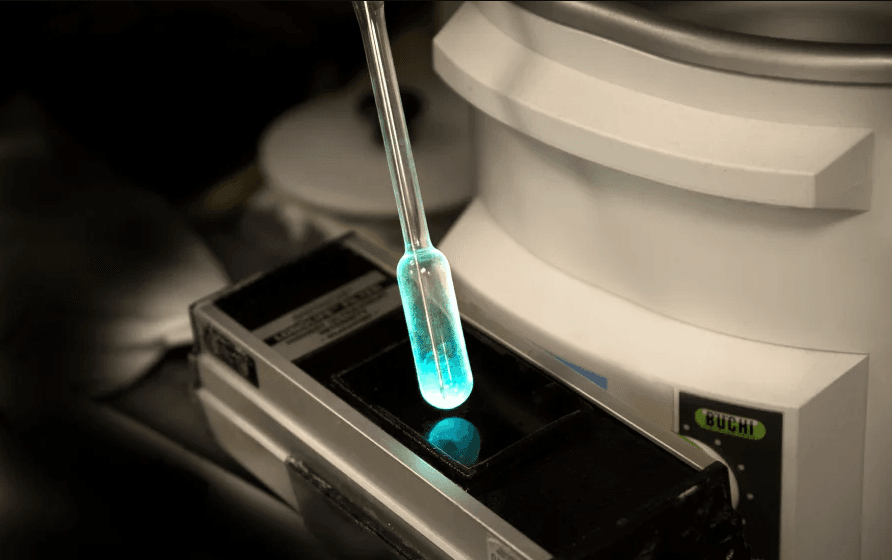
A South Korean company called Lordin says it’s ready to start mass producing blue phosphorescent PHOLED materials – known as “blue PHOLED” – paving the way for brighter, longer-lasting and more energy-efficient OLED televisions.
When it comes to OLED panels, there are two kinds of organic materials that can be used to create the red, green and blue pixels. Companies can use either fluorescent or phosphorescent materials, but while the former is much easier to manufacture and work with, it’s not nearly as efficient as the latter.
That explains why display makers have been racing to develop a fully phosphorescent OLED, or PHOLED panel for years. They cracked green and red PHOLED more than 20 years ago, but until now, their efforts have always come a cropper when trying to develop a viable blue PHOLED material.
Creating blue PHOLED has been challenging because it has by far the shortest wavelength among the three primary colours, and it also requires greater energy.
However, it appears that Lordin has finally cracked the challenge, matching the progress of LG Display, which said last year that it has reached “commercialisation level” in its quest to develop blue PHOLEDs. The company said last week it's hoping to raise $25 million in funding this year, and has secured access to mass production facilities in India.
Whereas existing OLED panels rely on fluorescent blue materials, PHOLED uses phosphorescent light emitters, which are far more efficient. Fluorescent emitters typically achieve around 25% efficiency, which means that only 25% of the light generated by the pixel actually reaches your eyes. Phosphorescent emitters, on the other hand, can achieve close to 100% efficiency using the same amount of power.
If Lordin, or LG Display for that matter, can start mass producing blue PHOLEDs, that should mean we’ll start seeing big improvements in OLED panels, for the material promises to have a noticeable effect on their overall brightness, and they’ll consume less power too. You’ll have a better display that doesn’t run anywhere near as hot as one that uses fluorescent emitters, because very little of the energy is wasted as heat. That means OLED displays will be able to crank up the brightness without worrying about burning out too quickly.
What’s interesting is that Lordin appears to have gone about developing its blue PHOLEDs using an alternative structure to that of LG Display, which has been working with Universal Display Corporation on its technique. According to Lordin’s chief executive officer Oh Young-hyun, the company’s process “structurally improves the blue emitter’s efficiency, lifespan and colour purity.”
It’s not just TVs that will benefit from having blue PHOLEDs. All OLED displays, including those used for smartphones, can potentially be made brighter and last for longer. But the biggest impact should be felt on TVs, which generate more heat and are generally used for much longer than the average smartphone.
It remains to be seen when the first OLED displays with blue PHOLEDs will actually make their way to the shops. Don’t expect it to happen this year, for TV panel makers will still have to work out how to rebuild their panels using the new emitters. But it’s encouraging news, and we could see new and improved OLED TVs come out well before the first QD-EL TVs, for example, or the first affordable MicroLED televisions.
