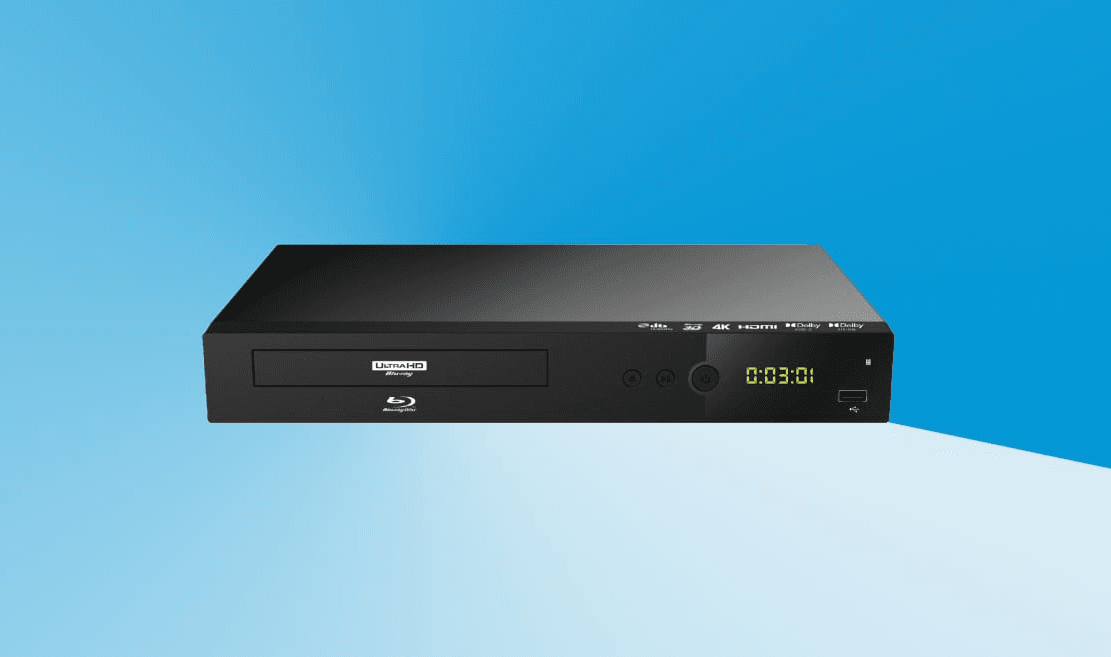
The physical media industry appears to be enjoying a mini-renaissance of sorts with the launch of yet another new 4K Blu-ray player, this time from the Australian brand Laser. The good news is that it’s dramatically cheaper than recent new offerings we’ve seen from Panasonic and Magnetar, but there is some bad news too.
Before we get to that, we’ll take a look at what Laser is offering. Its new product is called the Laser Blu-BD4K-384, and the company says it intends to bring it to market in November, though it’s accepting pre-orders now.
The Laser Blu-BD4K-384 is capable of spinning UHD Blu-ray discs, regular Blu-ray discs, DVDs and CDs, and it supports the Dolby Vision and HDR10 formats, but unfortunately not HDR10+. As mentioned, it is a fairly low-cost device, and that means it does make some compromises in terms of features, with the lack of any Wi-Fi capabilities being a pretty glaring omission. And while it does support USB playback, it does this via a USB 2.0 port, rather than the superior USB 3.0.
There is also a single HDMI 2.1 port on the back, which is unfortunately the only option for those who want to experience surround sound, for there’s no dedicated audio output besides the standard stereo port. Laser does not mention whether Dolby Atmos is supported, instead referring to Dolby Digital, Dolby Digital Plus and Dolby TrueHD. Elsewhere, the company’s product page mentions playback at a maximum 2160p resolution “with four times the pixel resolution of Full HD,” and multi-region compatibility, which means it can play discs that originate from any country, unlike some older Blu-ray players.

We did mention that there is some bad news, and unfortunately, Laser only appears to be selling the Laser Blu-BD4K-384 domestically for now. It’s priced there at AU$500, which works out at around just £264 at the current exchange rate. However, the fact that it offers multi-region playback support does mean that someone could go through the hassle of importing it to another country, if they desperately need some low-cost new Blu-ray player hardware in their living room.
We’re not sure if Laser has plans to bring the new device to global markets or not. The company typically only sells its products in its home country, and is known for being somewhat “cheap and cheerful,” focusing on affordable consumer electronics. But even so, it’s an encouraging sign that further reinforces the argument that physical media is still alive and kicking.
There has been quite a bit of discourse in the last few years that physical media is slowly dying and will ultimately become impossible to find, what with brands like Oppo, Samsung and LG all quitting the Blu-ray player business and the actual discs becoming harder to procure at retailers. But with a sudden deluge of new Blu-ray players coming onto the market this month, such a diagnosis was clearly premature.
Earlier this month, Hong Kong-based Magnetar announced a new flagship 4K Blu-ray player in the shape of the Magnetar Ultima (pictured below), which is an extremely premium product for home cinema enthusiasts that features lithium-based power stages and a synchronised master clock system designed to ensure super-smooth playback. That release was followed by Panasonic, which launched the new Panasonic DMR-4X10¹⁰. That too, is a premium-grade product that integrates a 4K tuner to pick up content broadcast over the airwaves and comes with a massive 10 terabyte hard drive. However, it’s only being sold in Japan for now.
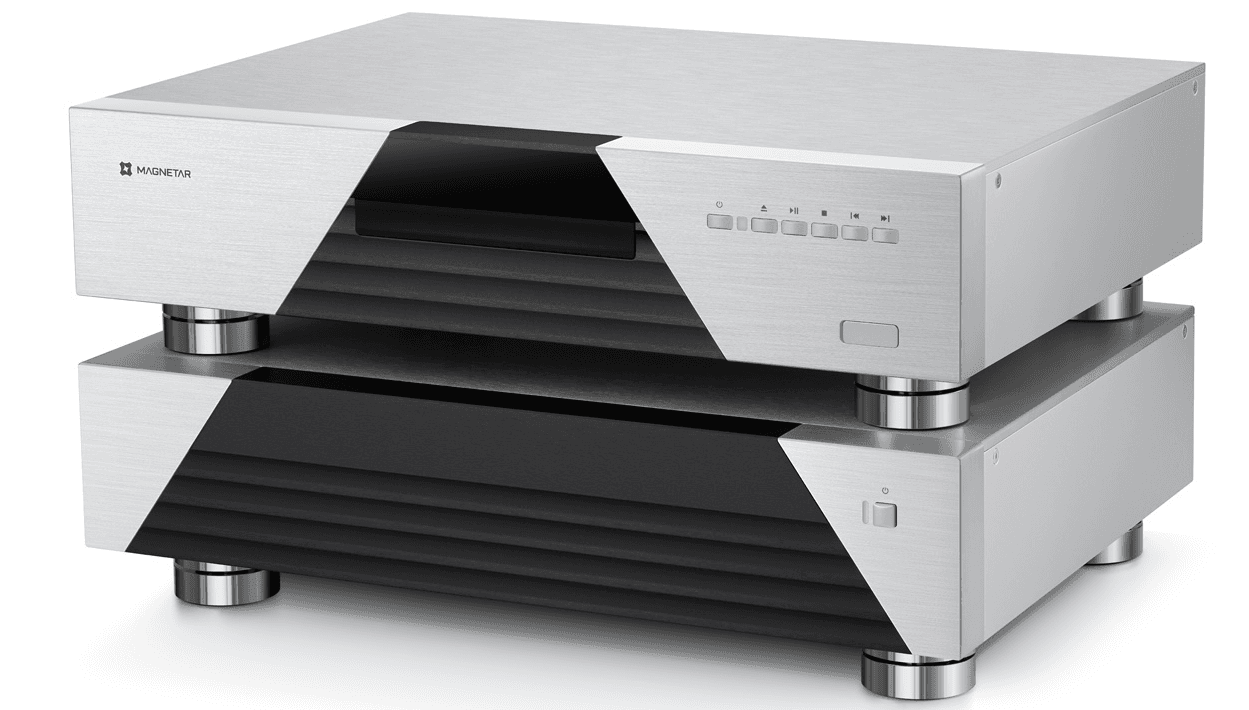
The downside to those two products was that, being premium, they come with premium price tags, with the Magnetar Ultima listed at a whopping $12,000 (£8,830) and the Panasonic DMR-4X10¹⁰ priced at 434,500 yen (£2,080). Laser’s Blu-BD4K-384 clearly sits at the opposite end of the spectrum, and provides a much-needed new option for those looking for an entry-level playback machine.
