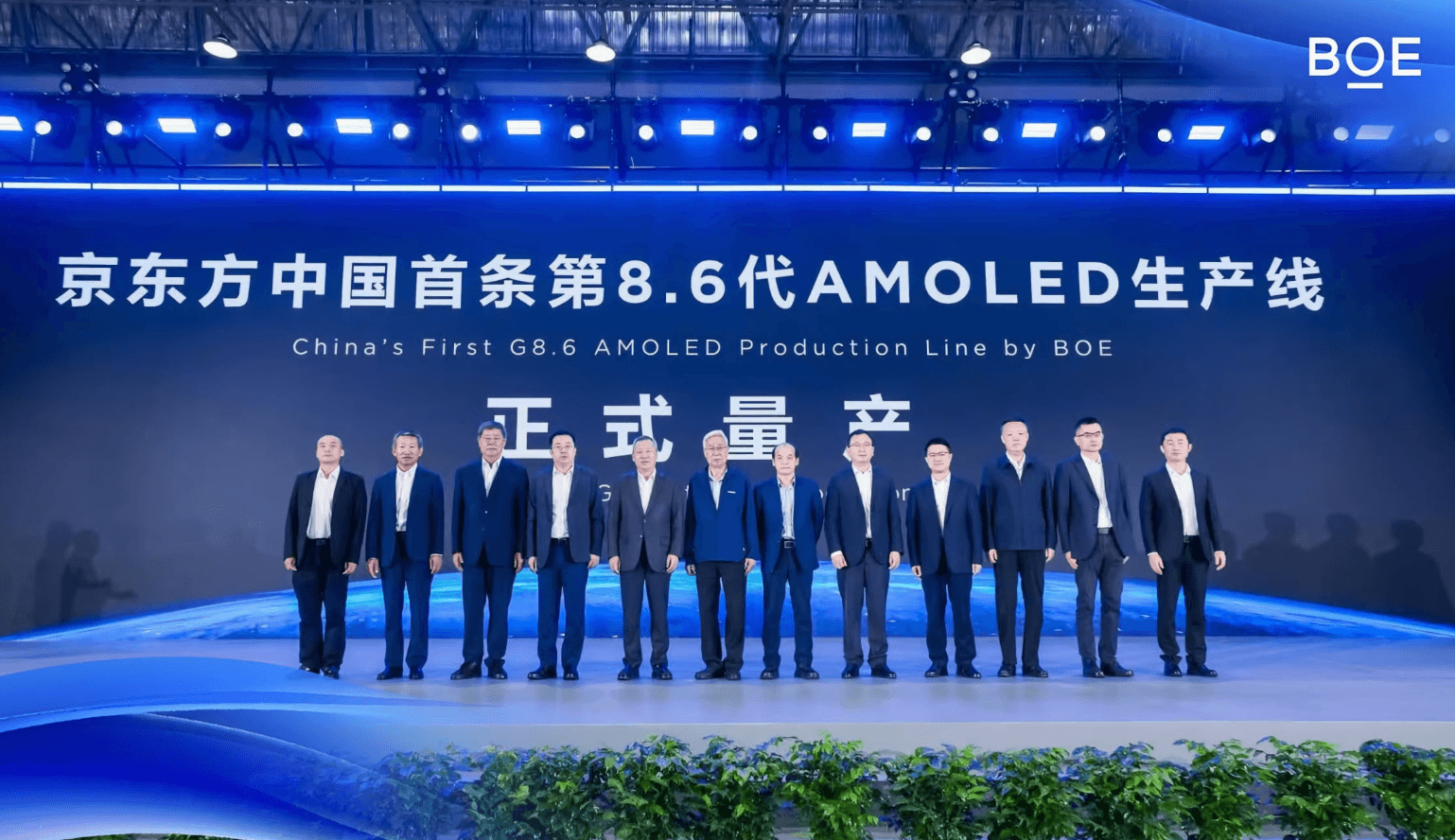
China’s BOE has won the race to become the country’s first display maker to start mass producing medium-sized OLED panels at its 8.6-generation factory, beating out its rival TCL CSOT.
The company’s B16 plant in Chengdu is on track to manufacture 10 million OLED panels in 2026 and will ramp up production to make substantially more next year, it said in a statement last month.
BOE said it began mass production of OLED panels on June 17, and says it intends to scale things up to meet growing demand for the premium displays in both China and overseas.
The company had an impressive roster of happy customers who’re all waiting to snap up the new OLED panels as they come flying off its new production line. Representatives from Lenovo, Asus, Oppo, MSI, Vivo, ZTE, Honor, Transsion, Nothing and Xiaomi all attended the 8.6-Gen plant’s opening ceremony, promising to launch new products featuring the technology later this year.
BOE said the new facility cost a staggering 63 billion RMB (around ₤6.9 billion) to build, making it the largest single industrial plant in Southwestern China. It will manufacture premium OLED panels based on a tandem structure, utilising low-temperature polycrystalline oxide backplanes. Large parts of the facility's production operations are automated with AI models, the company said. The panels will support native refresh rates of up to 240Hz. The 8.6-Gen production line is geared towards the manufacture of larger panels than BOE’s older 6-Gen plants, aimed at products such as notebooks, monitors and tablets. One of the first products to roll off the line is a 14-inch OLED panel that will be used in laptops from Acer, Asus and Lenovo, the company said.
The facility was brought online just five months after Samsung Display did the same at its new 8.6G plant in Asan, South Korea, which is manufacturing QD-OLED panels for Apple, Samsung Electronics and other customers.
However, BOE’s main competitor may not be Samsung Display, nor LG Display. Its Chinese rival TCL CSOT broke ground on its own 8.6G OLED plant in Guangzhou last October, and says it has already started producing some panels, with mass production on track for early next year. That plant is different, because it’s the first major OLED manufacturing hub to utilise the inkjet printing method, which is believed to be more cost-effective and could one day help to increase production yields.
Another rival set to enter the field is Visionox, which is currently building what will become China’s third 8.6G OLED plant in Hefei in Anhui province. That plant is expected to come online in 2027 or 2028 at the latest, and when it does, it could help China to overtake South Korea as the world’s biggest OLED display manufacturing hub.
None of the Chinese display makers have yet announced plans to start manufacturing larger OLED panels for televisions, but it’s looking more and more likely that they will eventually be in a position to threaten LG Display and Samsung Display’s dominance of that particular market segment.
