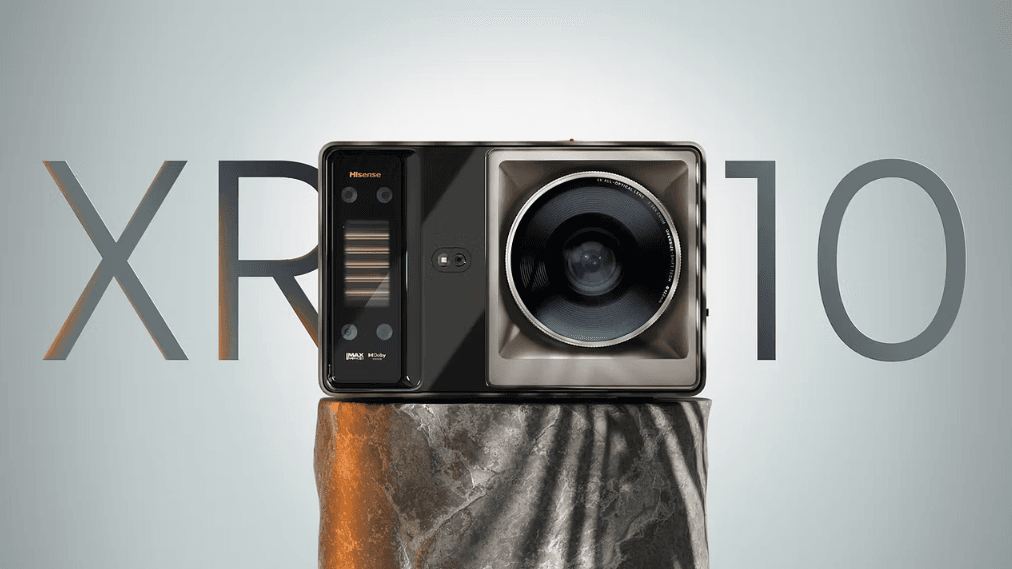
Hisense is teasing a couple of juicy updates to its portfolio of projectors with the unveiling of its new, incredibly big and bright XR10 and a PX4-PRO model that’s set to replace the existing PX3-PRO. We have a few details already, but the full specifications will be released at CES 2026 next month.
The Chinese brand has forged a solid reputation in the projector industry thanks to the powerful capabilities of its TriChroma laser technology, which first appeared back in 2019. It’s responsible for inventing the concept of the “Laser TV”, which is currently embodied by its flagship 2025 L9Q ultra-short-throw projector that can throw up a massive picture when sat just inches away from the wall.
Hisense seems to want to build on that reputation with the all-new XR10, which is said to be a “first-of-its-kind” laser projector that’s “built for cinephiles who want the big-screen theatre experience without sacrificing design, flexibility, or fidelity”.
The new model is housed in a compact, cube-like chassis that’s more similar to the company’s M-Series and C-Series projectors, but it’s far more powerful than either of those. It features a “premium laser performance” that could potentially rival big-screen TVs such as the 136-inch MX Series MicroLED TV or the 116-inch RBG-MiniLED TV, which both launched earlier this year.
As mentioned, we don’t yet have the full specifications, but Hisense said the XR10 comes with its most advanced LPU 3.0 Digital Laser Engine and a new AI-enabled chipset, paired with a pure RGB laser light source. These components are capable of generating an eye-searing 6,000 ANSI lumens of brightness that will ensure an "exceptional" viewing experience even in the daytime, the company promised. Other known details include a 6,000:1 native contrast ratio and an optical zoom of 0.84x to 2.0x to ensure “razor-sharp” picture clarity. It can throw up images of anywhere between 65-inches and 300-inches, the company added.
Hisense said the XR10 will be combined with 16 all-glass lenses that ensure superior light transmittance and temperature stability and a new IRIS system that intelligently adjusts the lens aperture and exposure settings based on the ambient light conditions. These will be adjusted continuously, so if someone starts watching just before sunset, it will maintain the most optimal picture even as the ambient light evaporates.
Hisense also talked about “dramatically expanded” coverage of the BT.2020 colour gamut and a 6% speckle suppression rate, plus a four-camera and dual TOF intelligent sensing system that helps to automate setup.
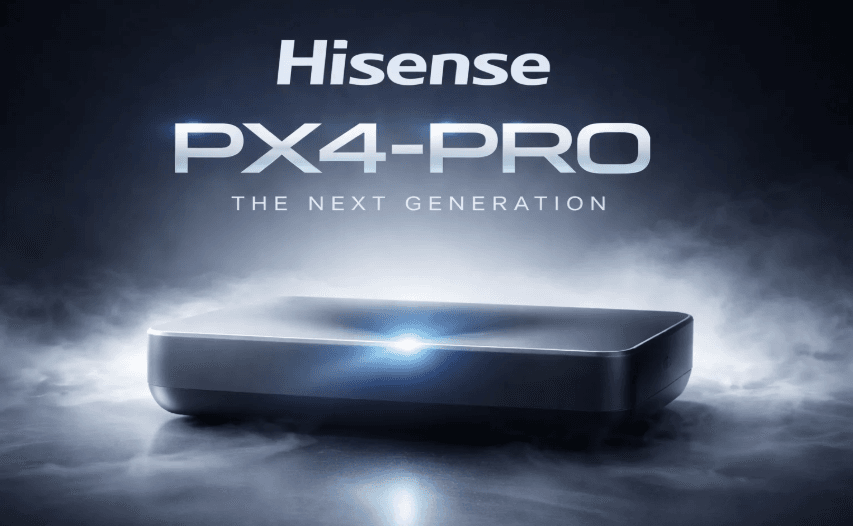
As for the Hisense PX4-PRO, this is the latest addition to an existing series that looks to improve on its predecessors. It’s based on the latest generation of the company’s TriChroma laser technology and implements the new IRIS system found in the XR10, and is capable of generating 4K resolution pictures with 3,500 ANSI lumens of brightness. With a 6,000:1 contrast ratio, the PX4-PRO promises “vibrant colour and crystal-clear detail” in all viewing conditions, and while it won’t quite be at the level of the XR10, it should still be pretty capable in brighter environments. It also boasts IMAX Enhanced certification as well as “ultra-low latency” to increase its appeal for big-screen gaming enthusiasts.
Hisense hasn’t yet said how much either new model is going to cost, but we can be certain it’ll be asking for a pretty penny. Last year’s flagship L9Q is currently going for around £3,999 at most retailers, while the PX3-PRO costs £1,799. Not cheap by any means, but they should nonetheless be a much more affordable big-screen option than Hisense’s MX MicroLED TV, which retails for $100,000 in the U.S., or the Hisense 116UX MicroRGB TV at £24,999.
