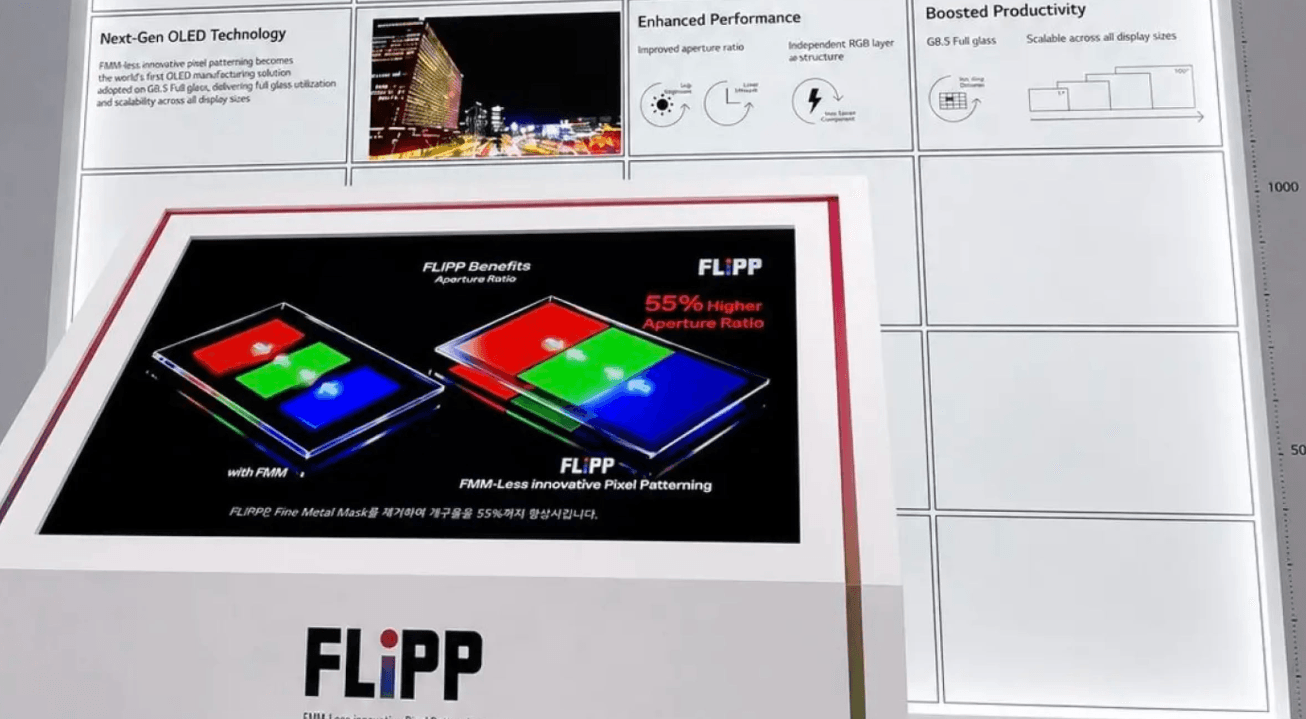
Just when you thought that OLED displays couldn’t get any better, think again. LG Display, the company that develops and manufactures the OLED displays found in the TVs of LG Electronics and other brands, has just unveiled what it says is a new “dream” panel technology that far surpasses the brightness, durability and lifespan of its existing OLED panels.
It’s the latest announcement in a long list of breakthroughs made by LG Display over the years, coming just a few weeks after it showed off a new, two-stack OLED panel featuring one less emissive layer than usual that promises to enhance colour reproduction.
Now it seems that those two-stack OLED panels are about to be further improved, for the company’s new “FLiPP” technology is set to deliver even more impressive improvements.
The “FLiPP” stands for “FMM-Less innovative Pixel Patterning,” which is really a description of how the new panels are manufactured. Traditional, LG Display has always used something called “fine-metal masks” or FMMs, which are a bit like stencils. They’re basically metal sheets that have been peppered with microscopic holes, and they’re laid on top of the glass or plastic substrate and carefully aligned so that the holes are placed where the red, green and blue pixels are meant to go. LG Display then uses a technique known as deposition to deposit the sub-pixel structures onto the substrates with extreme accuracy, so there’s no bleeding into adjacent spaces.
While these FMMs allow for extreme precision, they add a lot of cost to the manufacturing process. They’re also difficult to manufacture themselves, especially if you want them for larger screen sizes. Now, after years of research, LG Display says it has managed to come up with a new method that eliminates the need for FMMs altogether.
FLiPP works by depositing the pixel materials in a carefully ordered sequence, and if you care to learn about the specifics, you can watch this video:
The more important thing for many of us is why this matters. According to LG Display, FLiPP has the advantage of enhancing the aperture ratio of OLED, which means it can boost panel brightness by around 1.6-times that of its FFM-based panels. It also extends the lifespan of the OLED panels by up to 2.4-times, and reduces power consumption by around 13%, the company said.
Other key benefits include lower production costs because there’s no need to manufacture the intricate FMMs and position them on the substrate, which requires complicated machinery and software. In addition, FLiPP also makes it easier to create larger OLED substrates, which can then be cut into different panel sizes, giving it more flexibility.
In other words, we may soon see cheaper OLED TVs and they’ll be available in more sizes, possibly larger ones too. That’s because large-sized OLED panels are incredibly difficult to make, which is why they tend to have disproportionate price tags. You may have noticed that LG’s 97-inch G6 OLED TV is currently priced at a staggering £15,999, which is more than twice the asking price of its next-largest 83-inch model, which costs just £5,799. Without the FMMs, that 97-inch model might become a whole lot more affordable.
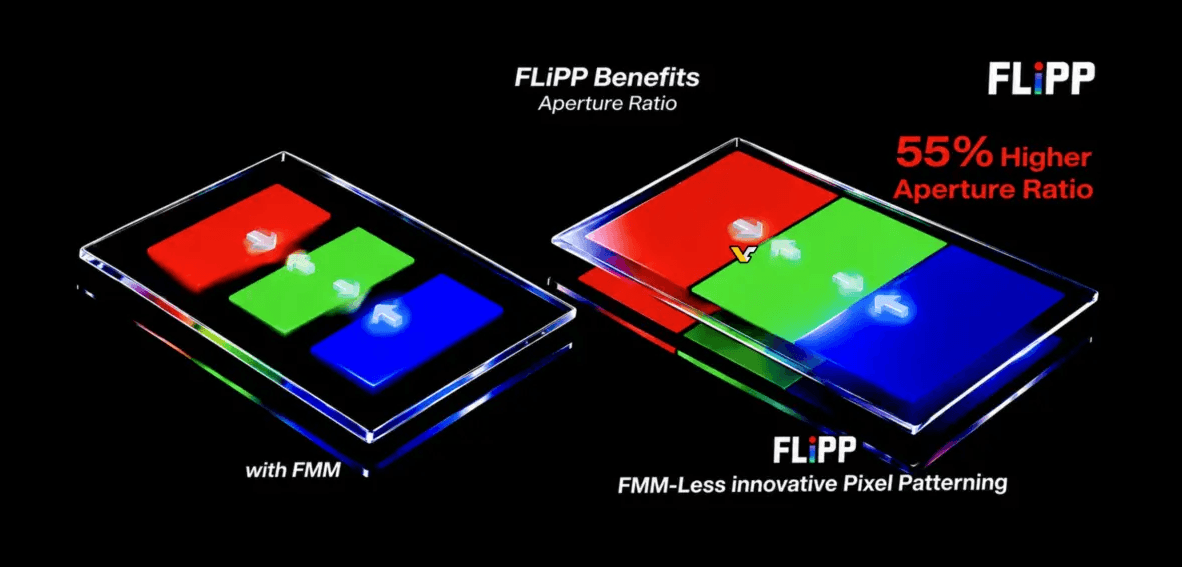
According to LG Display, FLiPP is “free from panel size and resolution constraints,” which means it could theoretically also manufacture a 1-inch panel too. Such miniscule displays could then be fitted into AR/VR headsets.
But don’t get too excited yet. In the display making industry, these things take time to realise, and which LG Display officially announced the technology at this week’s International Meeting on Information Display conference, it could well be two-to-three years, or possibly even longer, before we see any actual products.
To make matters worse, LG Display says it’s going to focus on “IT applications” first of all, meaning monitors and tablets, though it does also promise “ultra-large TVs” at some point down the line.
