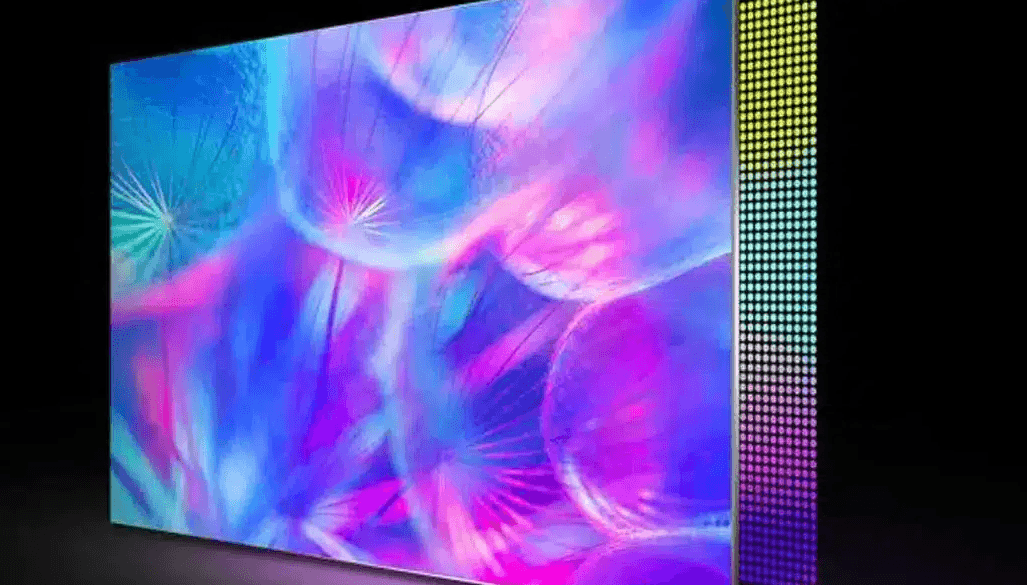
MicroLED TVs are still considered to be the Holy Grail of TV display technology, but its journey to the living room has stalled due to one seemingly insurmountable problem – the price tag.
Existing MicroLED TVs are incredibly expensive, with larger models retailing for hundreds of thousands of pounds. The industry desperately wants to make the tech more affordable, and that’s why LG Display is participating in a new, government-backed project that aims to simplify MicroLED pixel identification and repair.
The project is led by South Korea’s Ministry of Trade, Industry and Energy, and sees LG Display work with the Ulsan National Institute of Science and Technology (UNIST) and specialized equipment makers to try and create a commercially viable system for spotting and fixing defective pixels during the manufacturing process.
One of the reasons for MicroLEDs’ excessive costs is the microscopic scale of its pixels. Building a MicroLED involves precisely placing around 25 million tiny, individual pixels on a substrate, and doing so perfectly is problematic. Even if it’s possible for a manufacturer to achieve a 99.9% yield, that would still mean thousands of dead pixels on any given panel.
Such defects kill productivity, The Elec explained. Traditional inspection methods rely on physical contact, which can cause damage to individual pixels. Non-contact optical methods are also used, but these techniques lack the surgical precision required to ensure the panel is perfect.
LG says it’s going to participate in the project, which is slated to run until 2032, to try and develop superior detect and repair technology that will have a huge impact on MicroLED production, transforming it into an easily repeatable manufacturing process. It’s believed that if such a process can be mastered, it will result in higher yields for MicroLED panels, which in turn can dramatically reduce their production costs. At present, wastage is a big factor in the high price of MicroLED panels, which is why 110-inch sets typically retail at six-digit prices. But if it’s possible to repair defects on the fly instead of scrapping backplanes, the economies of scale may begin to tip into the consumer’s favor.
While such techniques may not be a silver bullet for immediate commercial viability, experts believe it’s the most promising lever for reducing MicroLED’s manufacturing costs. That’s why LG Display is keen to participate – if it can pull it off, it could easily surpass Samsung’s early lead in the MicroLED display space.
The news is a double-edged source for premium TV aficionados – on the one hand, it does increase the chances that MicroLED may one day fall into the realms of affordability. But even if that does happen, it’s likely to be several years away.
