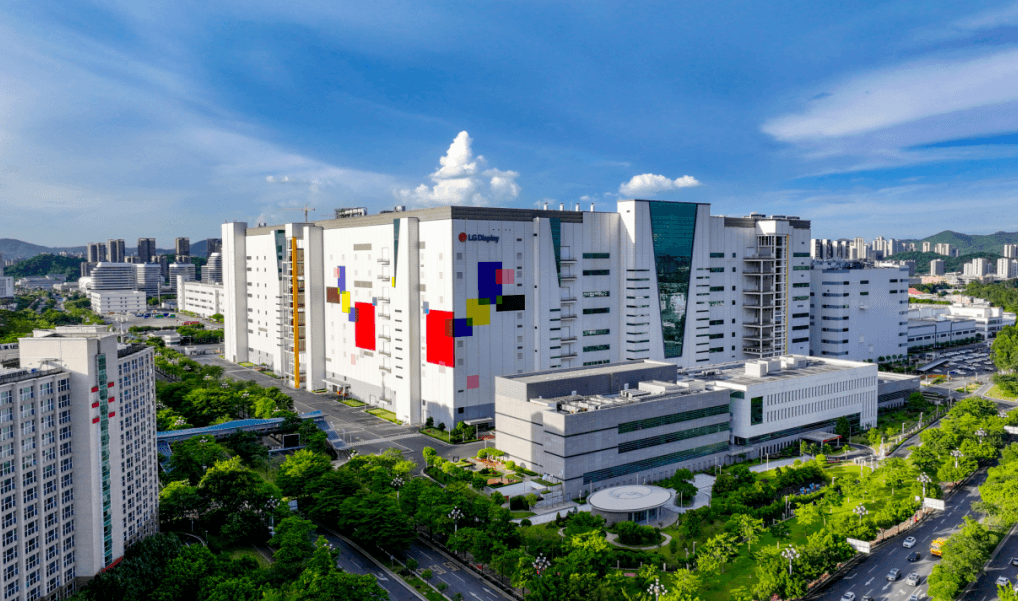
LG Display is planning a massive expansion of its OLED display panel factory in Guangzhou, China, that will see it build the world’s first production line for enormous 111-inch panels, according to multiple reports in China and South Korea.
The company is eager to make even larger OLED displays in order to compete with the wave of ultra-large-sized RGB LED and Mini-LED TVs available in sizes from 100-inches to 116-inches, the reports said.
LG Display jointly announced the plan with its Chinese state enterprise partner, Guangzhou Development Zone Holding Group, which is known as Guangkai Holdings and owns a 30% stake in the world’s largest OLED panel factory. LG Display is the main shareholder, owning 70%. The partners plan to invest one billion yuan (around £112.6 million) to upgrade the facility’s production capacity for large-sized OLED modules, so it will be able to manufacture greater volumes of 77-inch, 83-inch and 97-inch panels as well as the new 111-inch displays. At present, the 97-inch panel is the largest it manufactures.
“The 111-inch module line is a major highlight of the project,” said TrendForce, which first reported on the news.
LG Display will contribute 700 million yuan, while Guangkai Holdings will invest 300 million yuan, in-line with their respective ownership stakes. "This is a planned investment in module production to meet demand for ultra-large displays in accordance with our business plan," a spokesperson for LG Display told The Elec.
This is big news for all OLED TV fans and it could mean that larger-sized models could become more affordable in future, analysts say. This year, 83-inch OLED TVs have become much more affordable than they were in previous years. However, the 97-inch TVs are still extremely expensive in comparison to similarly-sized LCD TVs. Part of the reason for that is because LG Display has continuously delayed investing in larger sized OLED panels. But such manufacturing operations benefit from economies of scale, so the more volume there is, the cheaper those panels should become.
It’s important to note however, that LG Display will still need to convince TV makers, including its parent company LG Electronics and others, such as Samsung Electronics, Sony and Philips, to use the larger panels in commercial TVs. Those companies will first need to determine what kind of demand for larger OLED televisions there is. But if LG Display can make sure they’re reasonably competitive with the monster-sized RGB LED TVs we’ve seen in the last couple of years, we imagine that some brands will be willing to give it a go.
LG Display hasn’t provided any timelines for when the capacity expansion might happen, so it’s not possible to say when we might see the first 111-inch OLED TVs, but two-to-three years seems like a reasonable guess.
