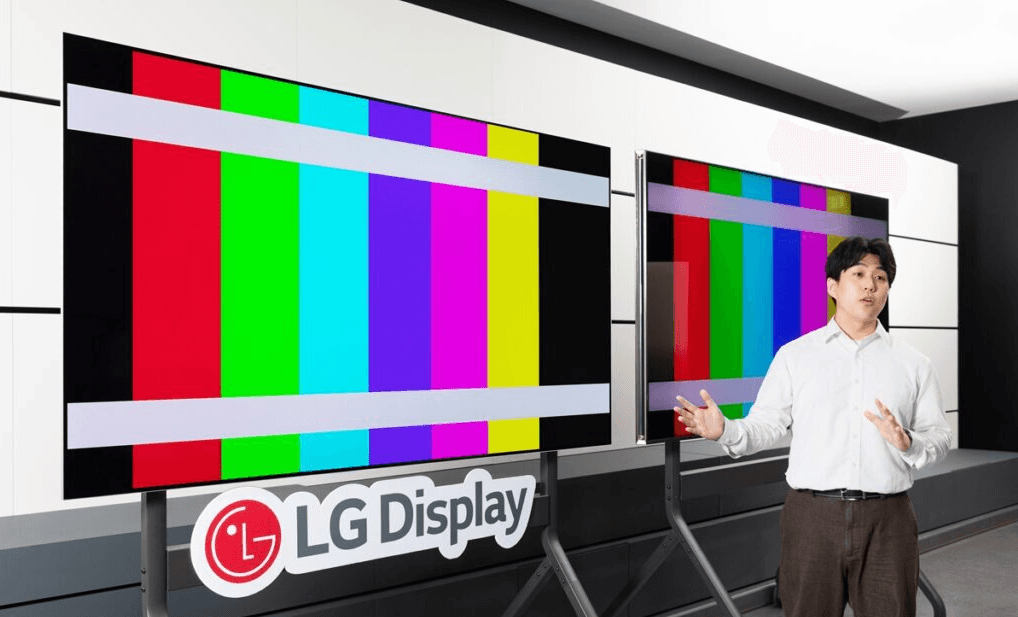
LG Display’s WOLED technology has achieved another major milestone after becoming the first display in the world to achieve Intertek’s “Perfect Colour/Brightness Accuracy up to 500lux” certification.
The certification covers LG Display’s full range of Primary Tandem WOLED TV panels, and means that the displays are capable of faithfully reproducing the full range of colour and brightness as intended by content creators, no matter the content type or viewing conditions.
Previously, most displays were rated by measuring their performance against simpler specifications, such as luminance and colour gamut. But there was never any objective standard to show how a display can accurately reproduce both together.
Intertek said the new standard involves applying a range of test patterns that can measure and quantify colour and brightness variations in specific areas of the screen, to ensure panels meet creators’ intended vision. When LG Display's panels, which are found in TVs such as the G6 OLED, were put to the test, they scored 100% accuracy in both brightness and colour reproduction accuracy with a colour crosstalk-free rating. The latter category means that each pixel is able to generate its own colour independently, without any interference from the surrounding pixels.
LG Display said that until now, no LCD panel has managed to achieve the same level of accuracy, with every one that has so far been tested by Intertek falling short in terms of both colour and brightness. The problem with LCD displays, according to LG Display, is that they use backlight blocks that are much larger than the individual pixels. As a result, when it comes to display HDR content, such as fireworks or stars against a night sky – which require certain areas to shine brightly and others to be darkened, such displays generated lower-than-intended brightness.
Not even the most advanced LCD TVs using RGB LED were able to meet Intertek’s standards, the company said. Although superior to regular LCD, they still showed some colour distortion in on-screen objects, depending on the background colour.
The difference has to do with the way OLED and LCD displays generate light. With LCD, the panels control their backlight sources through individual zones, which is a structural limitation that makes it possible for light to leak into adjacent zones, creating crosstalk issues, where surrounding colour bleeds into neighboring areas, distorting the image. Even some RGB LED TV panels were impacted by crosstalk, LG Display said.
On the other hand, LG Display’s OLED panels are powered by pixel dimming technology, which means each pixel independently emits its own light. This prevents the colour bleeding issue and ensures that images are more accurately reproduced, in line with the content creators’ original intent.
LG Display said Intertek’s independent testing process quantifies the advantage of OLED display technology over LCD. "We have objectively proven that OLED accurately reproduces the color and brightness values that consumers need, exactly as the content creator intended," said Lee Hyun-woo, head of LG Display's large display business division. "We will continue to strengthen our market leadership by communicating the premium picture-quality value that only OLED can deliver to customers around the world."
It’s not clear if Samsung Display intends to submit its rival QD-OLED panel technology to Intertek for testing, but if it does, it would likely be able to achieve a similarly high level of accuracy.
