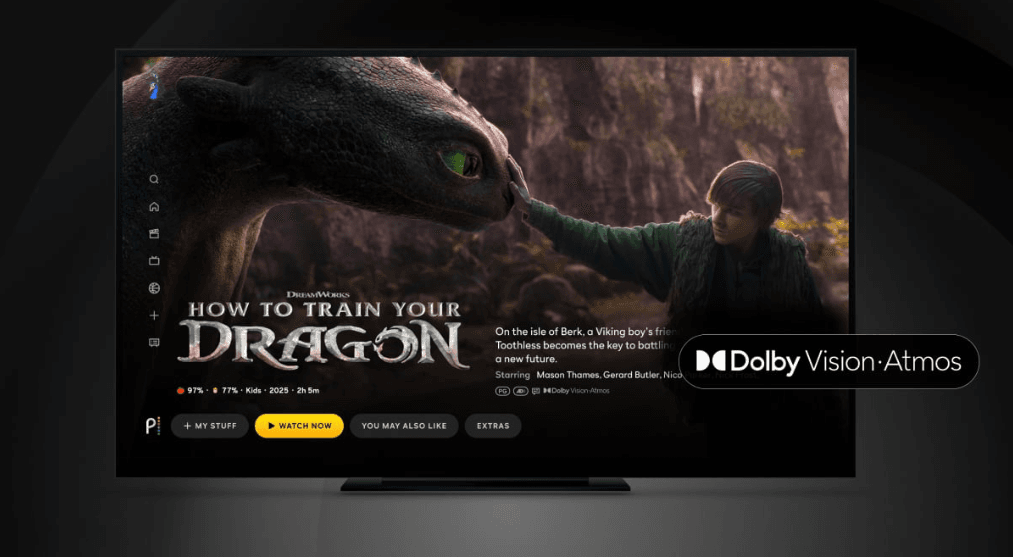
Peacock has become the first video streaming service to announce that it’s going to embrace Dolby Vision 2, with plans to start showing enhanced HDR content later in the year.
The U.S. streaming service said at CES 2026 that it will dive deeper into Dolby’s technology, adding support for its video and sound formats on live sports streaming and other content. It could mean events such as NFL, NBA and the upcoming 2026 Winter Olympics are among the first sports to be livestreamed in Dolby Vision 2.
Peacock will also add support for Dolby AC-4, which is a surround sound format that delivers a better, more immersive audio experience, but it’s Dolby Vision 2 that’s the really big deal here. With Dolby Vision 2, users should benefit from enhanced picture quality and the elimination of judder in movies and TV shows. The new format also promises to get rid of the “soap opera effect” that occurs when the TV applies too much motion smoothing, obscuring some of the detail in extremely light and dark scenes.
Dolby Vision 2 may be especially beneficial for sports content. Because it helps to expand the picture’s dynamic range, it should reveal more detail, especially when parts of the football pitch, for example, are shaded by clouds or a huge grandstand. In addition, Dolby Vision 2’s wider colour gamut should help TVs to generate richer colours, making the grass look much greener than before.
Check out this video to learn more about what Dolby Vision 2 will do:
As for Dolby AC-4, this is a new audio encoder that will be used to deliver Dolby Atmos, replacing the old AC-3 codec that’s currently in use. Not only does it enable more efficient streaming, but it will also allow users to customise the audio to their taste, so they might increase the dialogue at the expense of the sound track, or vice versa.
The only question is exactly when we’ll see all of this. Peacock hasn’t said when we can expect Dolby Vision 2 to roll out, nor has it said exactly what movies and shows will be able to take advantage of it. Most likely, it’ll begin with only a small selection of Dolby Vision 2 content at first, before gradually rolling it out to others.
Part of the reason for that is that content creators are going to have to encode their content differently in order to support the format, which means Dolby faces a lot of work in getting them onboard. In addition, users should note they'll also need a TV that's capable of supporting Dolby Vision 2 too, such as the upcoming new models from Hisense, TCL and Philips.
Still, with Peacock giving Dolby Vision 2 the green light, it may not be long before other streamers, such as Netflix, decide they need to follow suit.
