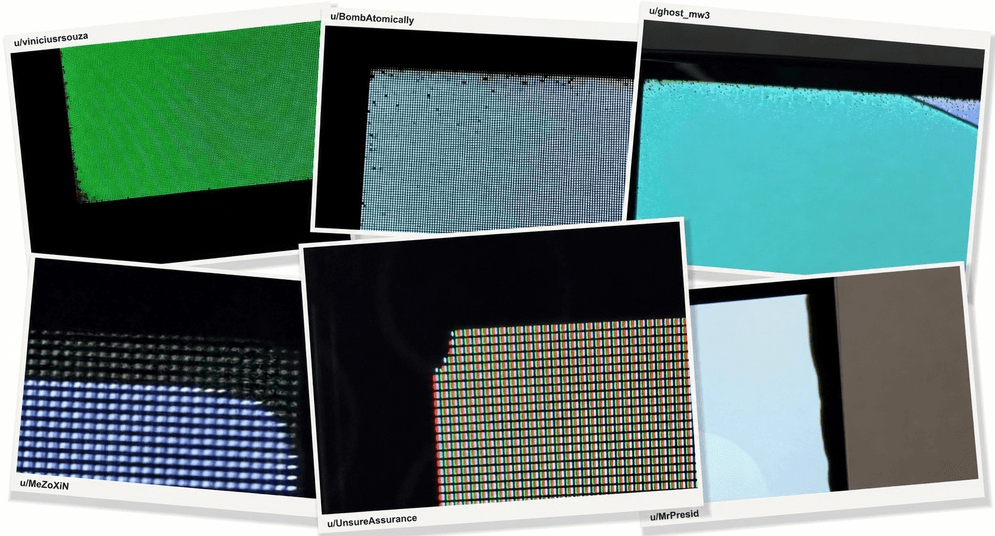
Just when you thought that OLED burn-in issues were a plague of the past, the issue has reared its ugly head again in the shape of a report by the consumer electronics review site Rtings, which warns that some LG OLED TVs may be susceptible to a problem it calls “edge rot.”
Unlike traditional burn-in problems, which can occur anywhere on the OLED panel, edge rot refers specifically to clusters of dead pixels along the side of the screen. According to Rtings, its testing shows the potential for some WOLED panels to suffer from this problem following prolonged use, causing them to look like there’s a black mold growing on the edge of the screen.
In a blog post, Rtings said it put a number of OLED panels through their paces in an exhaustive testing process after coming across multiple reports of edge rot on platforms such as Reddit.
The findings are worrying: Rtings found that 14 of the 16 WOLED TVs from 2020 to 2023 it tested in an Accelerated Longevity test showed signs of edge rot, ranging from just a few dead pixels that were difficult to spot without using specialised instruments, to “severe damage” that was clearly visible to the human eye.
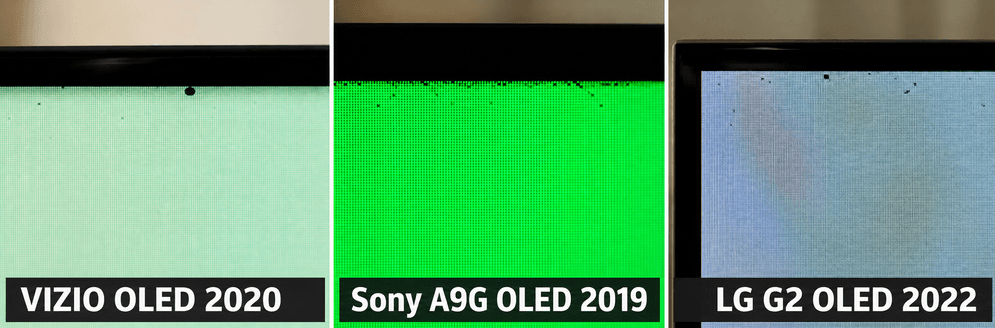
Rtings said ten WOLED TVs were models from LG Electronics, fitted with WOLED panels supplied by LG Display. After exposing them to a long-term test of 18,000 operating hours, nine of the models displayed edge rot symptoms, including the LG OLED BX, CX, A1, B1, C1, B2 and G2 models. Only the LG OLED A2 from 2022 came through unscathed. In addition, the same problem was found on WOLED models such as the Sony A80J, the Sony A8H, Sony A9G and a Vizio OLED TV from 2020.
The good news is that recent advances in OLED technology may have already solved this problem. Rtings said its testing did not reveal any issues of this nature on an LG G3 OLED television that was subjected to the same experiment.
Rtings said it believes edge rot on WOLED panels is likely due to contamination that occurred while the panels were manufactured, or possibly because of inadequate sealing, which allows moisture to leak inside the panel over time. Unlike traditional burn-in, which is associated with actual usage, edge rot appears to be an age-related concern, in that the older the TV is, the worse it gets, regardless of how often it’s used.
You can learn more about Rtings' testing process and its results in this video:
Rtings sent its findings to LG and quickly received a response. LG said it was aware of the issue, but believes it has only occurred in a “very small number of OLED products under prolonged exposure to high-temperature, high-humidity or other harsh environmental conditions.”
“Consistent with our longstanding commitment to product quality and reliability, LG continuously enhances OLED panel design and manufacturing processes to strengthen long-term performance and deliver the viewing experience customers expect from LG OLED products,” a spokesperson for LG said.
Rtings did also test a smaller number of QD-OLED TVs manufactured by Samsung Display, and it appears that the technology is immune to edge rot problems. None of the Samsung OLED TVs tested displayed any signs of pixel degradation.
Samsung Display gleefully seized the opportunity to get one over its rival, stating that the immunity of QD-OLED to edge rot was due to its proprietary Thin Film Encapsulation technology. “This architecture effectively blocks moisture ingress right at the edge of the panel, eliminating the root cause of border degradation and ensuring long-term edge-to-edge uniformity where traditional structures falter,” the company said.
Rtings concluded that WOLED TV models therefore have “marginally worse” expected reliability over time, but reiterated that such problems are still very rare and not experienced by the majority of consumers. “Despite this, both types of OLED are still a top pick for overall durability,” it said.
