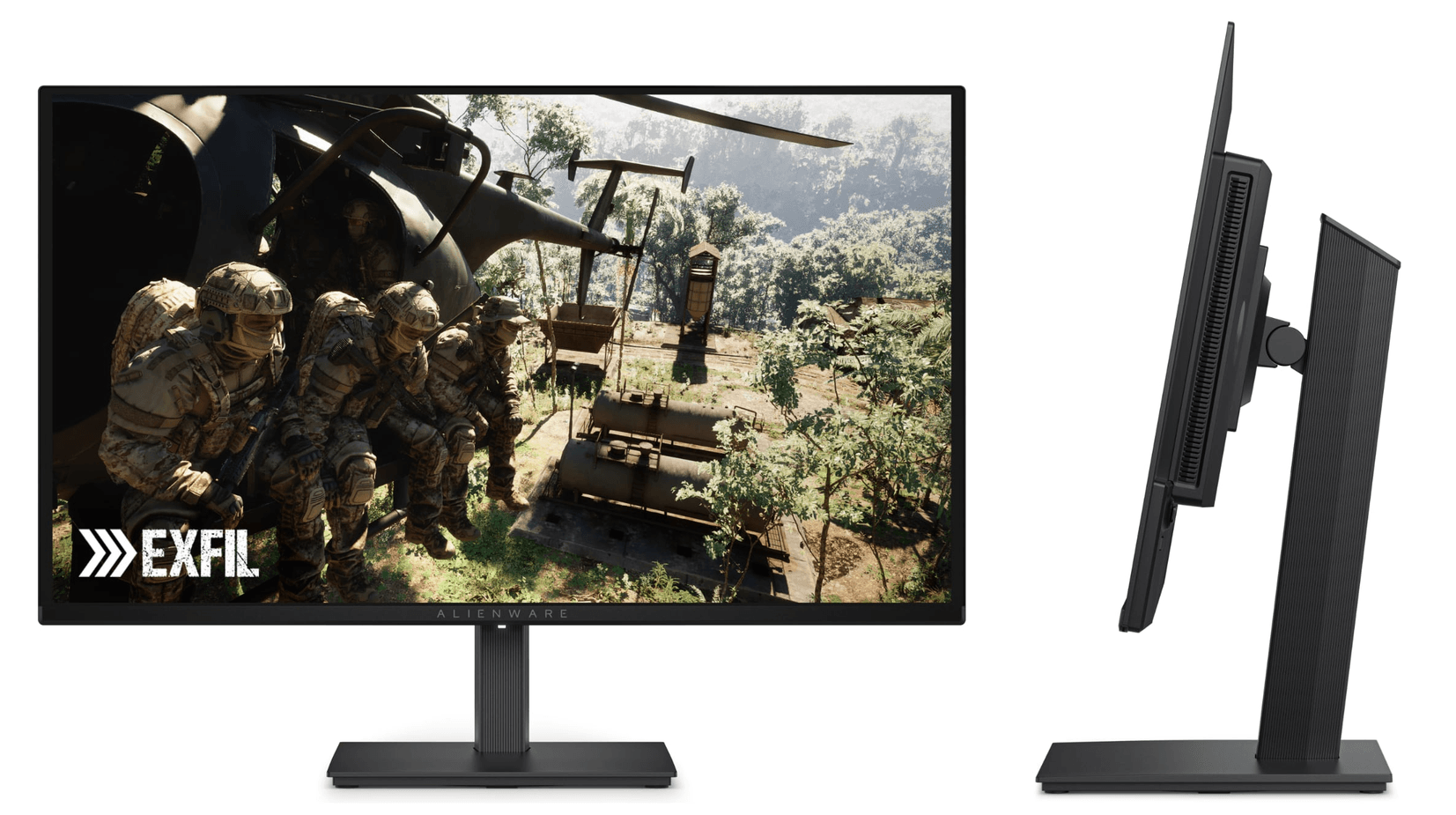
For several years, OLED gaming monitors have been the undisputed kings of desktop picture quality, albeit with a premium price tag to match. However, Samsung Display is now looking to make the technology much more accessible with a new, more affordable line of monitor panels dubbed 'QD-OLED Edge'.
In essence, QD-OLED Edge is a scaled-back version of Samsung’s flagship display technology. It retains the core benefits that make QD-OLED so highly sought after—things like pixel-level control of luminance and colour, infinite contrast, and near-instantaneous response times—but makes compromises in overall brightness and refresh rates compared to the company’s more advanced generations.
Interestingly, it turns out that some QD-OLED Edge monitors have been on sale for quite a few months already, with Samsung Display discretely launching the tech earlier this year. But we haven’t seen the words "QD-OLED Edge" plastered all over their retail boxes. Don’t expect too either. It’s not in the interests of the monitor brands in question, as they don’t want to be associated with selling "budget" tier gaming monitors, even if they’re not as good as their premium offerings.
Samsung Display’s rationale is all about market expansion. By creating a lower-cost tier, the company is trying to get ahead of the expected flood of more affordable OLED panels now that a number of Chinese display makers have gotten their production lines up and running. Undoubtedly, Samsung Display is worried that these rivals will corner the market by undercutting it on price, just as they did in the LCD display industry.
To begin with, there are two types of QD-OLED Edge panel. The first is a 27-inch 1440p panel boasting a 240Hz refresh rate, which is based on Samsung’s third-generation 2024 architecture. Joining it soon will be a larger 32-inch 4K variant with a 180Hz refresh rate, built on upcoming fourth-generation 2025 panel technology. Crucially, both panels are limited to a 200-nit full-screen brightness and a 400-nit peak brightness. Furthermore, neither panel utilises an RGB-stripe subpixel layout, meaning text clarity will still be affected. As a result, these displays are strictly tailored for gaming and media consumption rather than desktop productivity.
Sharp eyeballs will note the parallels with LG Display’s strategy in the television sector. Earlier this year, LG launched its lower-cost OLED SE panels for TVs, aimed squarely at capturing the entry-level market. Samsung Display is essentially employing the same tactics, only for the monitor industry. It’s therefore only right to wonder if we could soon see 'QD-OLED Edge' televisions. That may be a tantalising prospect for budget-conscious AV enthusiasts, but Samsung Display would need to make some changes if it’s thinking of going in that direction. The current 'QD-OLED Edge panels simply aren't bright enough to deliver a compelling living room experience. It would need to enhance the luminance of any potential TV-sized 'QD-OLED Edge panels to make them viable, but that may make them more expensive too.
Nevertheless, for gamers, these compromises could be a nice trade-off. While they might not satisfy the most discerning HDR purists, QD-OLED Edge panels still deliver a big leap in picture quality, motion handling, and viewing angles over traditional LCD monitors.
Best of all is the price. QD-OLED Edge monitors have been quietly rolling out across the U.S. and Europe since April 2026, with aggressive starting prices of around $300 to $350. The panels have already seen widespread industry from Dell Alienware, Asus, MSI, Gigabyte, AOC, Acer, ViewSonic, AsRock, and Samsung Electronics.
