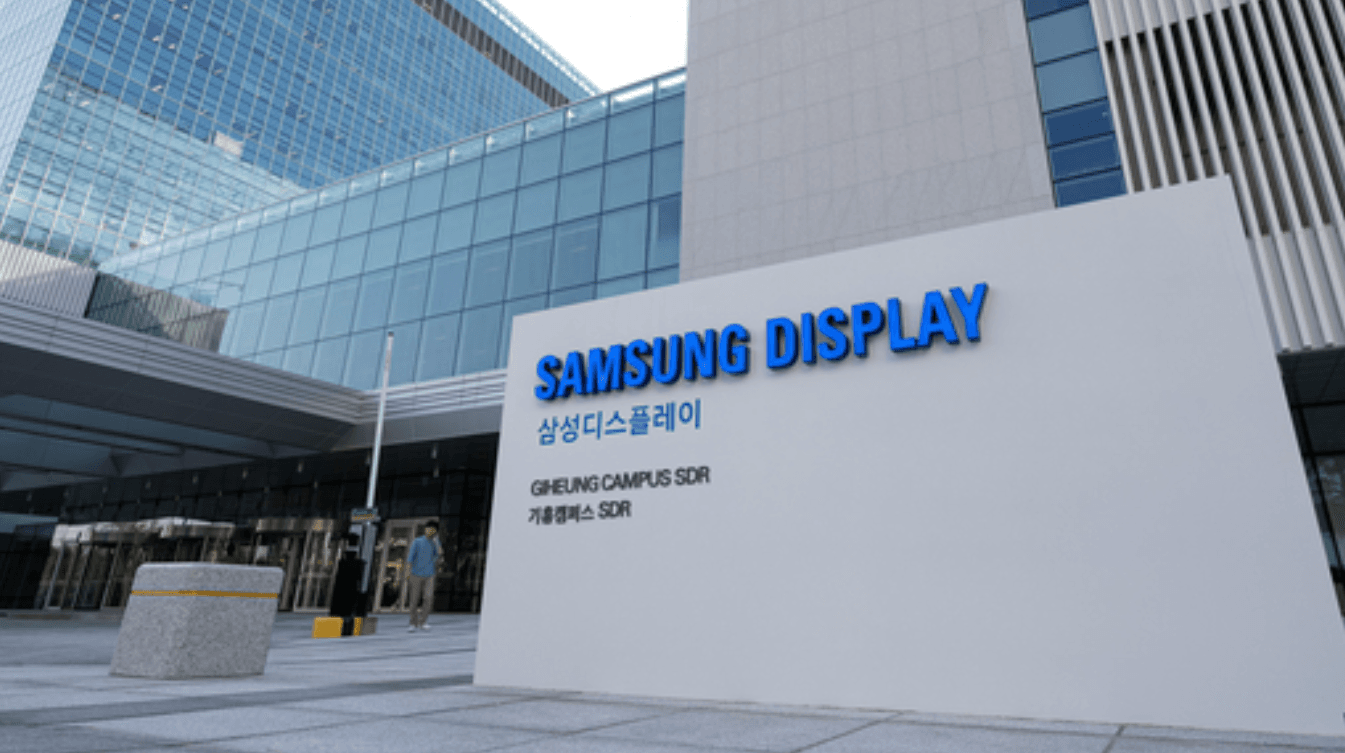
Samsung Display has reportedly resumed the development of its next-generation quantum dot nanorad display technology, after putting the brakes on the project about four years ago.
QNED, which stands for quantum dot nanorod emitting diode, was once seen as an extremely promising self-emissive display technology, which combines inorganic blue LEDs with quantum dots to produce red and green light.
QNED is similar to QD-OLED in many ways because it uses oxide TFT and quantum dot colour filters. The biggest difference lies in the material the pixels are made of, and the way the pixels are manufactured. Samsung Display creates its QNED pixels using an inkjet printing method, spraying nanorod LEDs that have been dispersed in a solution onto the pixel area of the display substrate. The pixels are then self-aligned using an electric signal.
Samsung Display has previously said it has high hopes for its QNED technology, claiming it will deliver superior contrast ratios, higher brightness and faster response times compared to the most advanced display technologies today, including OLED and MicroLED.
However, the company decided to cancel the project in the middle of 2022 to focus on QD-OLED and MicroLED, where it had progressed much faster. It cited challenges in aligning the LEDs in QNED to achieve uniform colour and light.
But reports from the Korean language publication ETNews and OLED-Info suggest that Samsung Display resumed the development of QNED in late 2025, shortly after achieving a breakthrough related to QD nanorod arrangement and placement.
Samsung Display’s QNED tech is not to be confused with LG Electronics’ QNED TVs, which are really just conventional LCD TVs that use miniaturised LEDs (basically Mini-LED). LG used the term purely for branding purposes, similar to how the “QLED” phrase – the original term for QDEL TVs – was hijacked. Unlike LG’s TVs, Samsung Display’s QNED panels do away with LCDs completely.

“The team that previously worked on QNED has regrouped,” ETNews said in its report, citing an anonymous industry insider. “Internally, there is a recognition that nanorod LED technology should be pursued as a long-term strategy, which prompted the restart of QNED.”
The most exciting part is that QNED panels could be cheaper and easier to manufacture than QD-OLED, because it’s possible to use inkjet printing for both the LEDs and the quantum dots, the reports claimed. Each pixel is made up of about ten LEDs.
If the report is true, it means Samsung Display is now actively working on four next-generation panel technologies. One is QD-OLED, which is currently its flagship panel tech for TVs, and another is MicroLED, which is widely regarded to be the most superior, but unfortunately extremely expensive (RGB LED, branded MicroRGB by Samsung, falls under MicroLED).
Samsung Display is also one of several companies racing to develop QDEL displays, which are confusingly known by multiple different names – NanoLED, electroluminescent quantum dot, emissive quantum dot, ELQD, QD-LED, EL-QLED and AMQLED.
QDEL is regarded as “true QLED” because the quantum dots are self-emissive. It uses electroluminescent quantum dots that conduct electricity and create their own light, without the need for separate light emitting diodes behind them. In other words, the quantum dots act as light-emitting diodes, eliminating the need for LEDs or OLEDs. That’s very different from the quantum dots we’re familiar with, which are really just colour filters and rely on LCD backlights.
Why is Samsung Display pursuing so many advanced display technologies? Most likely, it feels threatened by the rise of Chinese display makers, which have already totally cornered the market for LCD and Mini-LED TVs, and are fast catching up in OLED development too. By pursuing these newer technologies, the company hopes to maintain a technological edge for years to come.
