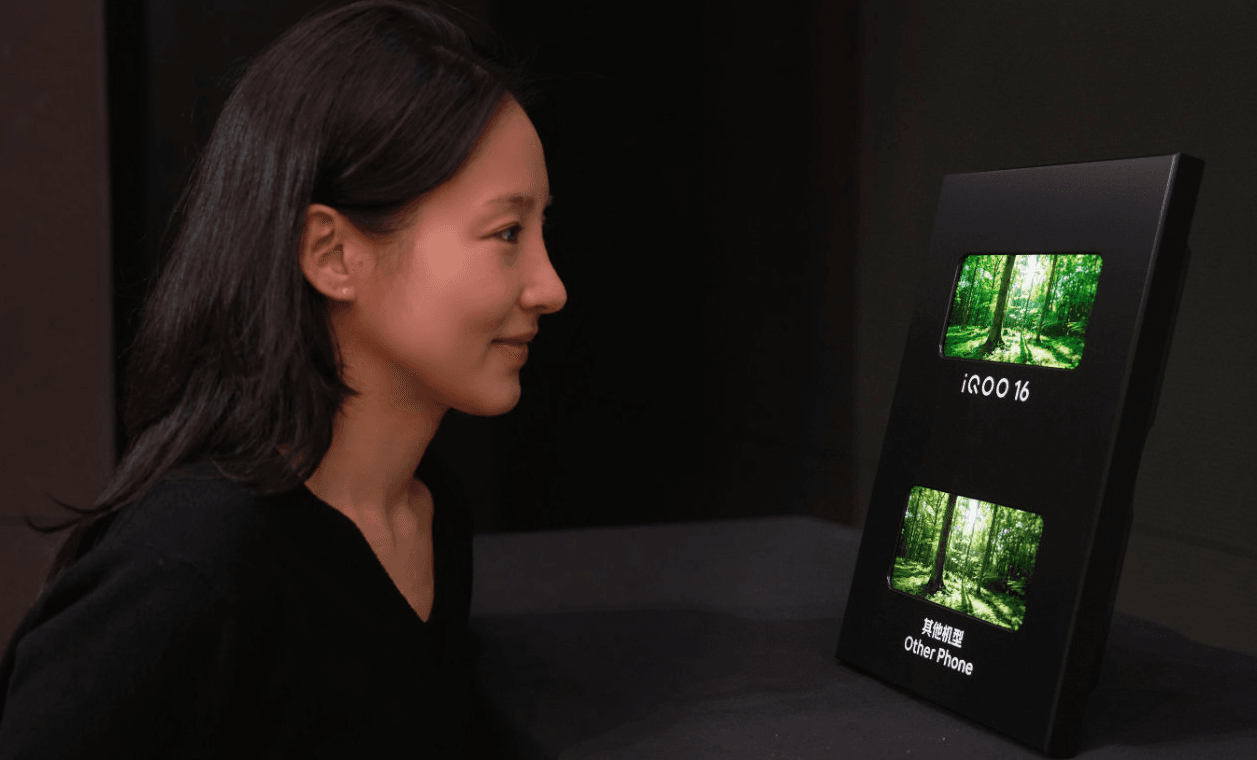
Samsung Display has unveiled its next generation OLED panel technology for smartphones, and it’s the first in the world to be able to achieve 10,000 nits peak brightness.
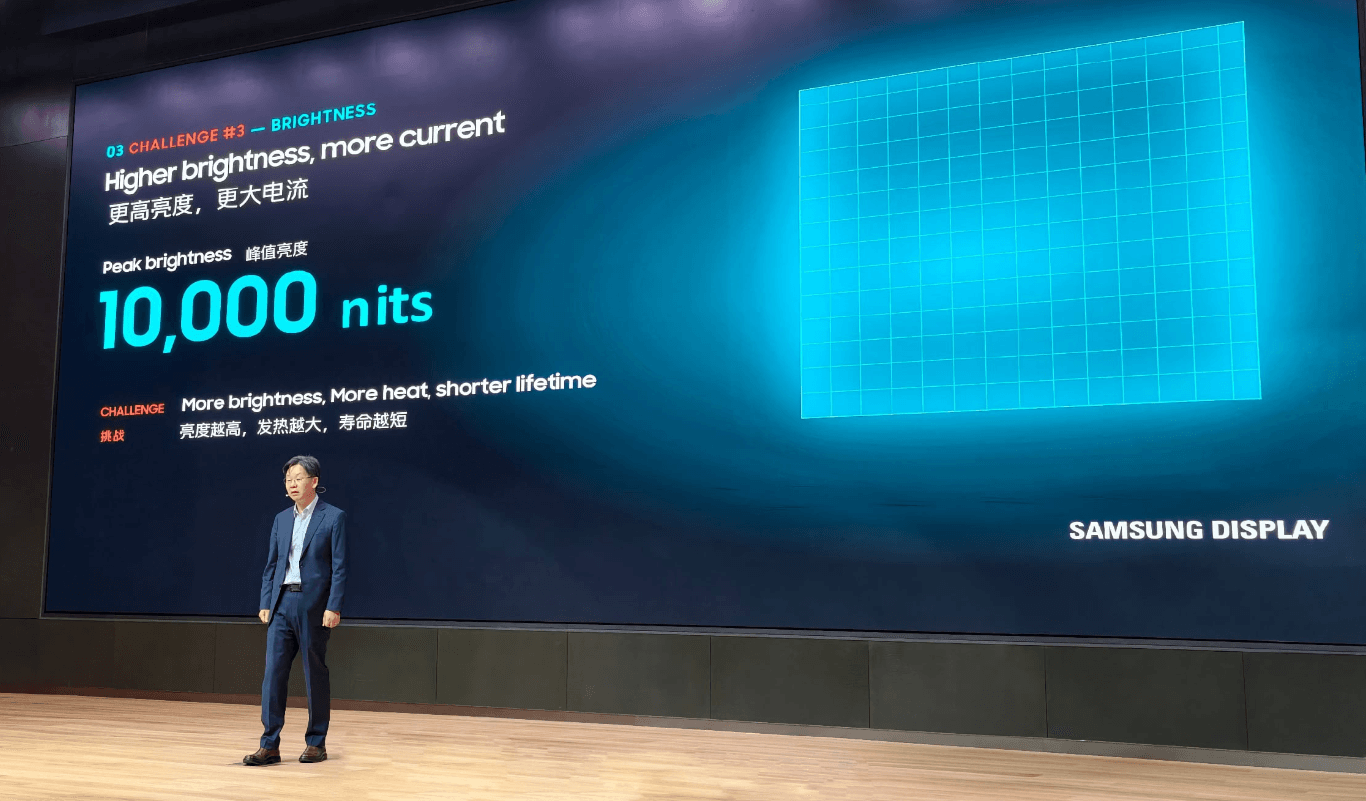
It’s called the M16 OLED display, and although it can only achieve that eye-searing level of brightness in a very small part of the screen – a 1% windows – for a few seconds, it’s still capable of putting out 2,800 nits full-screen brightness. This means it’s almost as bright as Micro LED technology, and way beyond any previous OLED screen we’ve seen so far.
Brightness is all well and good, but OLED displays have already reached a point where they’re basically bright enough for most people’s needs. So long as a phone can be seen outside on a bright sunny day, that’s all you really need. But there are some other interesting developments in Samsung’s new display. For instance, it’s the first to feature the company’s second-generation polariser-free OLED technology, which enables a massive 30% efficiency gain.
Given that smartphone displays are the biggest culprit in terms of battery drain, using far more energy than any single application or process, the M16 should therefore make a real difference in terms of how long you can go without needing to charge the device. There are some trade-offs with this technology, though. The omission of the polariser layer can sometimes result in less-defined contrast, especially in darker scenes.
FlatpanelsHD reported that Samsung Display has already got at least one customer in the shape of Vivo, which plans to use the M16 OLED panels in its upcoming iQOO 16 gaming smartphone. There have been rumours that Apple also intends to use the new panel in its upcoming iPhone 18 Pro and iPhone Pro Max smartphones, but that seems unlikely given that the company has already said that their display specifications are identical to what was found in the iPhone 17 Pro.
Samsung Display’s M16 OLED panels are specifically for smartphones, but there’s a good chance that the company could use some of the same methods employed to achieve such high brightness in its much larger panels for TVs. The company manufactures an entirely different display for televisions, known as QD-OLED, which integrates quantum dot converters for green and red colours. It’s now on its fourth-generation QD-OLED panel, and has significantly increased the brightness with each new iteration.
What’s impressive is the speed at which Samsung Display has managed to advance its OLED technology. It was barely a year ago, in March 2025, when the company announced its first ever 5,000 nit OLED panel, which means it has doubled its brightness in a very short space of time.
If these brightness and efficiency improvements do find their way into larger panels, it’s likely that they’ll come to monitors first of all.
