
Samsung Electronics has unveiled what looks to be its most expansive TV lineup yet.
Announced just before CES 2026 officially opens its doors in Las Vegas later today, the 2026 lineup is headlined by an expanded “Micro RBG” range featuring RGB LED display technology that includes a new, monster-sized 130-inch R95H model. There’s also at least two new OLED TVs to look forward to, plus an upgraded “The Frame” gallery TV and a slate of new Neo QLED TVs with advanced Mini-LED tech.
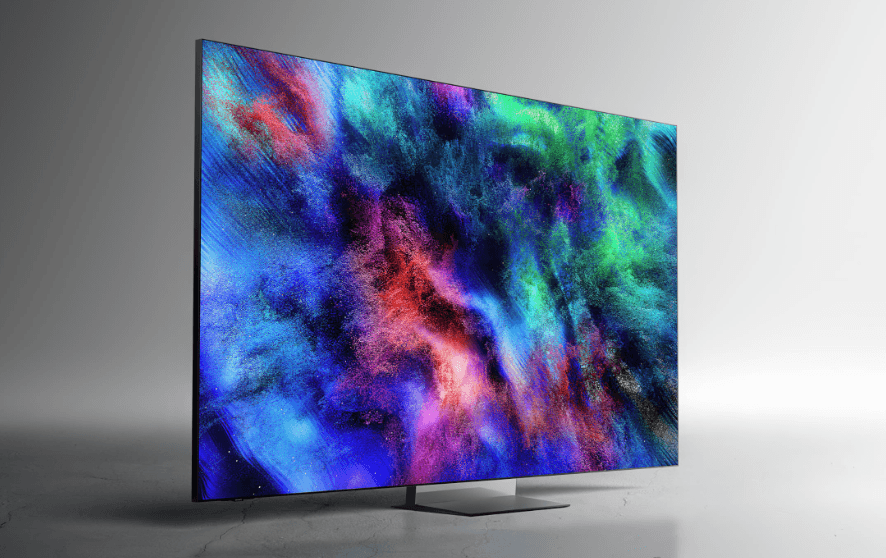
Without doubt though, the star of the show is the Samsung R95H Micro RBG TV, which will be available in 65-, 75-, 85- and an incredible 130-inch size options when it launches later in the year. Samsung said the R95H is a “Wireless One Connect Ready” offering, which means that buyers have the option to purchase a wireless One Connect box when they buy the TV, instead of plugging external media devices directly into its traditional ports on the back.
It’s the world’s first commercially available 130-inch TV and it represents another massive leap in the world of ultra-sized TVs, which are growing ever-larger. It builds on the arrival of the first 115-inch TVs in 2024, a move that was led by TCL and followed almost immediately after by Hisense, which debuted a slightly bigger 116-inch model that same year, followed by Samsung with its own 115-inch model.
Of course, the difference is that the 130-inch R95H TV comes with a super-special RGB LED panel, which is a new display technology that’s superior to traditional Mini-LED, bringing an expanded colour range, superior contrast and higher brightness. Samsung claims it covers 100% of the BT.2020 colour range for HDR. The TV will be powered by an all-new 'Micro RGB AI Engine Pro' processor, and will come with the anti-glare screen coating that’s fast becoming standard on all of Samsung’s higher-end TV models. It will support HDR10+ Advanced and run the Tizen OS platform, and come with many AI features.
In addition, Samsung said it will supply a new “Zero Gap Wall Mount” with this particular model, enabling buyers to fit it basically flush with their wall, if they decide not to use the traditional TV stand.
"Micro RGB represents the peak of our picture quality innovation, and the new 130-inch model takes that vision even further," said Samsung’s EVP of Visual Display Hun Lee.
Buyers may not want to mount the largest model on the wall, though. Unlike the smaller R95H models, the 130-inch version sets itself apart with its “Timeless Frame” design, which looks somewhat similar to the 85-inch Samsung S9 TV from 2013. It’s essentially just a fancy frame instead of a TV stand, inspired by a kind of “grand architectural window,” but it most definitely enhances the overall aesthetic appeal.
“We’re reviving the spirit of our original design philosophy introduced more than a decade ago to deliver an unmistakably premium display, engineered with technology for a new generation," Hun Lee added.
It seems almost guaranteed that TCL and Hisense will look to respond with their own 130-inch RGB LED models in the coming days once CES kicks off properly, but that is not all Samsung has to offer as it tries to assert its dominance of the global TV market. In addition, there’s a second new Micro RGB TV called the Samsung R85H, which will have the same panel and many of the same advanced features, available in 55-, 65-, 75- and either 98- or 100-inch sizes.
Besides Micro RGB, we also have Samsung’s new OLED models to look forward to. We don’t know the full extent of its lineup yet, and there have been rumours that the company could launch up to five or even six models this year, but for now it has confirmed just two. They are the Samsung S95H and S90H. The flagship S95H introduces a metal bezel, which is a somewhat intriguing aspect, given that many TV manufacturers have sought to eliminate bezels almost completely. It’s also a Wireless One Connect Ready model and it also has the Zero Gap Wall Mount as an option. It’ll support refresh rates of up to 165Hz, Samsung said.
The S95H will be fitted a brand new, 2026 QD-OLED panel that’s reportedly capable of hitting 4,500 nits peak brightness, while the S90H looks to be sporting an older panel, though the company said it will still be around 15% brighter than last year’s S90F, which it replaces.
As for Samsung’s 2026 Neo QLED TVs, we have very little details thus far, with just two models announced today. They include the QN80H, which replaces last year’s QN80F and reportedly has more local dimming zones, and the QN70H, which brings enhanced gaming performance thanks to its new Dual Line Gate technology, which cranks up the refresh rate to an impressive 288Hz at the expense of half resolution.
Of note is the fact that Samsung’s QN90F, which was previously its flagship Neo QLED model, does not have a successor. Instead, it’s being replaced by the R85H and relegated to second place, behind the R95H (they’re both LCD TVs).
Elsewhere, there are yet more ultra-large TVs in the shape of the 98-inch QN990H, which is an 8K resolution model, the 100-inch QN80H, 100-inch M90H and 98-inch U9000H. Finally, there’s going to be a 98-inch version of The Frame for the first time this year (but only in the U.S.), the largest available size of its popular gallery TV model, which has gotten yet another upgrade. This year there will actually be two variants of The Frame, with a “Pro” version featuring edge-lit Mini-LED backlights and One Connect box, and a standard model based on a QLED panel, with no One Connect box.
Samsung will break out the specifications and details on availability once CES opens its doors tomorrow, but it has been able to share a few tidbits on some of the new AI features that’ll be making its way to the new TVs.
For instance, the 4K AI Upscaling, Auto HDR Remastering, Adaptive Sound and AI Customization Mode features found on some of last year’s premium models will come to more TVs. There’s also some entirely new features, including AI Sound Controller, which allows users to adjust elements of sound such as the dialogue, music and sound effects individually, and an AI Soccer Mode, which uses algorithms to enhance the picture and sound quality of live football games.
