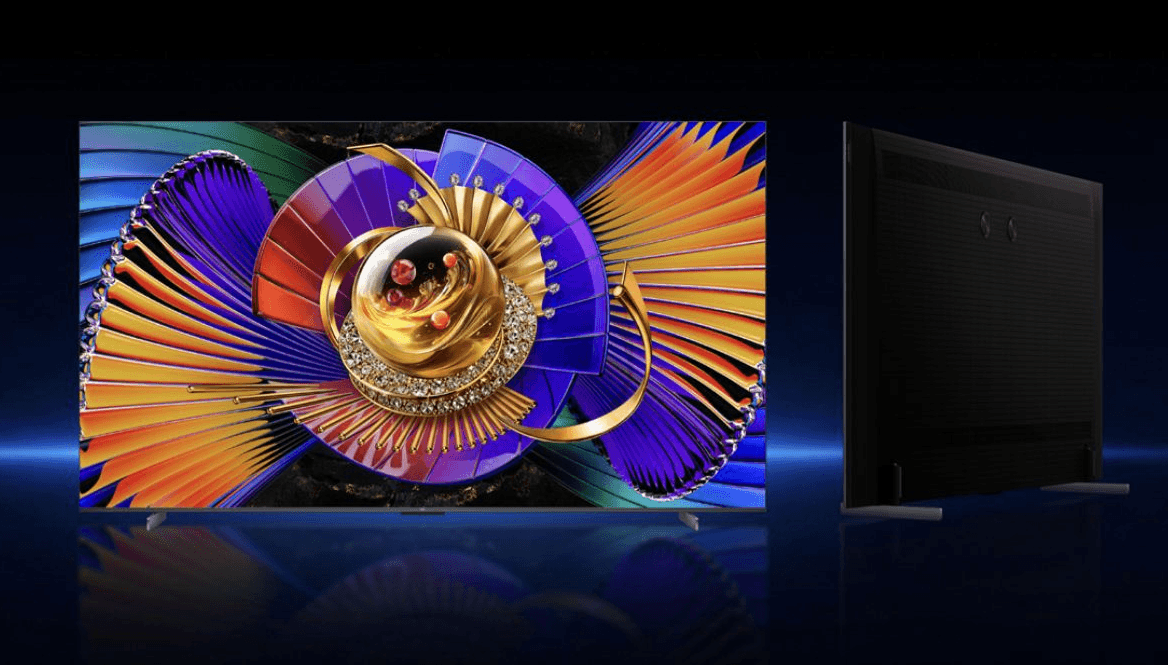
TCL has announced an expanded line up of its “Super Quantum Dots” Mini-LED TVs in China with the launch of the new TCL Q9m Pro SQD Mini-LED and the T7M Ultra and T7M Pro.
The company’s SQD display technology is the real draw, ramping up the brightness and delivering the kind of absolute colour purity that could previously only be found on a professional mastering monitor. SQD is an altogether different display technology that has so far only appeared in TCL-branded TVs. The company positions SQD as a superior alternative to the new RGB LED TVs from the likes of Samsung, Hisense and LG Electronics, and an even more compelling upgrade over standard Mini-LED.
Whereas RGB-LED TVs use separate red, green and blue LEDs in a backlight, TCL’s SQD implements a single-chip “pure white” light source that’s combined with a five-nanometre Super Quantum Dot filter, allowing it to deliver a broader spectrum of colour. According to TCL, it can achieve 100% coverage of the BT.2020 colour space, despite being slimmer and cheaper to build than RGB LED.
TCL argues that, while RGB LED TVs offer similar colour performance, they’re too thick for most consumers’ tastes, more expensive to manufacture and difficult to keep thermally stable, which means they’re probably not as durable over the long term. Traditional Mini-LED displays use blue LEDs and a standard quantum dot film, and though they can achieve high brightness, they sometimes suffer from what’s known as “colour crosstalk,” where the red and blue light bleeds into one another, desaturating images at higher brightness levels.
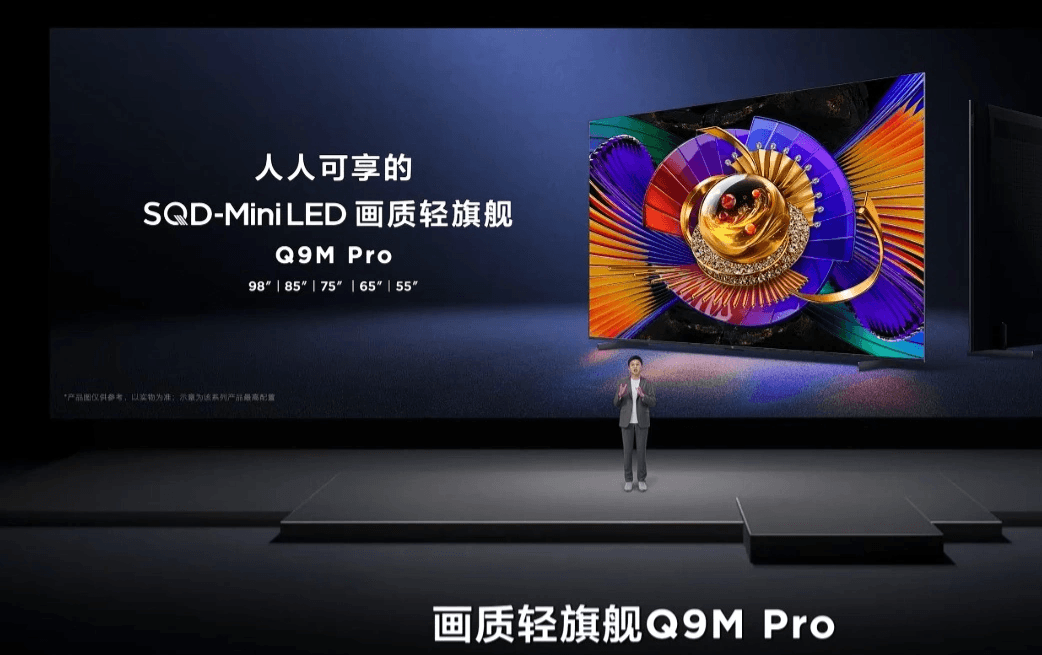
TCL’s flagship SQD TV this year is the massive and stunning X11L, which was first unveiled at the Consumer Electronics Show in January. The TCL Q9M Pro is a step-down model but still very high end, pushing brightness to a blistering 5,000 nits and featuring a blazing-fast 150Hz 4K panel that can be cranked up to 300Hz at lower resolution.
The upgrades to last year’s predecessor, the TCL Q9L Pro, are significant. It’s not just the use of the SQD Mini-LED display, but also the number of local dimming zones. According to TCL, the largest 98-inch model has 3,552 individual zones, while the brightness exceeds its predecessor’s 4,500 nits. That should provide more than enough headroom needed to resolve the brightest highlights in Dolby Vision and HDR10+. There are four HDMI 2.1 ports, and support for VRR and ALLM, which combines with the rapid 300Hz refresh rate to make it “super” gamer-friendly..
Other features include MEMC motion smoothing and AMD FreeSync Premium Pro. TCL said the Q9M Pro will run the company’s Spirit Control System 3.0 software, but this will almost certainly be swapped out (probably for Google TV) if it ships internationally. In terms of sound, the TV has an integrated Onkyo-powered 2.2.1-channel audio system, the same as the one found on last year’s Q9L.
According to the product listing, the TCL Q9M Pro uses the brand’s own Spirit Control System 3.0. Plus, it has the same integrated 2.2.1 sound system from Onkyo as the Q9L Pro. Ports include four HDMI 2.1, and it also supports Wi-Fi 6 connectivity.
The expanded range also includes the T7M Pro (below) and T7M Ultra, which appear to be the company’s first “entry-level” SQD Mini-LED TVs.
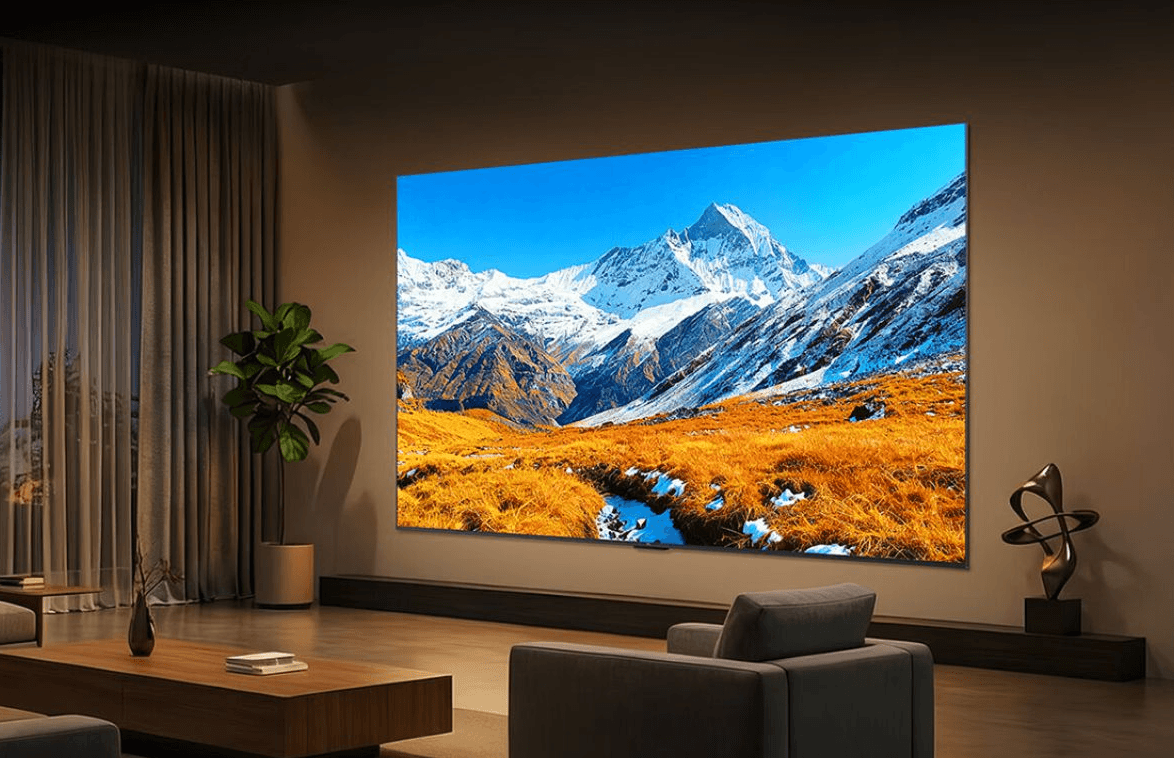
The T7M Pro is really a mid-tier model though, featuring TCL’s new Super Butterfly Wing Star Display technology. It’s an HVA panel that uses a polyimide microstructure to better align the liquid crystals, and the company says this delivers substantially improved native contrast and reduces halo effects. It’s available in five sizes – 55-, 65-, 75- 85- and 98-inches – with the largest model boasting 1,152 dimming zones and a peak brightness of 2,200 nits.
Stepping up in quality slightly, the T7M Ultra (below) offers a more densely-packed backlight that cranks up the brightness to 3,000 nits. While it shares the same 300Hz refresh rate boost (150Hz native) and 100% BT.2020 coverage as the Pro model, it also ups the dimming zone count to 2,200. It’s meant to be a compelling alternative to the Q9M Pro for those whose budgets can’t quite stretch that far.
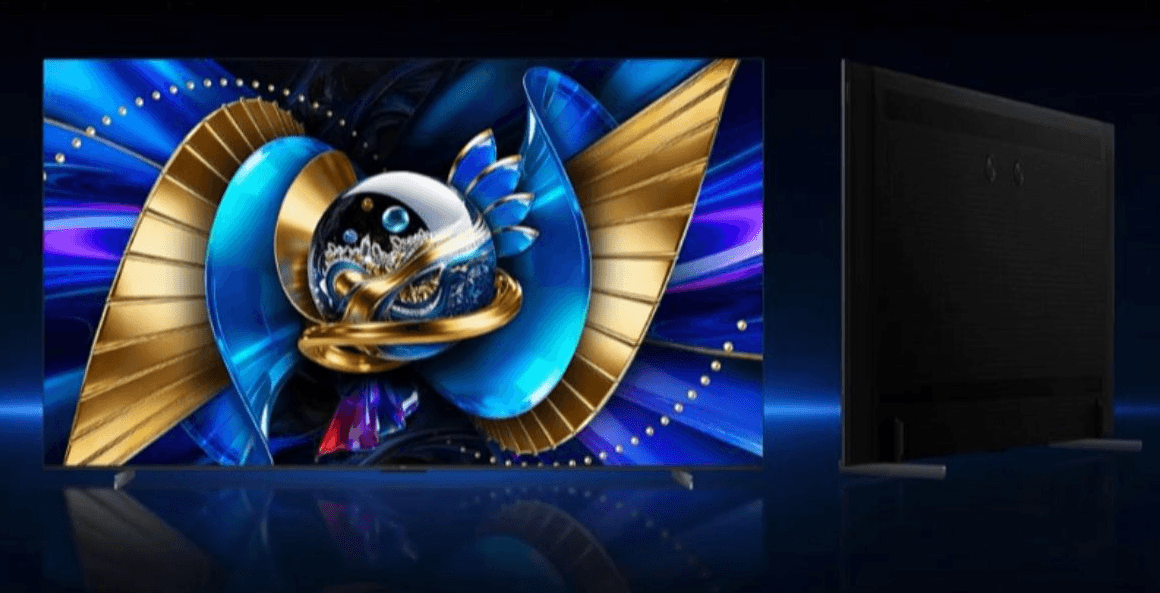
Both the T7M Pro and Ultra feature a 2.1.2-channel sound system, but the company did not mention how many watts of output there are. With regards to pricing, the TCL Q9M is the most expensive option, with prices starting at 6,199 RMB ($891) for the 55-inch model, rising to 19,999 RMB ($2,875) for the 98-incher.
The T7M Ultra is available in four sizes, with the smallest 65-inch version priced at 6,799 RMB and the largest retailing at 15,999 RMB. Finally, the T7M Pro starts at just 6,199 RMB for the 65-inch model, with prices for the larger versions currently undisclosed.
TCL has not yet confirmed, but it will probably launch all three TVs in the U.S. at some point this year, though it remains to be seen if they’ll come to Europe.
