Legendary Japanese TV maker Sony has kicked off the new year with a shocker, revealing that it has signed a deal with TCL to create a new joint venture that will run its TV and home entertainment business going forward.
Under the deal, which is still pending approval, TCL will have majority ownership of the joint venture with a 51% stake, with Sony holding 49% of the shares. The new entity will operate globally, handling every aspect of Sony’s TV business going forward, from product development to design, manufacturing and sales, the companies said.
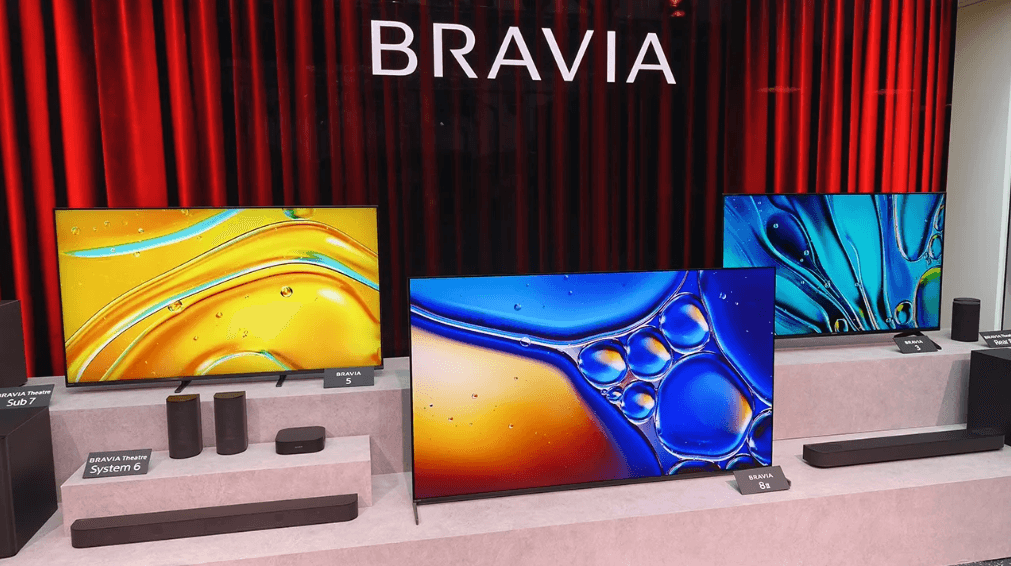
In a statement, Sony confirmed that the agreement covers both its Bravia TV lineup and its home audio equipment, such as its soundbars and external speaker systems. Those products will continue to be sold under the “Sony” and “Bravia” brand names, though we can expect to see them using a lot of TCL’s technology going forward, including displays made by TCL CSOT, which already supplies LCD panels to the Japanese firm.
For now, the deal has not yet been finalised. The companies have signed a memorandum of understanding ahead of a final agreement that’s slated to be ready by the end of March. The joint venture will then begin operating by April 2027, at which point TCL will effectively be steering the ship.
“We are pleased to have reached this agreement with TCL for a strategic partnership,” said Sony Representative Director, President and Chief Executive Kimio Maki. “By combining both companies' expertise, we aim to create new customer value in the home entertainment field, delivering even more captivating audio and visual experiences to customers worldwide.”
Although Sony was quick to stress that the deal represents a “partnership”, the fact that TCL has a controlling stake in the new joint venture is likely to alarm enthusiastic Sony fans, many of whom have been extremely loyal to the brand and swear by its TV technology.
We can’t say we’re too surprised, though. While the announcement will undoubtedly cause ructions in the TV industry, it has been clear for quite a while that Sony had to do something. The Japanese firm has struggled in recent years to compete with serious competition from leaner rivals such as the Korean tech giants Samsung and LG, and Chinese brands such as TCL and Hisense, which have both become juggernauts in the TV business.
We can take some reassurance from the fact that Sony will continue to be involved in the running of the joint venture, at least for now, so this is not a case of another manufacturer simply slapping on the badge of a revered old brand onto its own, inferior products. That's what happened with Toshiba’s TVs, which were once highly regarded but are now just another mid-tier brand that struggles to differentiate itself from legions of others.
That said, Sony has stated that it will definitely be leveraging TCL CSOT’s advanced display technologies in future, along with its global scale and its “end-to-end cost efficiencies” in order to expand the global reach of the Bravia brand and bring them to a wider audience. The implication being that we’re probably going to see a lot more affordable Sony Bravia TV options coming to the market, and perhaps even some budget models. Sony does offer a few mid-range options, but it’s mostly focused on more premium models.
We do think – at least for now – that Sony’s premium TVs will continue to set themselves apart from other high-end TVs, even those made by TCL Electronics itself. The statement also notes that the new company will continue to use Sony's “high-quality picture and audio technology”. This is important, because although Sony hasn’t manufactured its own display panels for years, its flagship Bravia TVs have always incorporated the company’s proprietary picture processing and audio expertise to differentiate themselves from competing models.
Perhaps the biggest concern is the fate of Sony’s OLED TV models, which use QD-OLED and WOLED panels supplied by Samsung Display and LG Display. TCL has long held a strong aversion to OLED technology, and loves to reiterate its belief that Mini-LED panels are superior. It’s the only major TV brand that has never sold an OLED model.
But, some of Sony’s latest OLED TVs have been absolute beasts, with its 2025 Sony BRAVIA 8 II QD-OLED model voted by industry experts as the best television that money can buy during HDTVTest’s annual shoot-out contest.
The Sony Bravia 8 II TV prevailed over some serious competition, including Samsung’s S95F, LG’s G5 and Panasonic’s Z95B, and so winning that title is quite a feat. HDTVTest’s Vincent Teoh explained that it won primarily because of its accuracy in terms of shadow detail and colour reproduction, underscoring the strengths of Sony’s video processing expertise.
We’d be terribly sad to see Sony drop OLED going forward, and with any luck its continued involvement in the joint venture, even if it’s the junior partner, will be enough to ensure it doesn’t always use TCL CSOT’s panels. Perhaps, future Sony Bravia TVs may even make use of TCL CSOT’s new inkjet-printed OLED displays, if the company decides to start producing larger panels.
