
Asus has announced the imminent arrival of its ProArt Display PA32KCX professional monitor, which is believed to be the first 8K display of its kind that also supports high dynamic range content. By all accounts, it’s a beast of a display, with a 10-bit IPS LCD Mini-LED panel, 4,032 local dimming zones and 1,200 nits peak brightness.
While 8K TVs have been around for a few years already, they have hardly captured the imagination. Very few people own one, partly due to their high price, but mostly because of the fact that there’s very little native 8K content to watch on them. One reason for this is that creators don’t have the proper tools to create films and shows in 8K resolution, but Asus is now providing that.
The Asus PA32KCX is not the first 8K monitor. In fact, Dell launched one way back in 2017, but it is the first to support HDR, which is something that should make it pretty special.
Another special thing is that the 7,680x4,320 resolution means that it boasts more than 33 million pixels spread across its 32-inch display. So this monitor should be able to reproduce extremely fine details for professional applications, videos and photos, which makes it a very useful tool for filmmakers, colourists and other content creators.
Asus said the Mini-LED technology in the PA32KCX has been tweaked for enhanced performance, with multiple control integrated chips that independently manage the local dimming zones. This should help to reduce on-screen flicker during transitions to help ensure sustained high brightness.
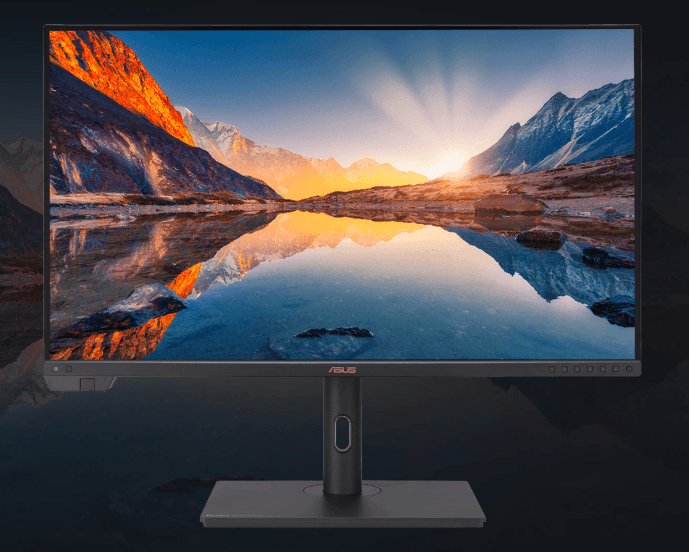
All told, peak brightness hits 1,200 nits, with Asus claiming an industry-leading 1,000 nits of full-screen “sustained brightness”. According to the company, this means it should display “outstanding contrast between the deepest blacks and gleaming whites.”
Other specifications include 97% coverage of the DCI-P3 colour gamut and 99% coverage of AdobeRGB. The display has been pre-calibrated too, and also supports further tinkering with Calman software and Light Illusion, using an integrated sensor.
Asus also talked about its new LuxPixel technology, which is an anti-glare, low-reflection coating on the display that enables a kind of “paper-screen” effect. It’s different from traditional matte displays that sometimes soften the images too much, and aims to minimise reflections while keeping the colours and details more accurate and sharper, the company said.
As mentioned, what really sets the Asus PA32KCX apart from the competition is its HDR capabilities. The company said it supports Dolby Vision, HDR10 and HLG content. With its 4,032 local dimming zones, that means each one controls around 8,200 pixels, which makes it far more precise than most Mini-LED TVs, even the more premium models. So it certainly sounds as if it should be able to handle HDR pretty well.
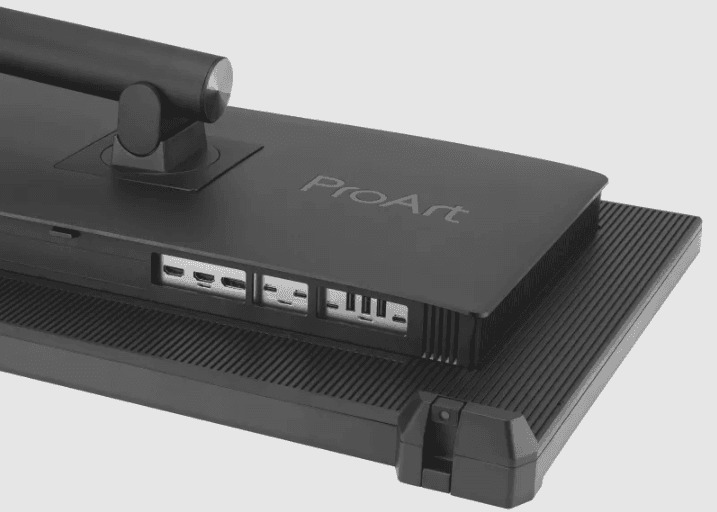
On the back of the monitor, users will find an array of ports, including two HDMI 2.1, a single DisplayPort 2.1, Thunderbolt 4 (which delivers 96-watts of power) and a USB 3.2 hub.
That said, numerous earlier monitors with IPS LCD displays have featured plenty of dimming zones, yet their HDR picture quality isn’t that great. There’s something about LCD that just doesn’t quite match the HDR you see on OLED displays with their true blacks, and so it’s not clear how good the PA32KCX’s HDR quality will really be. While we can be optimistic, it’s necessary to wait and see.
In any case, it’s a high quality monitor that will hopefully get plenty of creators interested, and perhaps lead to a bit more 8K content being made, which can only be a good thing. One thing we don’t know yet is the price, but it’s almost certainly going to be a big number.
We won’t have to wait long to find out. Asus said the PA32KCX will go on sale later this month.
