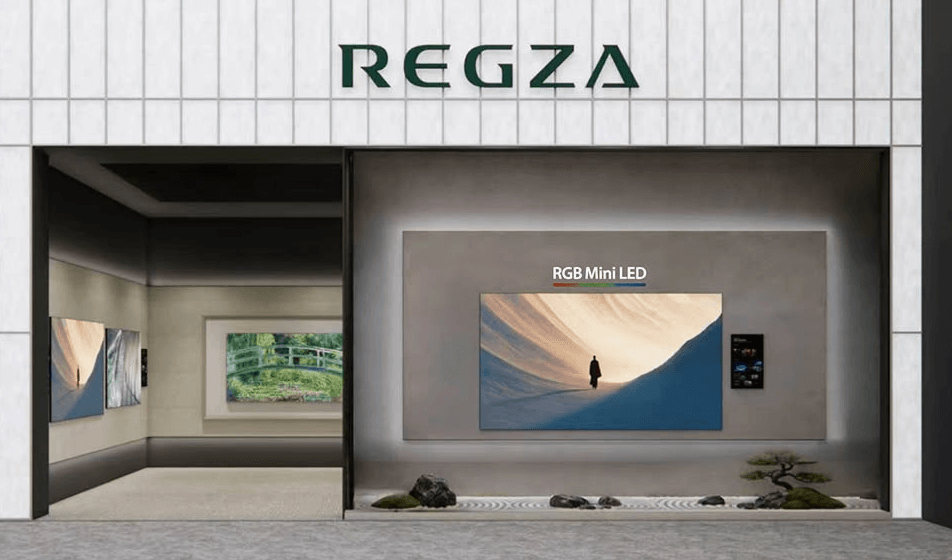
REGZA, the TV brand operated by Toshiba and owned by Hisense, took to the stage at IFA 2026 to showcase its most advanced TVs to European audiences for the first time, with its own take on RGB LED being the centrepiece exhibit.
The company unveiled its flagship REGZA ZX RGB Mini LED TV, which uses independently controlled red, green and blue light sources, which also has separate specialised chips for image and audio processing.
The REGZA ZX is based on Toshiba’s RGB Mini LED display technology, which follows a similar architecture to the RGB LED displays we’ve seen on TVs from brands like Samsung, Sony, Hisense and TCL. That means that rather than using a conventional white-light source and colour conversion, as Mini-LED does, it has individual red, green and blue pixels that all emit their own coloured light. According to REGZA, this enables it to achieve much higher colour accuracy and more precise control over colour reproduction on screen.
According to the company, this enables it to achieve colour purity of close to 100%, while covering an impressive 110% of the BT.2020 colour gamut, making it ideal for HDR content.
The two-chip setup is also worth mentioning. The REGZA ZX, which weighs in at an impressive 116-inches, features the ZRα AI processor for picture processing tasks and a separate BRα AI chip for audio. According to REGZA, this means picture and sound signals can be optimised independently before being merged into a coordinated audiovisual experience, where the on-screen action perfectly matches the sound. Audio is further enhanced by Toshiba’s Rocket SOUND Ultra technology, which is the latest version of its Rocket Speaker concept.
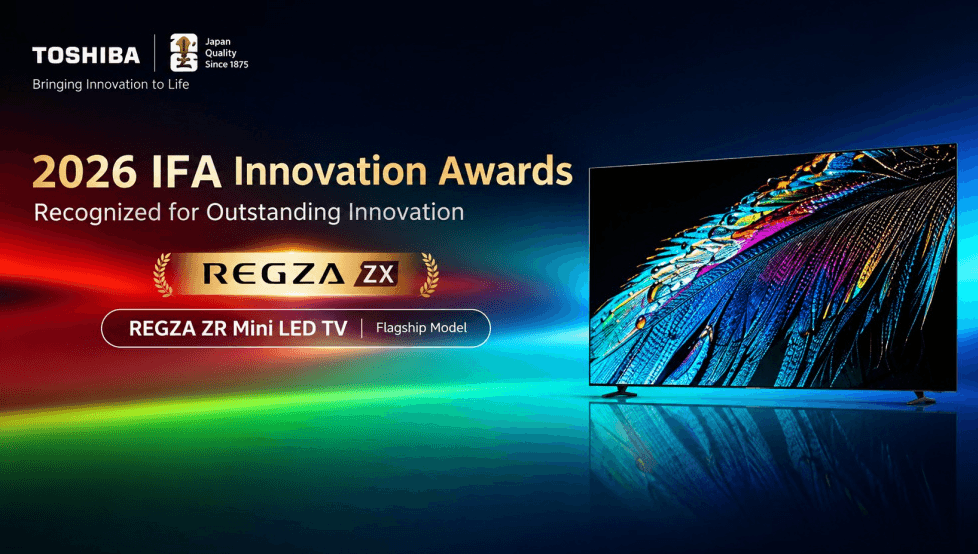
The company did not specify how bright the TV is or how many local dimming zones there are, instead focusing on its calibration technique, which uses over 1,000 colour management profiles and 4,000 tuning parameters. It also relies on AI to do the actual processing, while human experts perform adjustments too, to ensure the picture is just right.,
The REGZA ZX claimed an IFA Award at this year’s event, But it's unclear if the TV is ever going to go on sale in Europe. It’s an existing model that launched earlier this year in Toshiba’s home market of Japan, and later debuted in China, where Hisense is based. Hisense acquired the REGZA brand after buying Toshiba’s TV business, Toshiba Visual Solutions, in 2017.
REGZA also had some other TVs on show at IFA, including what it said was a 85-inch concept Mini-LED model featuring its most advanced REGZA ZR technology, which enables “Realistic Sunlit Scene Reproduction.”
REGZA’s ZR technology relies on the company’s ZRα AI processor to analyse scenes in real time, enabling it to detect sunlight and other strong light sources, the company explained. When it detects light, it will apply more precise controls to the brightness and highlight contrast, ensuring that the image preserves texture and detail without bleaching them out in white. It also reproduces natural glare, light distribution and depth, making such scenes feel much more realistic, as if you’re basking in natural sunlight.
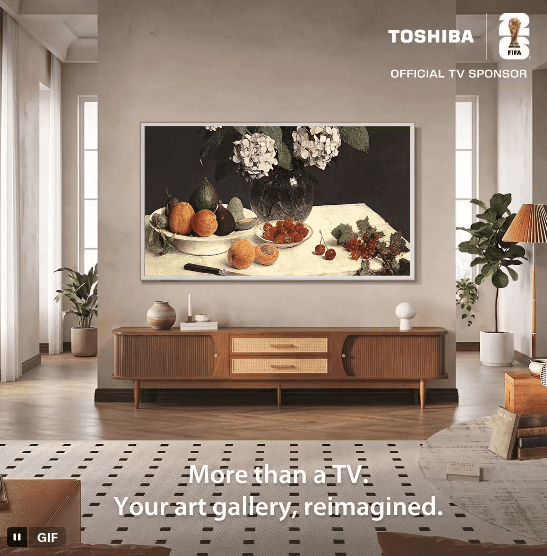
Another REGZA TV that got our attention was the REGZA ArtVision G700S, which is the company’s take on the gallery TV concept popularised by Samsung’s iconic The Frame TV. It features a matte display with an anti-glare and anti-reflective coating to ensure that the artworks it displays in Art Mode look more natural, like a real painting would. The company claims you’ll enjoy art with “museum-like visual quality.”
Finally, the company showcased two models that it said are aimed at the “global markets,” so these are the ones we’re most likely to see end up in the U.K. when the brand finally makes its European debut. They include the 100-inch Z670S QLED Mini-LED TV and the 85-inch Z570S QLED model.
With the emergence of OLED and RGB LED, we can’t describe the REGZA Z670S as a premium model, but it’s definitely a contender for the top-end when it comes to Mini-LED. It boasts quantum dots and full-array local dimming with its miniature LEDs to deliver rich colour, deep contrast and eye-searing brightness and features the company’s REGZA Engine ZRi chipset, which uses AI to analyse the picture and sound. The display boasts a 144Hz refresh rate and supports Dolby Vision HDR, while sound is enhanced by Eilex PRISM technology and supports Dolby Atmos.
As for the Z570S, this is a more affordable yet still pretty big screen option that features QLED colour and the same chipset as the Z670S, but lacks the Mini LEDs. Instead of that, it boasts “Mini Dimming” that helps to improve the level of detail across bright and dark scenes, while its 144Hz panel should ensure it delivers a nice gaming experience, too.
There’s no word on when these models will debut in Europe or what we might expect to pay, but we do imagine that REGZA is clearly interested in testing the waters. Expect to see more REGZA TVs in Europe in the years to come.
