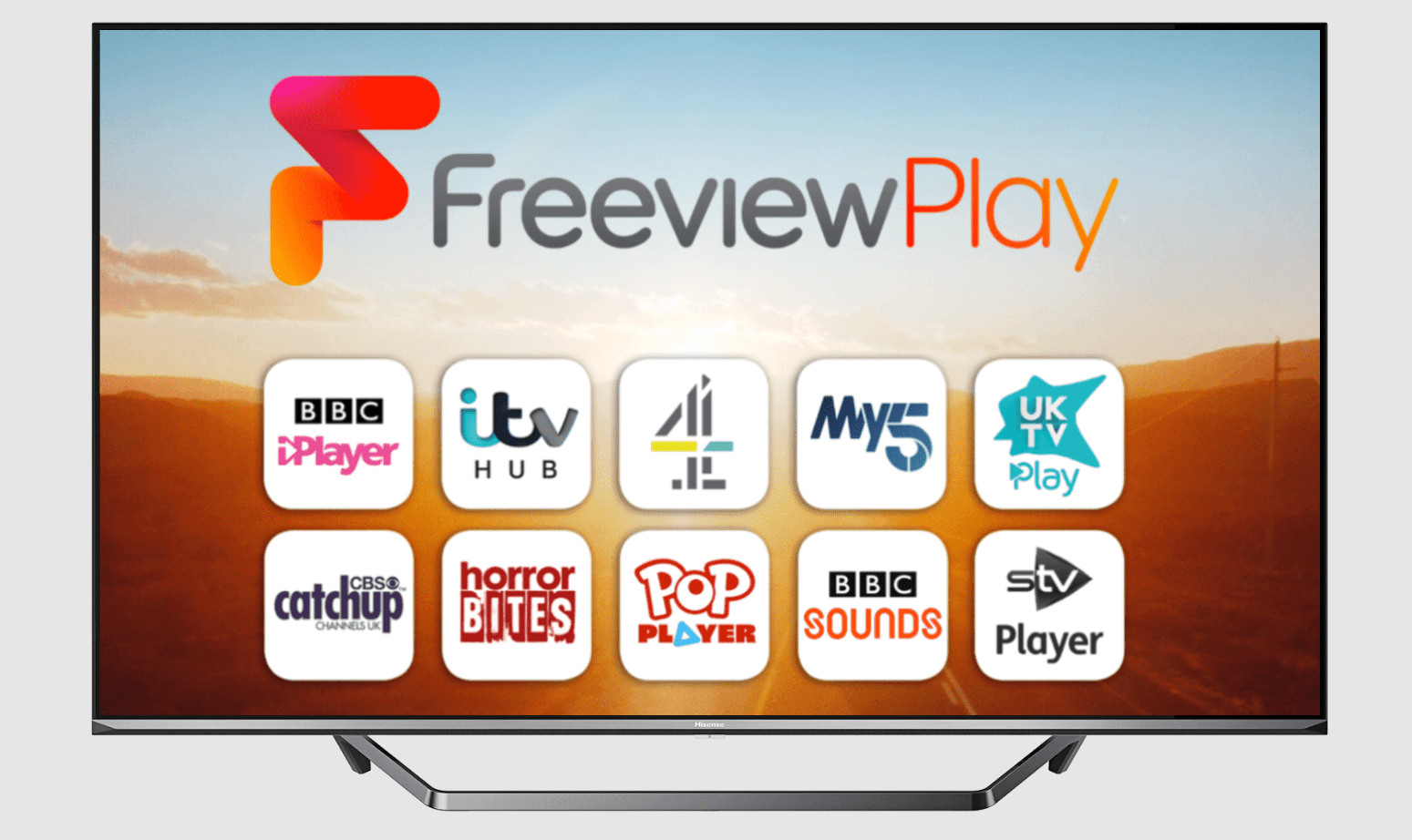
The Freeview Play and Freesat services have become two of the most popular TV offerings in the U.K. in recent years, offering free access to content from the BBC, ITV, Channel 4, Channel 5 and many others. So it would likely be a bitter blow to many if the government decides to shut them down.
But unfortunately, such an idea appears to be in the pipeline. According to a report from Cord Busters, ministers at Whitehall have authored a new green paper – a document that sets out a proposal for new government policy – on what kind of impact phasing the services out would have. The report adds that both Culture Secretary Lisa Nandy and Technology Secretary Liz Kendall have signed off on the paper, which means a full proposal is coming next.
Most people in the U.K are aware of Freeview, which is built into many TVs and also accessible via a kind of set-top box. It gets its content the old-fashioned way via the TV’s aerial. Meanwhile, Freesat uses a satellite dish that has to be purchased, though the service itself is free. The great thing about both is that they provide access to tons of content and don’t require an internet connection.
So why is the government believed to be plotting their demise? Well, it seems that the U.K broadcasting industry is making a concerted effort to try and push everyone to streaming services instead of terrestrial or satellite airwaves.
Lately, the BBC, ITV, Channel 4 and Channel 5 have all been pushing the alternative Freely service extremely hard. Freely was launched by a consortium of Britain’s four biggest broadcasters, called Everyone TV, back in 2024, and it has since become the country’s fastest-growing TV service. Like Freeview and Freesat, it provides the same free access to the same content, and throws in another 60-odd live TV channels on top of that. It boasts more than 75,000 hours of on-demand content from services like BBC iPlayer and ITVX.
While Freely is going to be a capable replacement for those can access it, there is the obvious concern that not everyone can access it yet. Unless you’ve purchased a new TV recently that comes with the app pre-installed, it’s likely to be unavailable on your existing living room screen, which would necessitate buying a separate set-top box such as Manhattan’s Aero 4K TV Streamer.
In addition, cutting off Freeview and Freesat could leave any homes still without a Wi-Fi connection without any sort of broadcast entertainment. According to data from Ofcom, roughly 5% of the U.K. population does not have internet access at home, with many of those saying that they can’t afford a broadband connection.
The good news is that these people will have time to get their houses in order. Under current legislation, traditional TV broadcasts are mandated to continue until at least 2034. Moreover, Cord Busters says that the government must satisfy a number of conditions before it can eliminate Freeview and Freesat, including the stipulation that “superfast broadband is available across the entire U.K. at affordable prices.” It must also set up subsidies for households that cannot afford broadband.
So with any luck, this means that the government will at least make sure that no one is going to be left without a source of homegrown TV content by the time it does kill off the Freeview and Freesat services.
