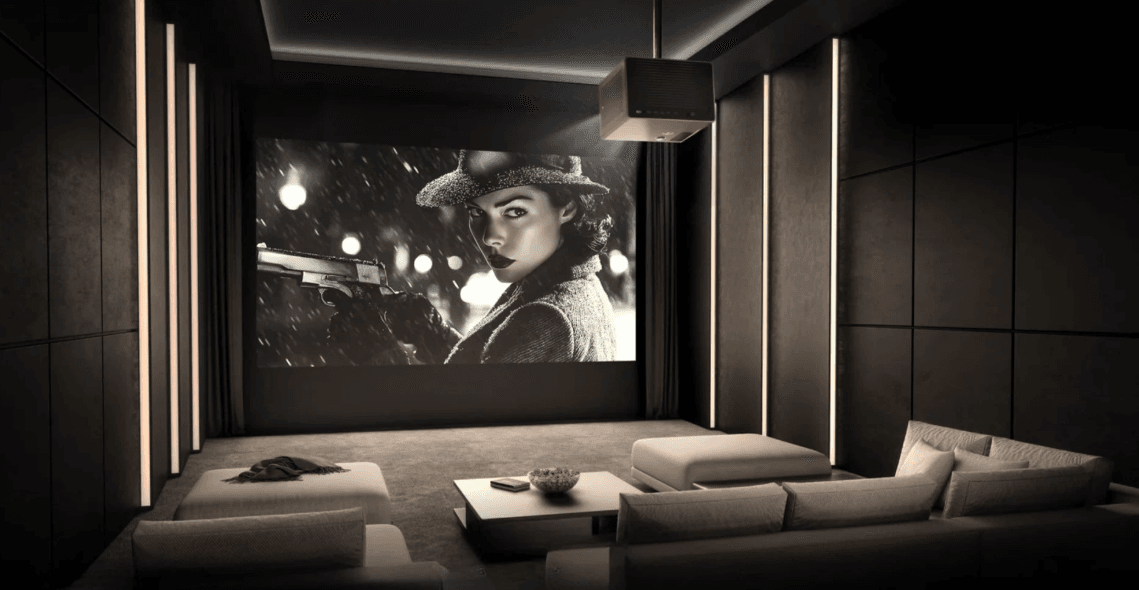
Hisense’s flagship XR10 tri-laser projector was first showcased at CES 2026 in January, and it caused a ton of excitement with its 300-degree visuals and eye-blistering 6,000 lumens of brightness. It’s an absolute beast in so many ways, and we now know much more about it, including its price.
Unlike other projectors that can throw up massive 300-inch images, the Hisense XR10 doesn’t require a much smaller picture to get the best quality picture, for it can deliver super-sharp visuals even at that mammoth size. Of course, it can still scale down to just 65-inches if you’d prefer, but there’s definitely much more wow factor the bigger you go.
It’s a movie-throwing monster without doubt, housed in a compact, cube-like chassis that’s more similar to the company’s M-Series and C-Series projectors. But what really sets it apart is its “premium laser performance” that aims to rival big-screen TVs such as the 136-inch MX Series MicroLED or the 116-inch RBG-MiniLED TVs, which were also on show at CES. The XR10 does this due to its “dual triple-laser light source”, which means you get two RRGB beams of light, merged together, to deliver that peak output of 6,000 ANSI lumens.
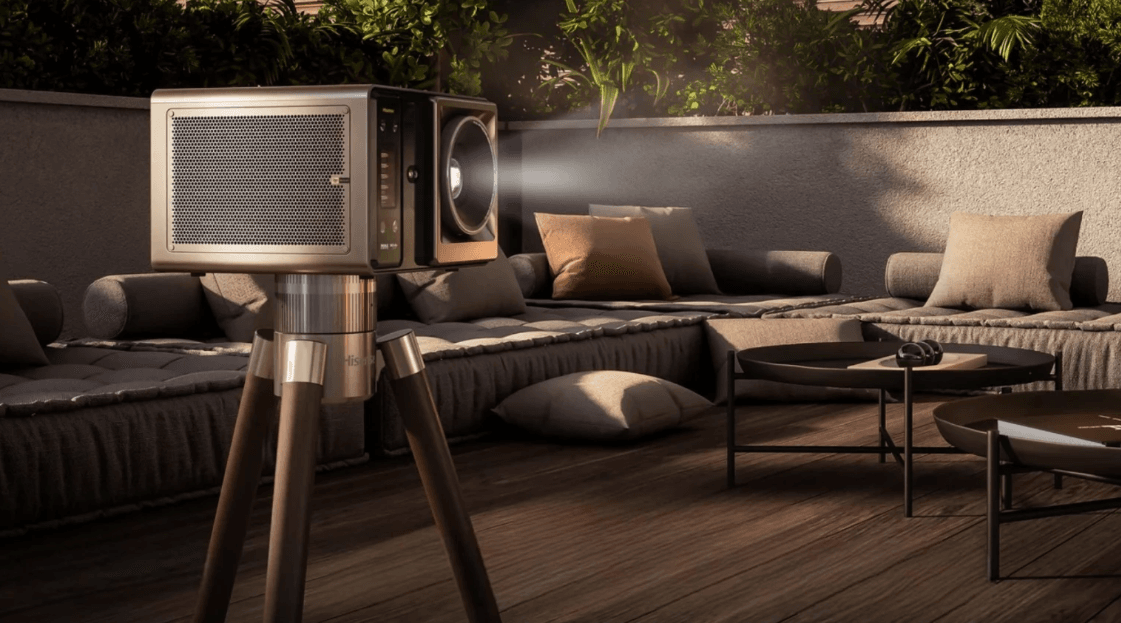
It’s so incredibly bright that you could probably still get a decent picture outside on a bright sunny day, though we’re yet to put that to the test. But Hisense is confident that it’ll certainly look the part in someone’s living room at any hour of the day, promising crystal-clear content always.
Hisense said there are 2.39x optical zoom and lens shift adjustment features that users can obtain a great picture regardless of where the projector is placed, and there’s an integrated single-tube, dual-channel liquid cooling system to ensure the device always runs cool.
Other premium features include a seven-level iris adjustment that enables you to fine-tune the light and dark colours via its 17-element optical lens, which is an industry first. There’s a 6,000:1 native contrast ratio that goes up to 60,000:1 dynamic. Dolby Vision, HDR10+ and IMAX Enhanced content are all supported, and the colour saturation is so extreme it covers a whopping 118% of the BT.2020 colour space, meaning almost unprecedented HDR performance for a projector. Hisense’s promise of "stunningly vivid colours, deeper contrast, and ultra-realistic details” carries a lot of weight.
The company has chosen to ditch the Google TV platform that appears in the majority of its TVs in favour of its own Vidaa smart TV operating system, but that’s maybe not terrible news. Vidaa is a pretty mature platform these days, and has access to all of the major streaming apps, plus quite a lot of others. Connectivity comes in the shape of an Ethernet port, Wi-Fi 7 and Bluetooth 5.4, and Airplay 2 or Miracast enable easy screen mirroring from a smartphone.
The XR10 should also be an amazing gaming companion, with its HDMI 2.1 ports that support ALLM, eARC and CEC – though it did not mention anything about refresh rates. But still, 300-inches…
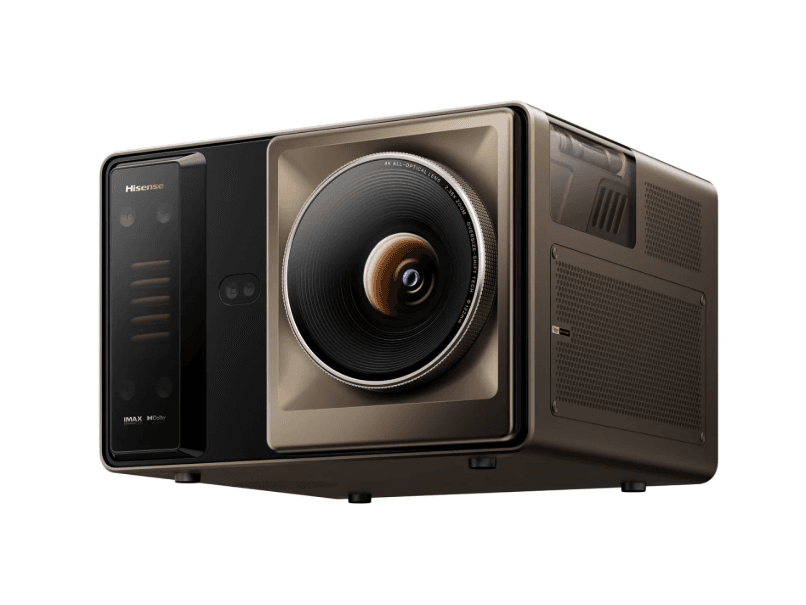
In terms of sound, Hisense has partnered with Devialet on the integrated 2.1-channel sound system, while there’s a “sonic signature” fine-tuned by Opéra de Paris to add more depth and detail, the company said. The audio system is made up of two 8-watt drivers and a 15-watt sub, so that adds up to a total 31-watts of output, and Dolby Digital and DTX Virtual:X surround sound are supported.
As for the price tag, just beware that such amazing features don’t come cheap. Hisense is asking for an eye-watering $6999.99 to take home this beauty, though if U.S. customers pre-order it now, they can save a staggering $1,700. Not a bad discount.
In addition, early birds will also get a free HT Saturn 4.1.2-channel wireless home theatre system thrown in. Normally, that costs $1,300, so altogether they’re saving a hefty $3,000 compared to buying the projector plus the sound gear later on.
