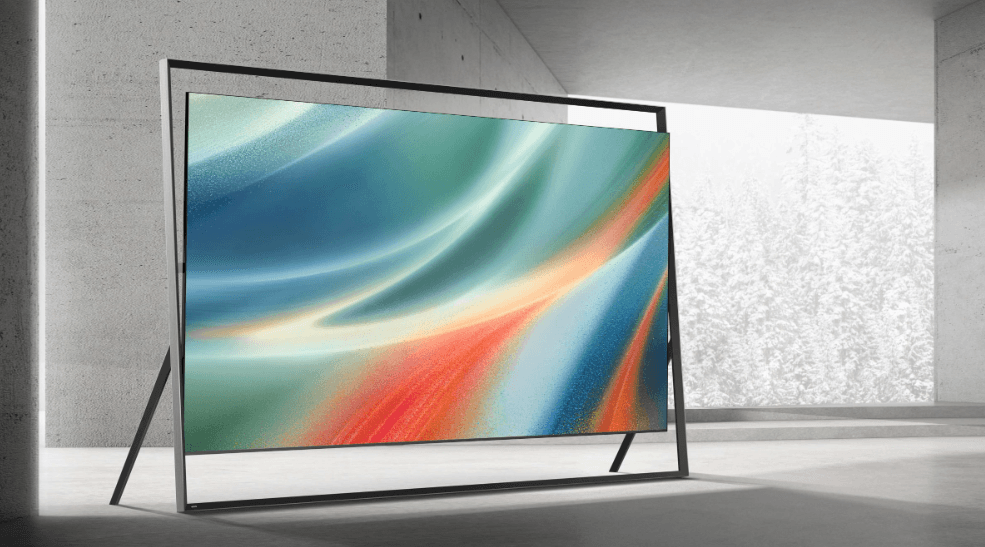
Consumer TVs have been getting bigger and bigger over the last few years, and Samsung Electronics is planning to up the stakes when it launches its first 130-inch model later this year. But if you’re thinking about going larger than ever, be warned that you’ll have to pay a pretty penny for the privilege.
That’s according to the latest TV price tracker from Counterpoint, which says that the production costs of 130-inch LCD panels in China are currently about 50% higher than the price of the 116-inch panels already on the market. The cost of the panel is the most significant factor in a TV’s overall price, so clearly, you’re going to have to fork out quite a bit more if a 116-inch screen doesn’t cut the mustard.
“In 2026, a 130-inch UHD LCD module will cost nearly 1.5x the cost of a 116-inch UHD LCD module,” the analyst firm wrote. “These sizes are used for flagship models with new technology such as RGB MiniLED.”
It’s disappointing news for anyone who might have been hopeful that Samsung’s upcoming, monster-sized, 130-inch R95H Micro RGB TV might be within the realms of affordability. The R95H, which will also be made in 65-, 75- and 85-inch sizes, was one of the stars of the show at CES 2026 last month. It’s set to become the world’s first commercially available 130-inch TV and it represents another massive leap in the world of ultra-sized TVs, which are growing ever-larger. It builds on the arrival of the first 115-inch TVs in 2024, a move that was led by TCL and followed almost immediately after by Hisense, which debuted a slightly bigger 116-inch model that same year, followed by Samsung with its own 115-inch model.
Some may have hoped that the 130-inch version of the R95H wouldn’t be so expensive, because prices of ultra-large TVs have declined quite a bit in the last couple of years. The TCL X955 Max was initially priced at around $20,000, but by the end of last year it was already retailing for less than half that original price.
Sadly, Counterpoint’s research suggests that prices of 130-inch TVs are likely going to remain above the $15,000 mark into next year, regardless of the brand. Samsung’s model will probably come with a premium, not only because it’s paired with the RGB LED backlight, but also because… well, it’s a Samsung TV. But even if TCL and/or Hisense launch a 130-inch model, it’s going to be pricey, simply because they have to pay for the panel.
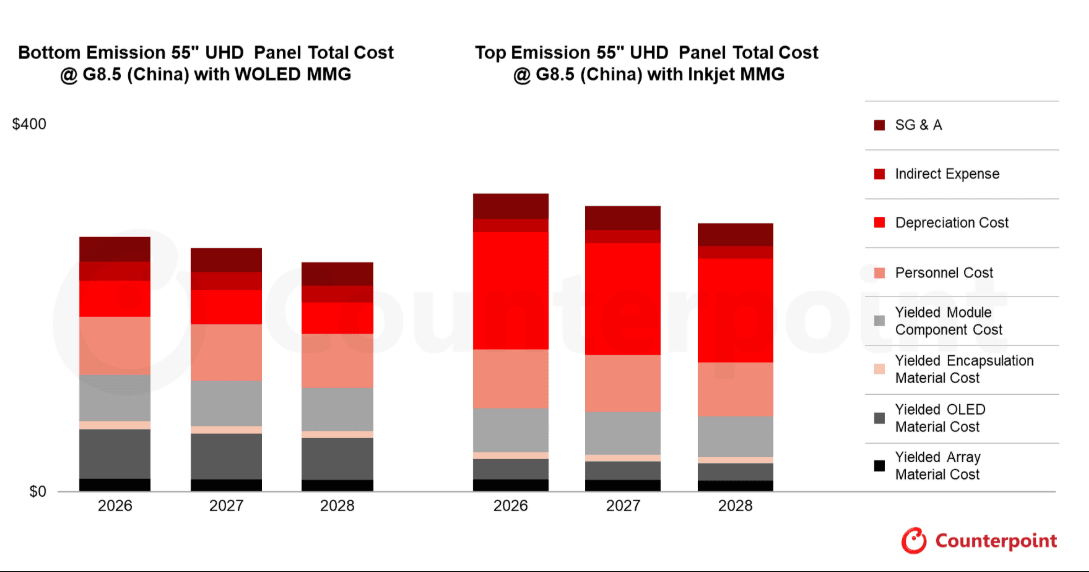
There is good news on the OLED front, at least. Counterpoint said the price of OLED panels, especially those of the WOLED variety made by LG Display, continue to decline as a result of the amortization of factory construction costs. On the other hand, Samsung Display’s QD-OLED panels cost around 65% more than WOLED.
The research firm also provided an estimate on TCL CSOT’s upcoming inkjet-printed OLED panels, which are expected to compete with LG Display’s and Samsung Display’s products. Initially, they’ll probably cost more than WOLED to produce, but less than QD-OLED. Over time they’re likely to become cheaper than both, however.
Sadly, you probably won’t be able to buy a 130-inch OLED TV anytime soon. The largest OLED panel is currently LG Display’s 97-incher, which debuted several years ago. Neither LG nor Samsung has made noises about going even bigger. The biggest QD-OLED panel currently available is just 83-inches.
