OLED displays are likely to get much cheaper in the coming years thanks to the emergence of inkjet-printed panel manufacturing techniques that dramatically reduce production costs, according to a report by Omdia this week.
The report says that OLED display panels for laptops, tablets and, ultimately, even televisions may become much more affordable as a result of this development.
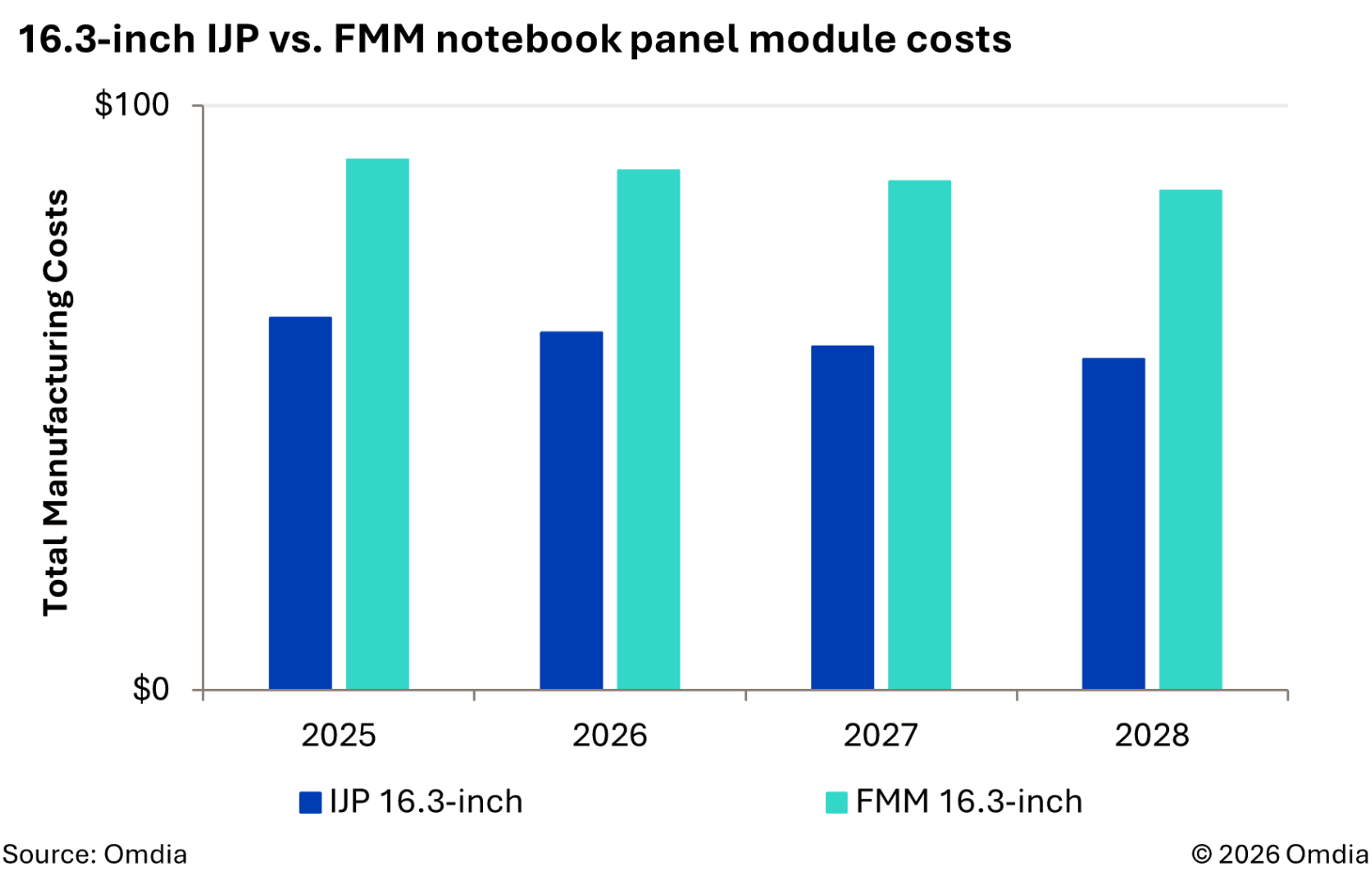
At present, most of the world’s OLED displays are made by LG Display and Samsung Display, which both use a “fine metal mask” or FMM technique to manufacture their panels. Omdia says FMM costs are getting lower with each year, but the process is still much more inefficient compared to the inkjet-printing technique that’s now being scaled up by Chinese firms such as TCL CSOT and BOE Technology Group. As a result, inkjet-printed panels are expected to cost between 30%-35% less than FMM panels.
The difference stems from the way the OLED pixel materials are affixed to the panels. With FMM, they’re basically sprayed onto the panels, using a kind of stencil, which results in a lot of waste. Inkjet-printing, on the other hand, is much more precise, meaning much less waste.
The lower costs are good news, because OLED displays at present are vastly more expensive than LCD panels, which is why most OLED televisions and monitors are considered to be premium products. However, inkjet-printing is still a very new technology, and neither TCL CSOT nor BOE have yet managed to manufacture their OLED displays at the scale necessary for mass commercialisation.
TCL CSOT is hoping to change this, however, and is reportedly making good progress at its new 8.6-G OLED plant that opened last year. Originally, it was thought that the facility wouldn't start mass producing OLED displays until late 2027 at the earliest, but a report in March said that the company is now well ahead of schedule. Its first ever OLED display is expected to be a new 27-inch, 120Hz 4K resolution panel based on an RGB-stripe pixel architecture. Designed for monitors, it’s expected to go into mass production at the end of July, that report said.
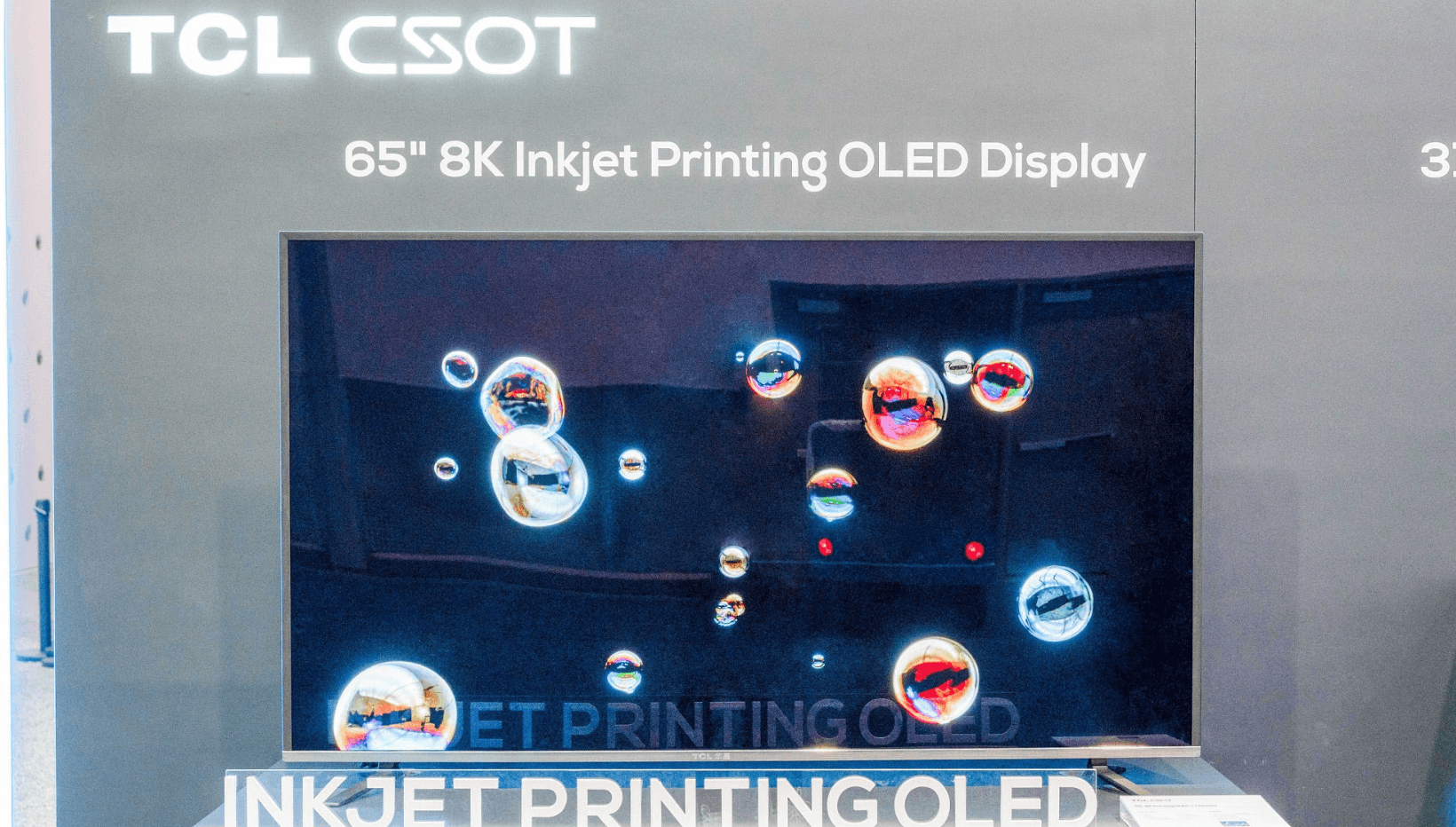
That means lower cost OLED panels for monitors and notebooks look to be a sure thing in the next year or so, but we may have to wait a little longer before we start seeing cheaper OLED TVs. While TCL CSOT has shown off some concepts of inkjet-printed OLED panels for TVs – most recently a 65-inch display that was on show at SID Display Week this week – it does not have any plans to mass produce them at this stage.
However, the prototype panels suggest that the company most definitely is thinking about making such a move, and it seems reasonable to think it could do so before the end of the decade, especially given its rapid progress thus far.
