Panasonic has just announced its 2026 TV lineup, but barely anyone is paying attention to what’s in store this year, because the company also dropped a bombshell – it’s entering into a strategic partnership with China’s Skyworth, which will effectively take over the Panasonic TV brand going forward.
The legendary Japanese brand’s TVs will be very different going forward, because Skyworth will take over the manufacturing, sales and marketing operations. That said, they’ll still carry Panasonic’s branding, and the company’s experts will continue to assist in their development, so hopefully there won’t be any impact on the quality of its future TVs.
The announcement comes hot on the heels of Sony’s partnership with another Chinese TV maker. In January, Sony revealed it’s creating a joint venture with TCL, in which it will hold a 49% share. TCL will manufacture Sony’s TVs going forward, but just as with Panasonic, Sony will continue to play a role in their development and, hopefully, ensure that they’re still “real” Sony televisions.
“Under the agreement, the new partner will lead sales, marketing and logistics across the region, while Panasonic [will] provide expertise and quality assurance to uphold its renowned audiovisual standards with full joint development on Top End OLED models,” Panasonic promised.
The announcement is not that surprising, and not only because of Sony’s recent decision. Panasonic flagged that its TV business was in trouble last year, when it said it was looking at “strategic options,” including the possibility of selling it entirely.
Panasonic isn’t selling its TV business, but it is definitely giving up a large part of it, and the development seems to mark the end of an era. After Sony’s decision to partner with TCL, Panasonic was the last major Japanese TV brand standing, but it didn’t stand alone for very long. Other legendary Japanese brands, such as Sharp, Toshiba and Pioneer have long since exited the TV business. Panasonic and Sony managed to keep going for longer due to their focus on premium products, but even with rave reviews and higher price tags, their TV operations weren’t sustainable amid growing pressure from their South Korean and Chinese rivals.
Panasonic does sell much cheaper TVs, but these mid-range and entry-level models are outsourced to various companies, which simply slap on the “Panasonic” badge.
Panasonic’s OLED TVs have long been standouts, consistently ranking among the best in HDTVTest’s annual TV shootout, where they’re pitted against rival OLED TVs from Sony, Samsung and LG Electronics. They’re extremely popular, and so there’s going to be a lot of interest in what happens next.
The good news is that Panasonic will likely continue to produce new OLED TVs going forward. Skyworth is the world’s third-biggest seller of OLED TVs after LG and Samsung, though most of its sales are in its home market. Critically, it sources its OLED panels from LG Display, the same supplier used by Panasonic. Going forward, we can expect future Panasonic OLED TVs to use the same panels, and they’ll continue to be designed by Panasonic’s engineers, with Skyworth’s manufacturing operation handling the production and distribution. With any luck, they’ll continue to be among the best OLED TVs around.
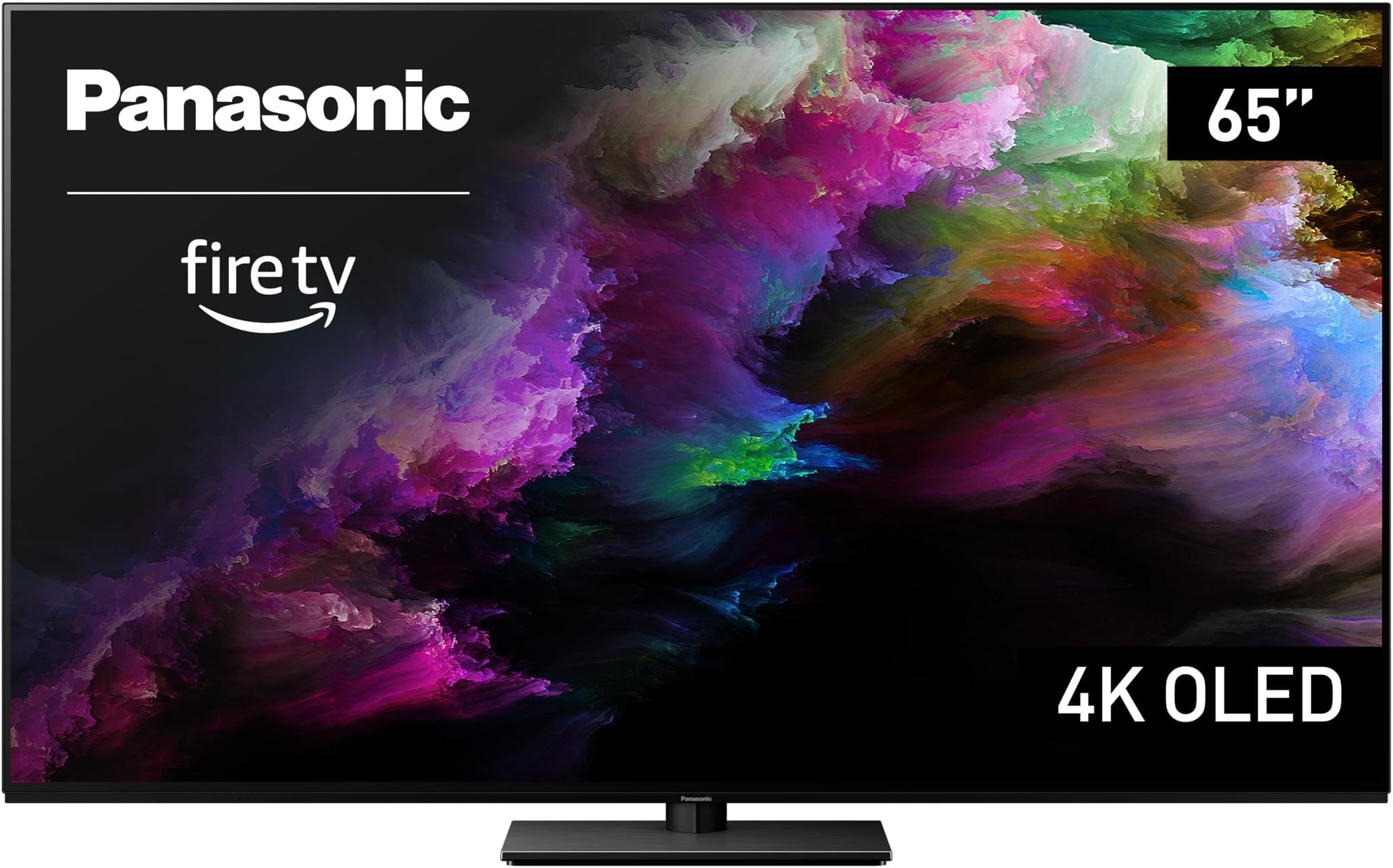
Still, Panasonic fans will have been mightily disappointed at this week’s launch event, where the company only announced a single new OLED model, and it’s not even a very good one. The new Z85C (Z86C in North America), pictured above, is a midrange model that will sit below Panasonic’s Z95B and Z90B models that debuted last year. The company intends for its higher-end models to carry over into 2026, at least for now.
Panasonic said the Z85C features a “new OLED panel,” which is suspected to be LG Display’s new OLED SE display. The Korean company revealed that new panel at CES, explaining that it’s a more affordable product designed for entry-level OLED television makers. So far, we’ve not been able to confirm any of this, but assuming that’s correct, then the Z85C will have a 120Hz refresh rate and VRR support, meaning it could be a nice, lower-cost option for video gamers, perhaps enhanced by Panasonic’s colourisation experts. The Z85C will support all of the major HDR formats, including Dolby Vision, HDR10+, HDR10 and HLG, as well as Dolby Atmos, and it will be sold in 55- and 65-inch sizes. In Europe, it’ll run the Google TV platform, while Amazon’s Fire OS will be used in the U.S.
The reason we said the Z95B and Z90B will carry over “for now” is because Panasonic did showcase a pair of “prototype” OLED TVs (below), including one that uses LG Display’s most advanced Tandem WOLED panel – the same one found in the LG G6 OLED TV. Panasonic refused to confirm or deny it will launch a new flagship OLED TV this year, saying only that it expects to have “more announcements” at some point this year. So it could just be that its 2026 OLED TVs are going to arrive later than usual.
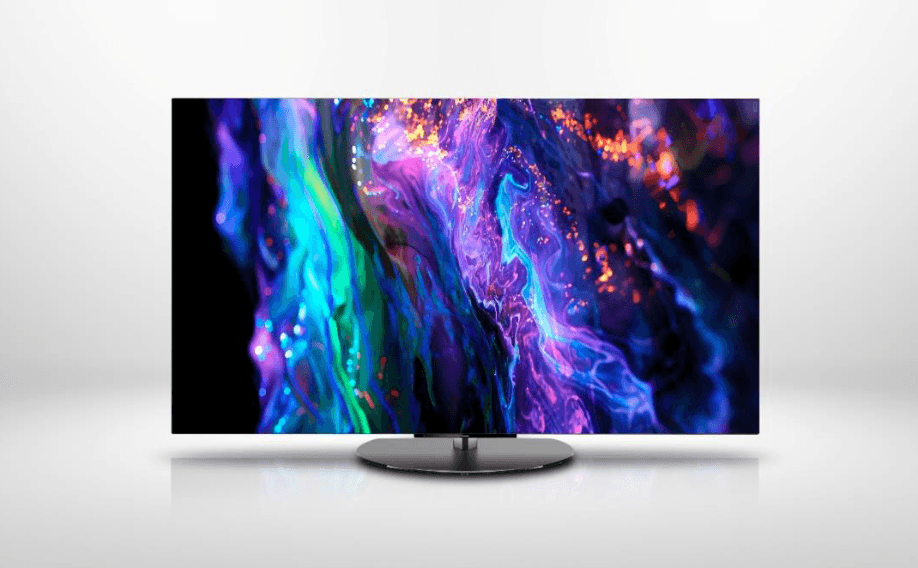
There was more encouraging news on the Mini-LED front, as Panasonic announced a host of new models for 2026, including its W97C (main picture) and W95C (below) flagships, which only differ in the colour of their chassis.
We’re a tad disappointed that Panasonic didn’t announce any RGB LED TVs like its rivals have done, but the W97C and W95C look to be pretty capable, featuring a 144Hz panel, more than 1,000 local dimming zones and 1,500 nits of brightness. In addition, they also come with a “Glare Free Ultra” coating that will help to limit reflections and enhance the TV’s viewing angles.
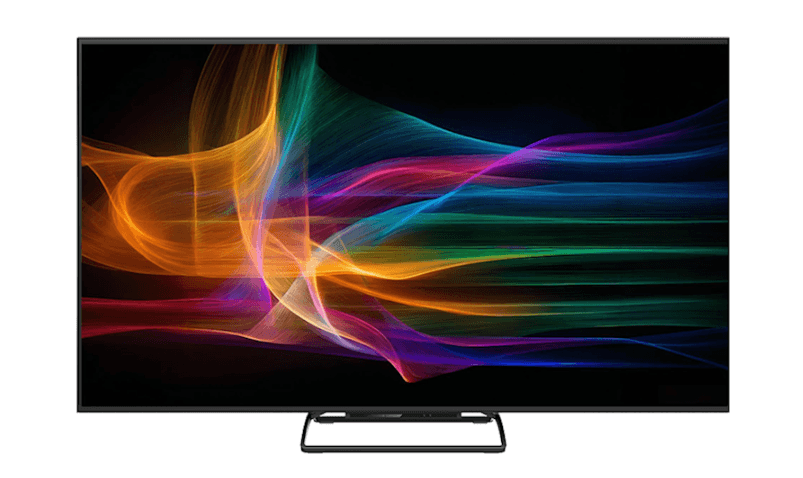
It appears that the W97C and W95C Mini-LED TVs will only launch in Europe, where they’ll be available in 55-, 65-, 75- and 86-inch sizes. However, it’s not clear yet if these models will come to the U.K., according to WhatHiFi’s report. Instead, U.K. buyers could be forced to make do with the Panasonic W94C, which will launch in 55-, 65- and 75-inch sizes only. WhatHiFi said the W94C looks “very similar” to the flagship models because it has a 144Hz panel and the Glare Free Ultra technology, but it was unable to confirm the brightness or the number of dimming zones. It also differs from Europe’s W95C and W97C in that it will come with Amazon’s Fire TV, not Google TV.
Another option is the Panasonic W91C Mini-LED TV, which is limited to a 60Hz panel and runs the Roku TV platform. It does, at least, have the Glare Free Ultra coating and HDMI 2.1 ports, which bring support for VRR and ALLM.
