Samsung Electronics is planning to phase out its once extremely popular Neo QLED TV range, and we could see the last such models as soon as 2028, according to a report in South Korean media.
The company has already reduced the variety of Neo QLED models it’s selling this year in its 2026 TV lineup, and it ultimately plans to abandon the technology for good.
The revelation came from ETNews, which said Samsung is also drastically cutting back on the production of more affordable QLED televisions, which sit below the Neo QLED range. According to that report, production will be slashed from 10 million units last year to just 2-3 million this year.
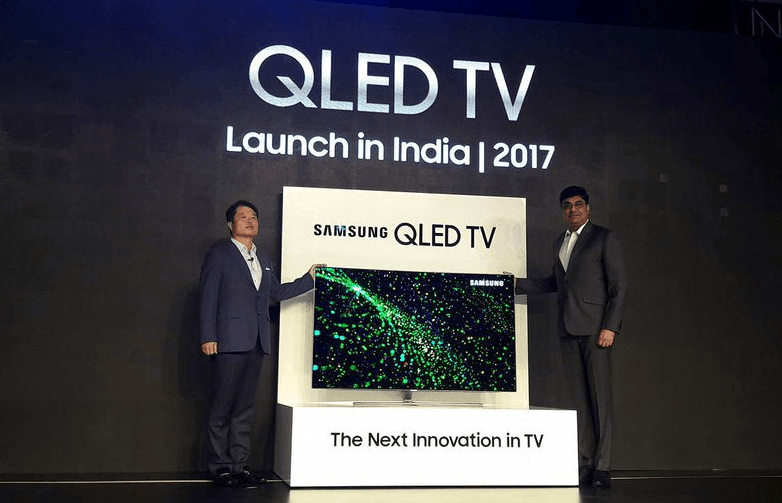
Samsung launched its first QLED TVs in 2017, pitching them as an alternative to LG Electronic’s OLED technology, which was just beginning to emerge as a high-end option for TV buyers. Unfortunately for Samsung, QLED never really caught on in the same way as OLED did, and was never really seen as a premium technology, because it could not match the colour accuracy and contrast of OLED. It was also overshadowed by the emergence of its higher-end Neo QLED TVs in 2021.
QLED is really just a more advanced version of traditional LCD displays, which are a much older technology. They use LCD panels and add in a layer of quantum dots to create an expanded colour gamut. Neo QLED takes it further, adding a Mini-LED backlight as well as quantum dots, enabling superior contrast, brightness and colour reproduction thanks to its thousands of local dimming zones.
HDTVTest's Vincent Teoh was one of the first people in the world to get his hands on Samsung's first Neo QLED models, including the Samsung QN900A, which was absolutely at the cutting-edge at the time:
However, Samsung clearly wants to move on from both QLED and Neo QLED, according to ETNews. It said that its QLED TV range will account for just 2-3 million units out of its total production of approximately 40 million, spanning all display types.
The report suggests Samsung is aiming to accelerate a transition that first began in 2022 when it re-entered the OLED market that it had previously flirted with in 2013 with the launch of its first OLED TV in close to a decade, the S95B featuring a QD-OLED panel. Since then, Samsung has dramatically expanded its lineup of OLED TVs and now sells multiple models in that range, including some that use LG Display’s Tandem WOLED panels.
Last year, it also introduced its first RGB LED television, the Samsung Micro RGB TV, which is the most advanced form of LCD tech so far. Rather than combine blue or white LEDs with colour filters and quantum dots, RGB LED uses separate red, green and blue LEDs that are embedded directly into the backlight to reproduce a far wider colour gamut than what Mini-LED is capable of.
Therefore, Samsung now positions its OLED TVs as its most premium models, with Micro RGB sitting just below, but also marketed as a premium display technology. Meanwhile, Neo QLED, which was once the company’s flagship TV lineup, is now positioned as a mid-range technology that’s far more affordable than it used to be.
While Samsung is selling some Neo QLED TVs this year, a number of models in the range have been discontinued, including the QN90 and QN95 ranges and most of its 8K resolution screens. It’s a trend that’s going to accelerate fast, ETNews believes.
“Samsung Electronics’ QD TV shipment plan this year has been significantly reduced to less than 30%,” ETNews said, citing an unnamed industry source. “Neo QLED will also produce only half of this year next year, and gradually stop manufacturing.”
While Samsung has not confirmed the report, it certainly makes a lot of sense, given that the company is facing increased competition from Chinese brands such as TCL and Hisense, not only in the budget and mid-range segments, but also in premium TVs. Samsung would rather protect its reputation for high-end TVs, which have much higher profit margins, than fade away into obscurity as a brand known for cheap and cheerful models.
Of course, it’s notable that many Chinese display makers have begun to accelerate their OLED panel manufacturing operations too, and with larger panel sizes on the horizon in the next few years, Samsung reportedly has its eye on newer display technologies that are said to be superior. These include Micro LED and an even newer tech called QDEL or NanoLED, which eliminates the light-emitting diode completely, instead using quantum dots that generate their own light and colour.
