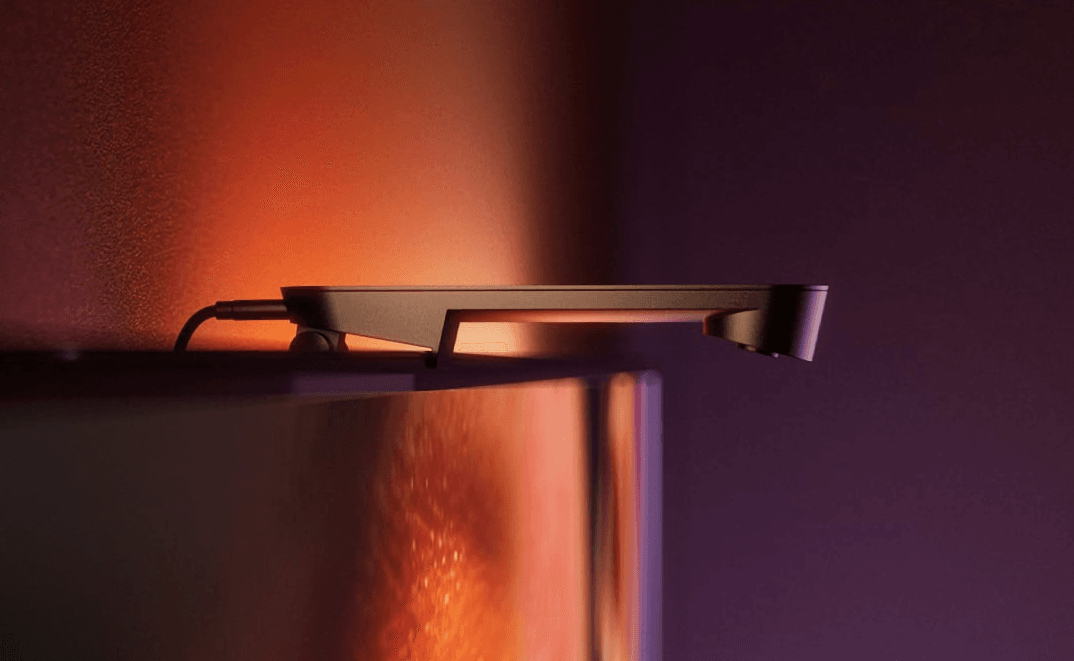
Philips Hue is giving its smart mood lighting system for TVs a major upgrade with the launch of a new product that makes it possible to synchronise lights with any TV screen without running cables through an HDMI box.
Signify, the company that operates the Philips Hue brand, has announced a new system called the Hue Play Screen Sync. It’s perhaps the simplest set up for TV owners that want to enjoy mood lighting effects similar to Philips Ambilight technology, without actually buying a Philips TV. It’s designed to enable smart lights to extend the colours emanating from the TV to create a more immersive viewing experience.
Previously, the only way to do this if you lacked an Ambilight TV was to purchase a Philips Hue HDMI Sync Box, which interfaces between the HDMI content source and the TV itself. But that meant the mood lighting would only work with content from HDMI devices, so those hoping to use their smartphone to cast movies to the TV were out of luck.
Fortunately, that’s no longer a problem. With the Philips Hue Play Screen Sync system, which costs just £89.99, there’s no HDMI box at all. Instead, users have to rig up a fisheye camera to monitor what’s happening on their TV screen. It will detect the light emanating from it, and then automatically synchronise the mood lighting to match what’s being shown, regardless of the content source.
This isn’t an entirely novel idea. Rival brands like Nanoleaf and Govee also offer box-less smart mood lighting systems that make use of cameras. But there are some disadvantages to those companies’ offerings – the use of a camera means increased latency, which can mean the lights are a tad slow to react to changes on screen. The cameras are also susceptible to reflections hitting the TV screen, which can confuse them as to what colours they’re seeing. But we’ve yet to see the Philips Hue system in action, so it may have found a way to overcome those challenges.
The new system also supports some interesting AI features, including Custom AI Behaviors. According to Signify, this lets users describe the kind of lighting automations they want to see in their natural language, and it will automatically set it all up. This can be done manually using the Philips Hue application, but it’s extremely fiddly, so the chat-based UI should make it much more effortless.
For example, the user could tell the AI that it wants a mood lighting setup to “set the Christmas mood” or that they want to “recreate a topical sunset,” and it’ll get to work immediately. It will search through the user’s existing scene library first, and if it doesn’t find a match, it will just automatically create it. Users can then speak additional commands to make slight adjustments until they get the scene just right.
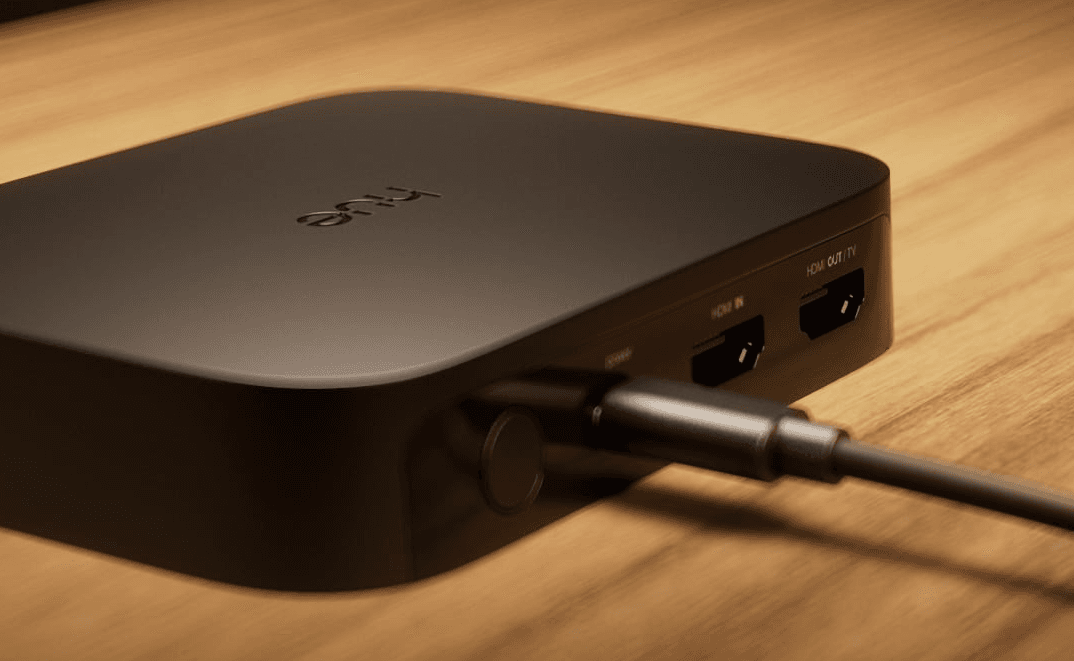
In addition to the Philips Hue Play Screen Sync system, Signify is also launching a smaller HDMI box with a similarly unwieldy name. It’s called the Philips Hue Play HDMI sync box 4K, and it’s a more affordable alternative to the original 8K box that launched two years ago. It’s notably slimmer than the original, and it's currently only listed in Europe, where it comes with a €150 price tag. That’s around £128.
