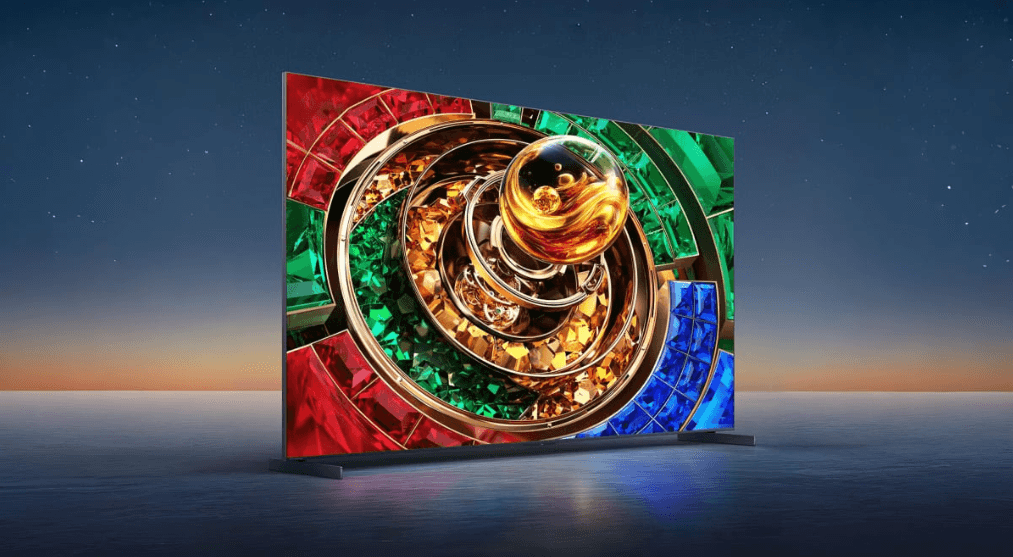
TCL made sure that most journalists’ eyeballs were on its flagship X11L SQD-miniLED TV this week when it was unveiled at CES 2026, but the company also took the time to reveal its first LCD TVs with RGB LED backlights.
The company has once again taken a different approach to its big brand rivals, positioning the TCL X11L with an SQD-miniLED display, or “Super Quantum Dots miniLED,” as its most premium model in 2026. It reckons that SQD-mini LED has several advantages over RGB LED displays, including higher brightness and more accurate colour reproduction.
However, TCL is not shunning RGB LED completely – instead, the technology will be used in another still very premium model known as the TCL RM9L. It’s the first TCL television to make use of this new technology, which first appeared last year in Samsung’s Micro RGB TV and Hisense’s 116UX.
Like its rivals, TCL is going to offer a variety of options, with the RM9L set to launch in 85-, 98- and 115-inch sizes. The company claims they’ll hit peak brightness of 9,000 nits and achieve 100% coverage of the BT.2020 colour space. WhatHiFi, which managed to get a detailed look at the RM9L, said the 85-inch model will come with 8,736 local dimming zones, while the 98-inch model will get 11,520 and the 115-inch version will get 16,848 in total.
Interestingly, WhatHiFi also claims that TCL will use the same model name for this TV in both the U.S. and in Europe. That’s a departure from the company’s usual practice of coming up with different model names on each side of the Atlantic. However, it’ll have a different name in China, where it’s known as the Q10M Ultra TV.
The TCL RM9L will be equipped with the company's most advanced 4K resolution WHVA 2.0 LCD panel, which is made by TCL CSOT and offers wider viewing angles. It has a native refresh rate of 144Hz, but this can be increased to 288Hz at 1080p, and there will be four HDMI 2.1 ports, making it an excellent option for gamers. Dolby Vision and HDR10+ will be supported along with Dolby Atmos sound, while the audio system is made by Bang & Olufsen. It’ll be powered by TCL’s new AiPQ Pro processors, and it’ll run the Google TV operating system.
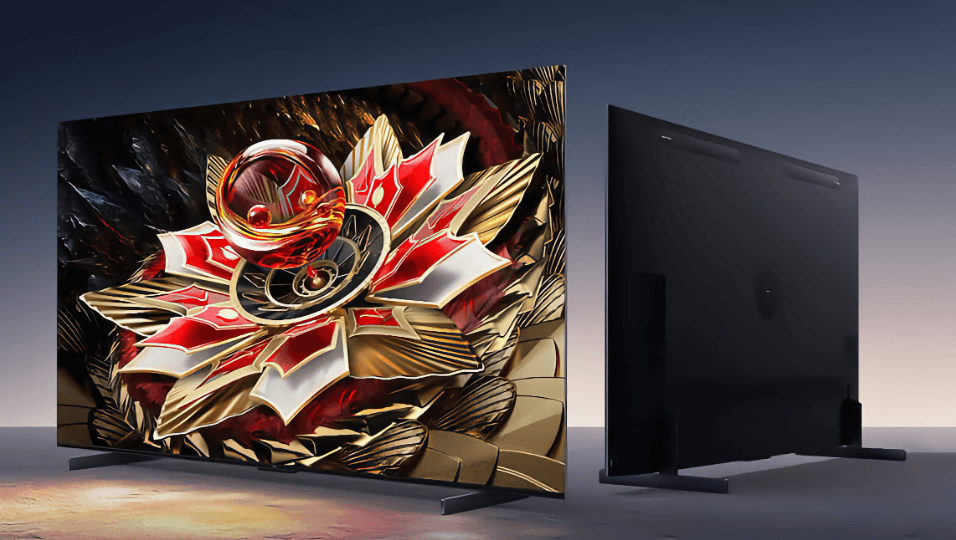
The most disappointing thing about the RML9 is that there’s likely only going to be three sizes available. While TCL could still surprise us and announce more sizes, for now there’s only the three relatively huge options available. In contrast, Samsung has already announced it’s going to launch a 65-inch Micro RGB TV, while Hisense’s smallest option will be just 55-inches. That’s good news because smaller panels are inevitably going to be more affordable, and in many cases more suitable for the average U.K. living room.
On the other hand, some may be disappointed that TCL is also not going to match Samsung’s upcoming 130-inch MicroRGB TV, which boasts an enhanced panel that promises even higher brightness and better colour accuracy than standard RGB LED.
It’s good to see TCL embracing RGB LED, but the company also made it clear that it believes that its own SQD-miniLED technology is the way forward. In addition to the flagship TCL X11L, it’s also going to launch smaller SQD-miniLED models next year in the shape of the QM8L and QM7L TVs, which will be the successors to last year’s QM8K and QM7K models. It’s likely that TCL will revert to its habit of using different model names for different locations, with Tom’s Guide saying that the QM8L and QM7L will probably be known as the C8L and C7L in Europe.
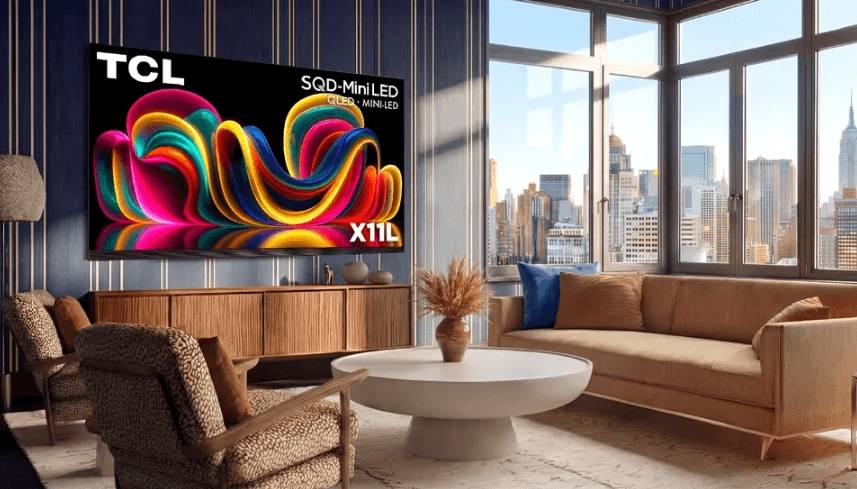
We don’t know much about these TVs yet, but the company has confirmed that they’ll support Dolby Vision 2, and they’ll likely offer more than a few local dimming zones. Because they’re SQD-miniLED, we can also expect higher brightness and more coverage of the BT.2020 colour gamut than last year’s models.
Lastly, TCL also confirmed plans to launch a more affordable QM6L TV, which will probably be known as the C6L in Europe. It’s expected to use a standard Mini-LED panel.
