Back in September, TCL revealed that it’s taking Samsung Electronics to court over its claims that this year’s new M80H and M70H televisions are genuine Mini-LED models, despite not having any local dimming zones in them at all.
TCL accuses Samsung of misleading consumers with its claim that the edge-lit M-series TVs feature “supreme Mini LED dimming” capabilities, saying that its choice of words is a “scam” that amounts to “false advertising.” It’s trying to force Samsung to stop advertising the M80H and M70H TVs as Mini-LED models at all, and also wants compensation, saying that it has missed out on sales to consumers who want to purchase a genuine Mini-LED TV at an affordable price point.
The court case is still ongoing, but recently a lot of evidence has emerged that seems to suggest TCL has a very strong case against Samsung.
FlatpanelsHD notes that the term “Mini-LED” does not have a proper, widely-accepted definition, which certainly favours Samsung’s choice of words. However, there’s a general consensus that most consumers expect any TV that’s advertised as having a Mini-LED display should have genuine miniature LEDs and some kind of local dimming too.
Counterpoint Research analyst Bob O’Brien told Ars Technica last month that Mini-LED was originally introduced as a term that describes full array local dimming or FALD technology. “Among those in the industry, it has always been assumed that a Mini-LED TV has FALD capability,” he said.
This is where Samsung could come unstuck, according to both TCL and various experts who have looked into Samsung’s claims. In its written complaint about Samsung, TCL said that its rival had in recent years struggled to compete with its own lineup of Mini-LED televisions, and that it was facing a “rapidly vanishing” market share.
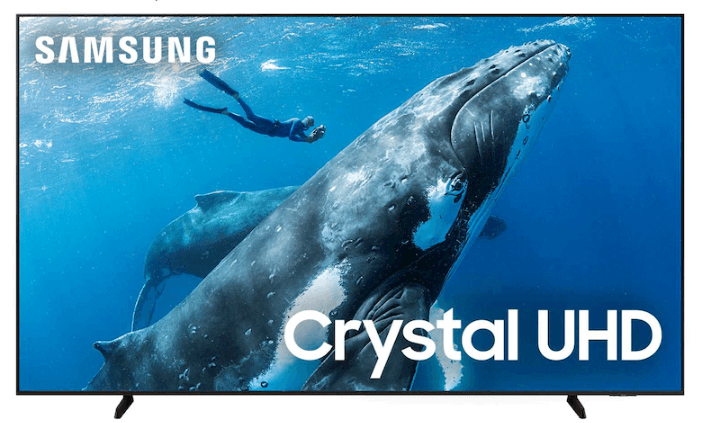
“Desperate to resurrect its lagging sales and reduced market share, Samsung resorted to a fraud on the market,” TCL said. “It took a cheap, non-Mini-LED model from a recycled product line (Crystal UHD) and peddled it to the public as a “supreme” Mini-LED model at an attractive price point.”
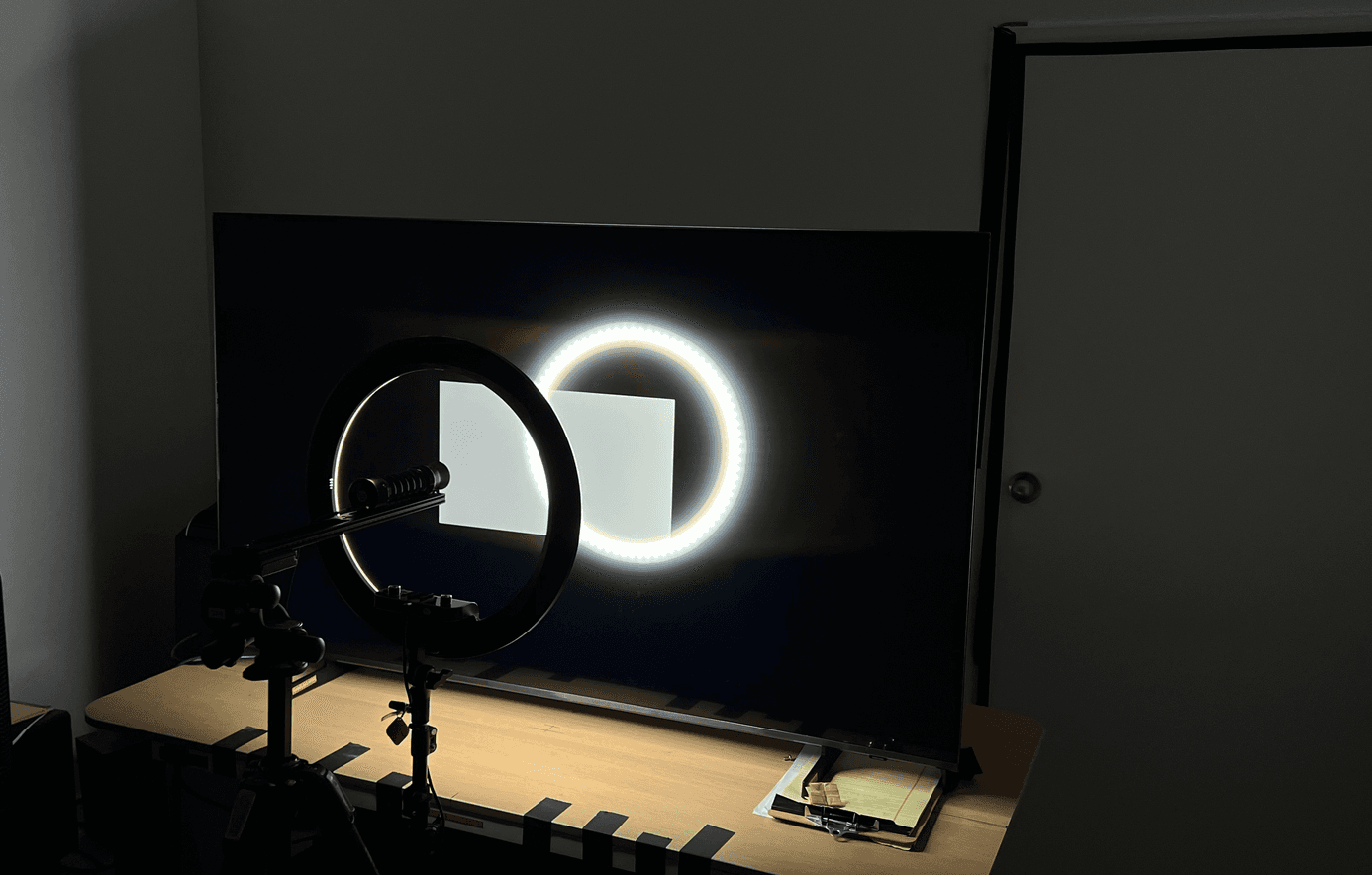
RTings, the popular consumer electronics review website, decided to take a closer look at TCL’s claims, and its examination of the M70H model verified much of what it has been saying. “Although they're advertised as Mini-LED models, this simply means they use smaller LEDs in their backlights, as both M-series TVs lack local dimming entirely,” it concluded.
On its own website, Samsung defines the term “miniLED” as an “advanced backlighting display technology that uses tiny LEDs, smaller than standard ones, for more precise backlight control through local dimming zones.” It’s a description that tallies with Samsung’s more expensive Neo QLED TVs, but clearly cannot be applied to the M-series models.
Samsung’s rivals also call into question the size of the LEDs used in the M-series TVs. TCL said its own assessment measured them at 0.5 millimetres, and both RTings and AP Tech confirmed that in their own reviews.
“I have seen LEDs measuring 0.2mm or 0.3mm that were considered to be a traditional LED in some cases,” said Scharon Harding of Ars Technica. There’s also an academic paper that supports the assertion that 0.2mm refers to “normal” LEDs rather than Mini LEDs.
TCL goes even further, and argues that the layout of the LEDs in the M80H and M70H are basically identical to that of Samsung’s Crystal UHD TV models – the product line that it claims was simply peddled as a Mini-LED model. The company says this proves that all Samsung did was rebrand the Crystal UHD lineup, without actually introducing any new innovations inside them.
For consumers, the most important thing in a Mini-LED TV is not the size of the LEDs, but the fact they have local dimming zones, as this is the main innovation that enhances picture quality beyond what a regular LCD TV can muster. If the M-series TVs don’t have this, then they won’t be able to match the picture quality of genuine Mini-LED models that do, TCL claims.
Samsung hasn’t commented on the case recently, but when TCL first filed its lawsuit a couple of months back it vowed to "vigorously defend” its assertion that the M80H and M70H TVs are true Mini-LED models. “We stand fully behind the quality and accuracy of our product descriptions,” the company stated, before explaining that it will not comment further because the case is still ongoing.
Unfortunately for Samsung, a quick look at Reddit reveals that very few people seem to believe its claims, with several commenters noting that the company has a reputation for doing this kind of thing before. Previously, it has labeled what were fairly bog-standard LCD TVs as “QLED” models despite them having no local dimming zones either. The company has also promoted some older TVs as being “LED TVs,” despite them not meeting the industry’s widely agreed-upon definition.
It remains to be seen what the U.S. courts will ultimately decide, but the case does have an ominous precedent of sorts in the form of a lawsuit that culminated just last year, ironically involving Samsung suing TCL.
The latter case, which was brought in Germany, was finally resolved in March when the court agreed with Samsung’s accusations that TCL had misled European consumers by advertising some of its televisions as QLED TVs, when in fact, they only used a miniscule amount of quantum-dot materials in their displays. Samsung said TCL’s QLED870 TVs therefore did not provide any meaningful improvement in picture accuracy or colour performance.
The judge in that case ordered TCL to stop selling or advertising the QLED870 TVs as QLED models, and they were later pulled from sale in a number of European countries.
