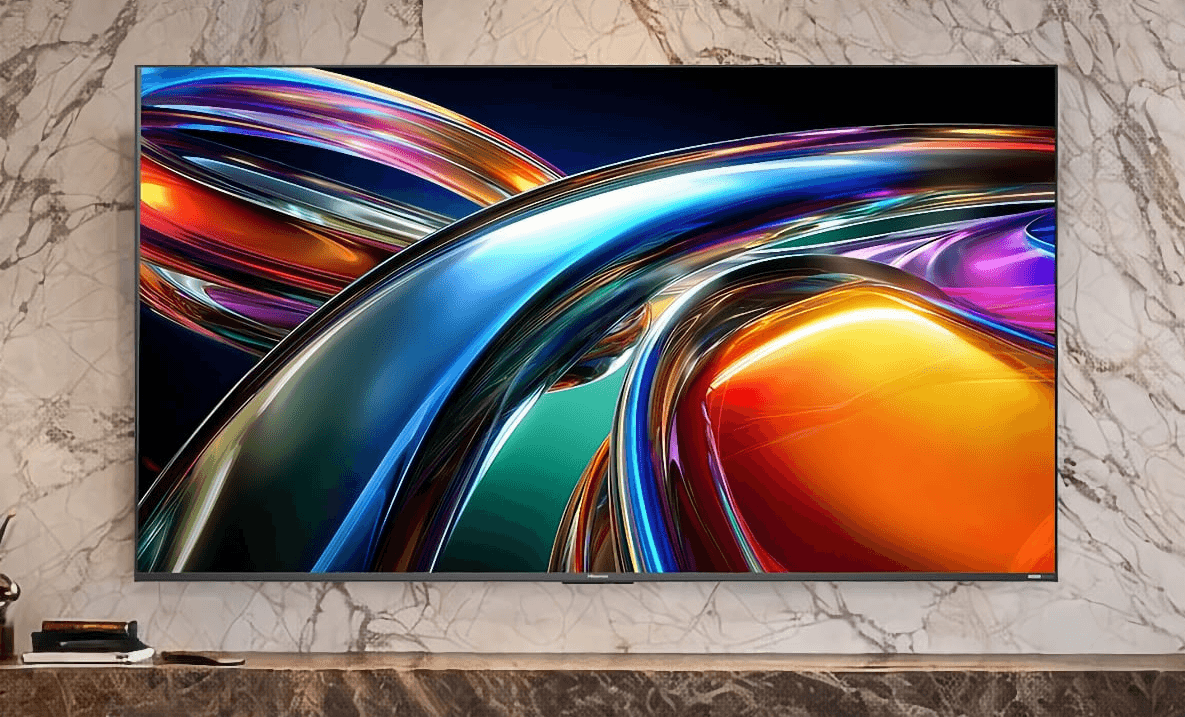
The floodgates have well and truly burst open, with Hisense joining LG Electronics and TCL in the global rollout of its 2026 TVs across Europe, the U.K., the U.S. and other regions. With the launch, Hisense is one of several top tier brands trying to push RGB LED display technology into the hands of more consumers, offering superior capabilities to standard Mini-LED.
Hisense has rapidly established itself as a major player in the TV industry, although it’s slightly behind TCL in terms of overall unit sales, as the world’s third-most popular TV brand. Samsung Electronics remains the world’s number one TV company, but Hisense and TCL have both pushed LG down into fourth place, and they have their eye on securing that number one spot in the coming years.
The Chinese brands are treading the same path as their Korean rivals did more than 20 years ago, when they established themselves with decent quality budget models before pushing into the premium TV segment to muscle out the best-known Japanese TV brands.
This year, Hisense’s premium models are all about RGB LED, with the company branding the technology as RGB-miniLED. They’re fitted with LCD panels and an RGB LED backlight that dramatically expands the colour range, enabling it to deliver brighter and more accurate HDR images.
The top-tier model in Europe is the Hisense UR9S, and it’s followed by the UR8S, with the main difference between the two being the number of local dimming zones, which is a decisive factor in terms of picture quality.
Both the UR9S and UR8S will be sold in sizes ranging from 55-inches to 100-inches at the maximum, and they’ll be some of the first in the world to support Dolby Vision 2.
The Hisense UR9S and UR8S also feature native 180Hz panels, and they’ll be able to support gaming at up to 300Hz when users reduce the resolution from 4K to 1,080p. They look the part too, with a new, streamlined “unibody” aesthetic, with the smaller models being just 45 millimetres slim. They’re powered by the company’s new Hi-View AI Engine RGB chipset that has been designed specifically with RGB LED in mind.
Stepping back, Hisense is also selling a wide range of Mini-LED TVs this year that lack the red, green and blue LEDs of the UR9S and UR8S. These include the U7S pro, U7S, U6S and E8S ranges, all of which are arriving in physical retail stores this week. They will be available in sizes of up to 100-inches and with 4K resolution. Buyers should also be able to find budget models in the shape of the Hisense E7 and Hisense A ranges.
Note that while Hisense uses the Google TV or Fire TV platforms in the U.S., its televisions will come with the company’s own Vidaa platform in Europe and the U.K.
Hisense’s most expensive TVs in 2026 will be the flagship UXS RGB-miniLED TV that’s set to go on sale in the U.S. and China later in the year, but it’s still not clear when. That model, which is even brighter, has more local dimming zones and an extra cyan pixel, promises even higher quality images, but it will not be sold in Europe.
One thing that U.K. buyers will be able to find, if they go to Harrods, is the 136-inch Hisense MX Micro LED TV, which uses millions of micro-sized, self-emmisive LEDs to deliver an OLED-like experience without any of the downsides. Most experts agree that MicroLED is superior to RGB LED in every way, but the downside is that it’s exceedingly expensive with its eye-watering £119,999 price tag.
Hisense has also refreshed its popular Canvas TV, which is a rival to Samsung’s The Frame. It’s officially known as the Canvas S7SG, and it’s available in a new 50-inch size, alongside the 55-inch, 65-inch, 75-inch and 85-inch sizes of last year’s model.
Hisense’s RGB-miniLED TVs will go head to head with TCL’s new SQD-miniLED and RGB miniLED models, Samsung’s microRGB TVs, Sony’s True RGB and LG’s Micro-RGB models.
