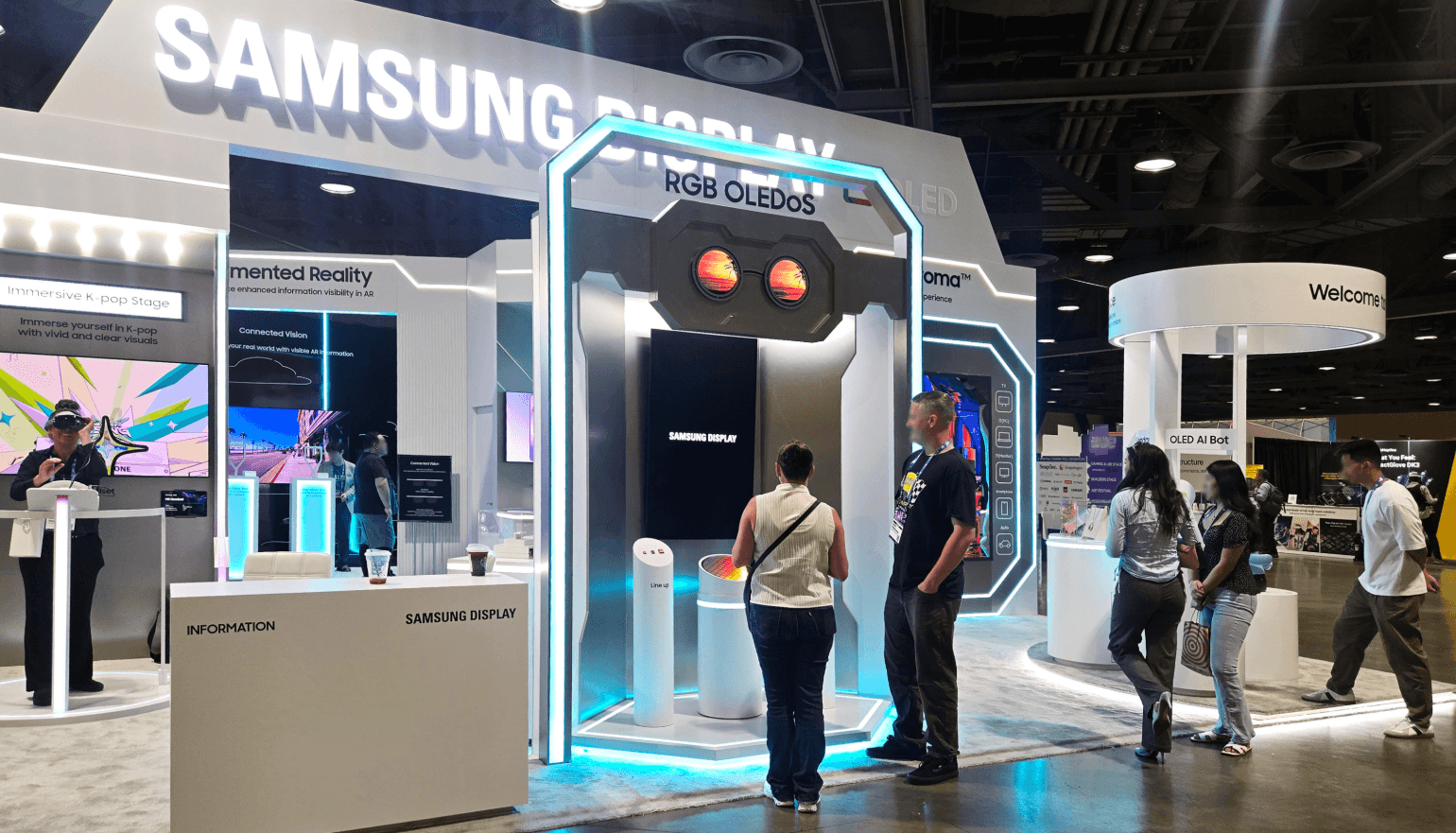
Samsung Display took to the stage at one of the world’s biggest XR and AI industry events this week, where it showcased the incredible potential of its latest RGB micro-OLED display technology, delivering a massive leap in brightness.
The prototype on display at AWE USA 2026 is capable of hitting a peak brightness of a dazzling 40,000 nits, the company said. It’s intended for virtual reality and augmented reality headsets, and it was showcased alongside a new glasses-free 3D OLED panel that’s geared towards portable devices.
It’s an incredible gain. At present, the brightness of existing headset displays is nowhere near that level. In Apple’s Vision Pro headset for instance, the micro-OLED display it uses is rated at around just 5,000 nits. But even then, users don’t actually experience that level of brightness, as most of it leaks away due to the device’s driving and optics. To enhance image quality in headsets, much brighter panels are a necessity.
The new 1.3-inch OLEDoS display, as Samsung Display calls it, is a significant step forward, up from the 20,000 nit micro-OLED panel it demonstrated last year. In 2024, when it unveiled its first-ever micro-OLED display, it could only reach 5,000 nits.
Samsung Display explained that unlike “white OLEDoS” panels, its RGB OLEDoS technology doesn’t require the use of a colour filter, because the pixels already generate the three primary colour of red, green and blue. This is the secret to its higher light efficiency, and it also means it will have a much longer lifespan, the company said.
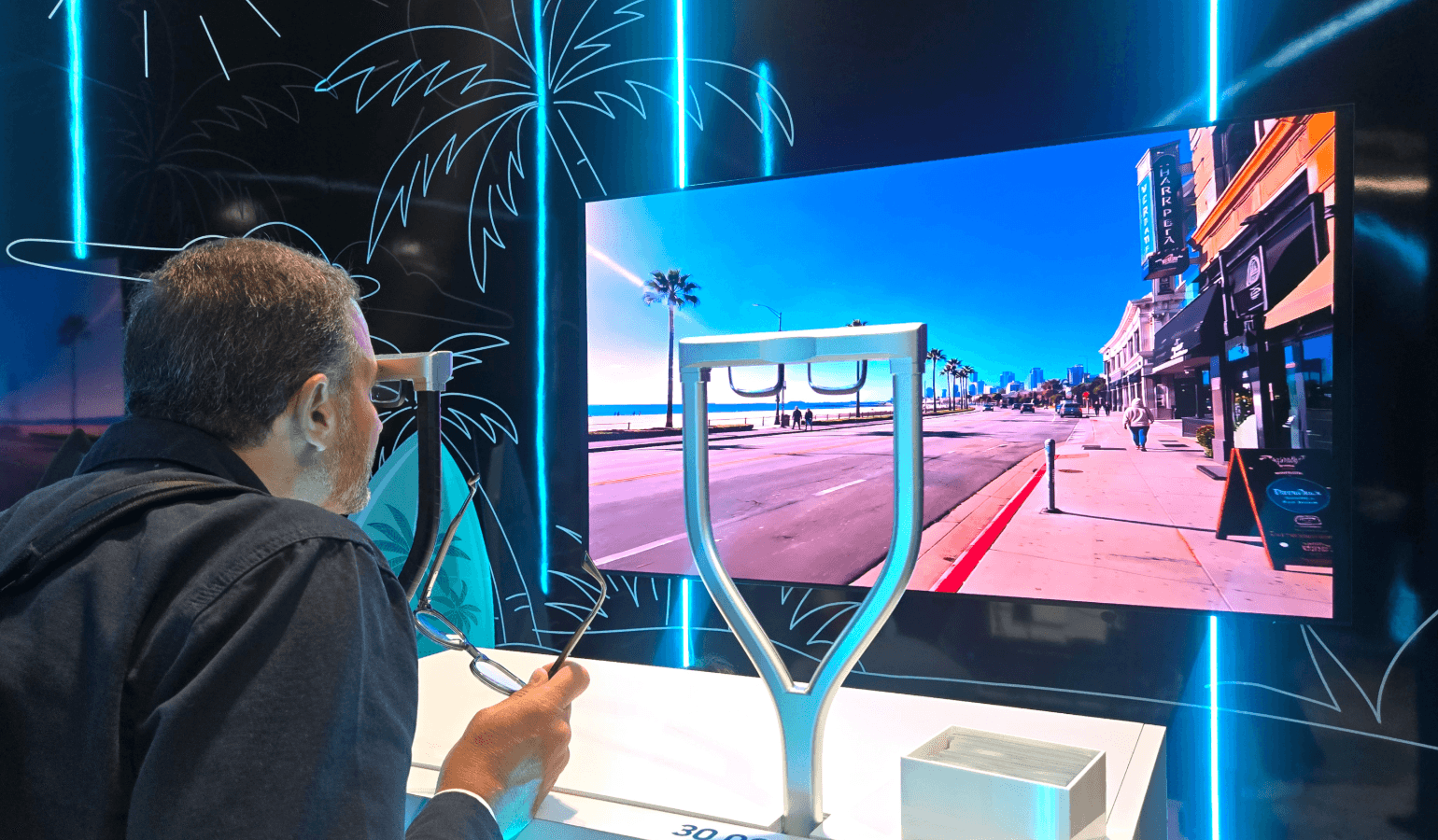
“These advantages make it highly suitable for delivering excellent color reproduction and high brightness," a spokesperson for the company said. "This is why RGB OLEDoS is considered an optimal solution for XR devices, which require sharp image quality in compact and lightweight form factors.”
The technology looks extremely promising, but a promise is all it is at this stage. The company has shown a number of prototype RGB OLEDoS displays in the last few years, having acquired the technology needed to manufacture it from a company called eMagin, which it bought in early 2024.
However, Samsung Display has still not yet brought any RGB OLEDoS products to market, and that likely means it’s struggling to achieve the production yields required for commercial success. It’s not clear how well progress is going in that regard, and it’s telling that Samsung Electronics’ existing VR/XR headsets currently use micro-OLED displays sourced by Sony rather than its own display making outfit. Nonetheless, the continued demonstration of prototypes suggests that Samsung Display remains confident it’ll get there in the end.
In addition, the company is betting there’s a big future for glasses-free 3D displays too. At AWE USA, it also exhibited the second-generation of its 16-inch 3D OLED panel, which is based on light field technology.
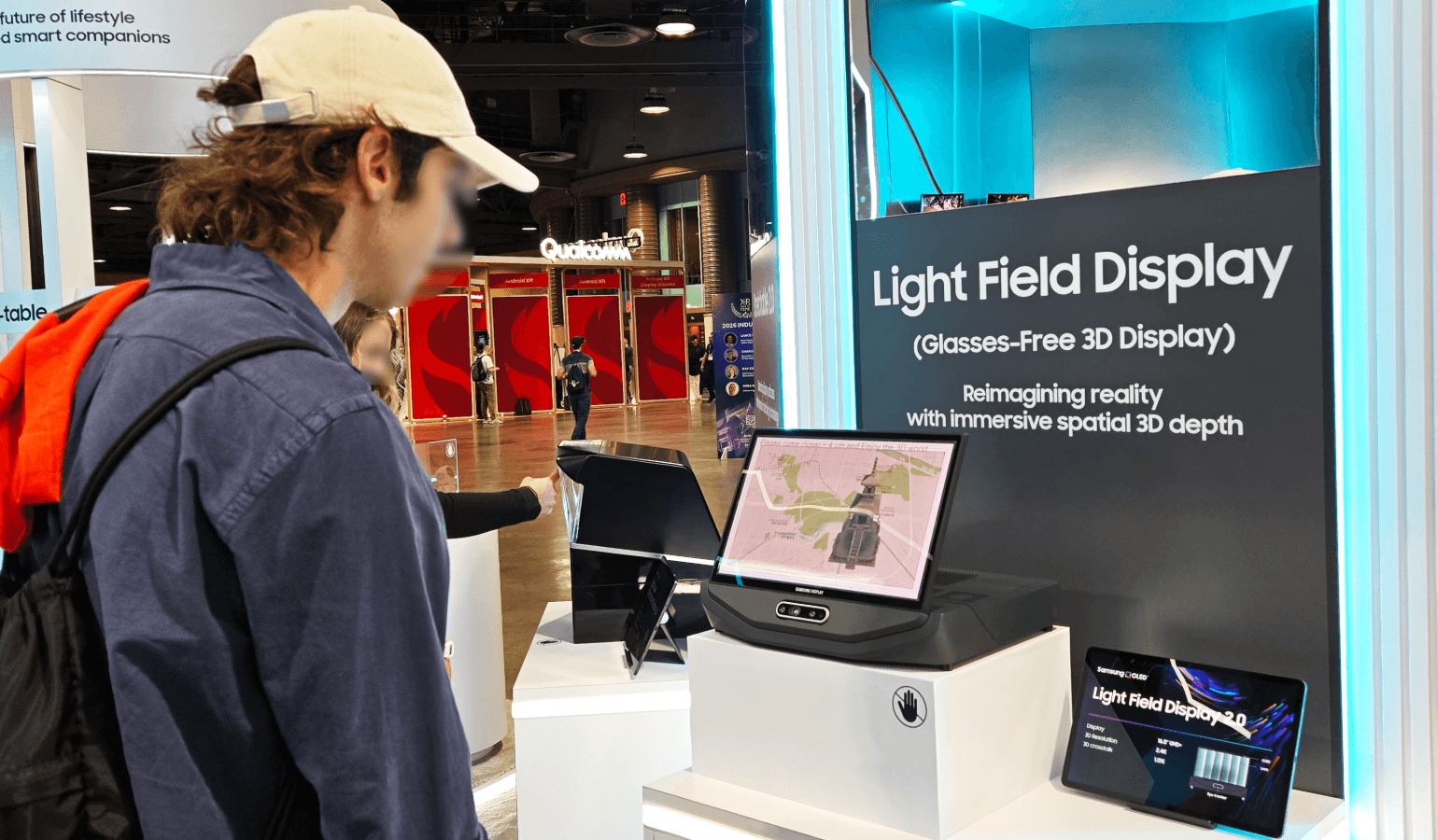
The new generation of the technology is said to deliver some big improvements, boosting resolution to 2.4K, up from 2K in last year’s model, while reducing “crosstalk” to just 1%. It’s not clear if the new panel makes use of Samsung Display’s metasurface lenticular lens technology, which was discussed earlier this year. What the company did say is that the new panel integrates “enhanced eye-tracking tech” to improve the glasses-free three-dimensional effects it creates.
The company did not talk about its commercialization plans for either of the new panels, but its ongoing development in both areas is an encouraging sign, if nothing else.
