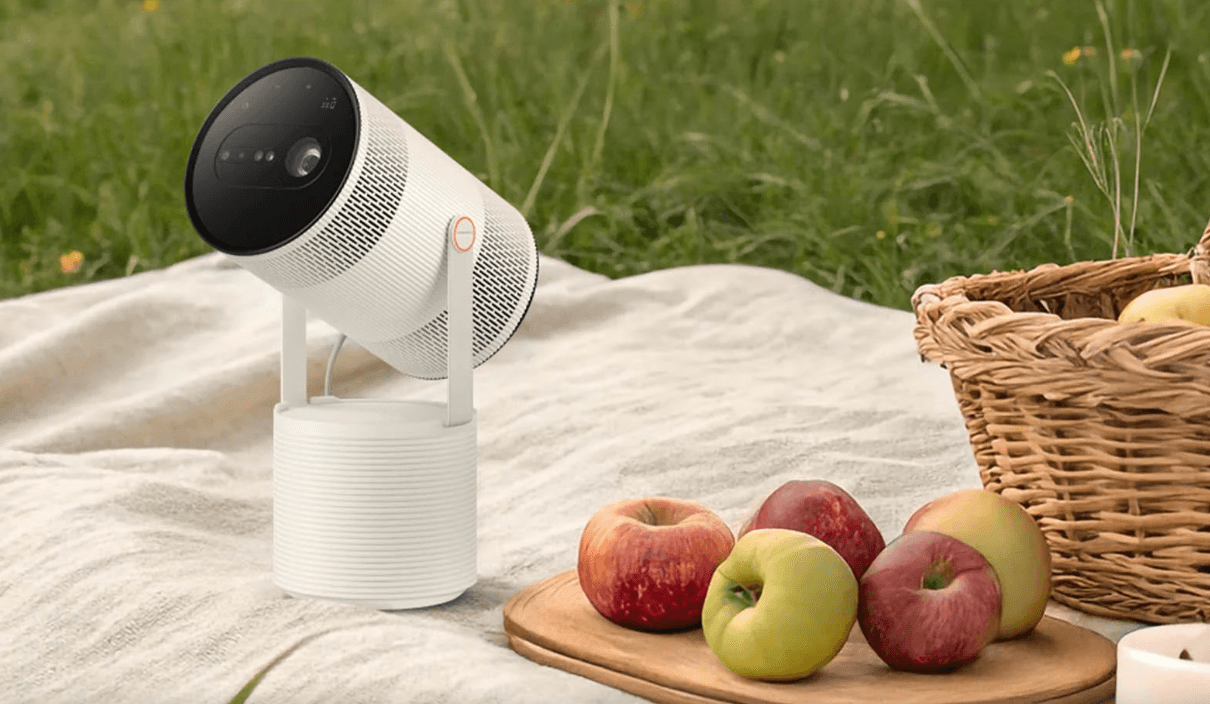
Samsung Electronics’s next generation portable projector is finally available to buy in the U.S., seven months after the company first unveiled it at CES 2026. It’s called the Freestyle+ AI Smart Projector, and as the name suggests, the biggest upgrades pertain to its new artificial intelligence capabilities.
The gadget’s best trick is that it can project perfectly aligned images onto almost any kind of surface, including those that are ridiculously uneven or obscured by obstacles, meaning it’s possible to enjoy big screen pictures in almost any location.
Normally, to enjoy a proper projection experience you need to find a huge plain wall to project the picture onto, or else invest in a proper projection screen. But Samsung says that the Freestyle+ is much more versatile. No matter if you’re dealing with patterned wallpaper, a coloured wall, one that’s peppered with obstacles such as shelves and picture frames, or even an uneven surface, it will use its AI smarts to get around these issues and project a perfectly rectangular image.
Samsung says the Freestyle+ can project Full HD pictures of up to 100-inches, which is similar to the Freestyle Gen 2 projector that launched in 2023. It has also boosted the brightness of those pictures to 430 ISO lumens, which is almost twice as bright as the predecessor, while the addition of PurColor and HDR10+ support should help to ensure richer colours and superior contrast.
However, it’s the AI smarts that really make the difference. The Freestyle+ comes with five AI-powered tools, including 3D auto keystone, wall calibration, screen fit, real-time focus and obstacle avoidance, which all work together to keep the picture sharp and correctly aligned, no matter where you position the projector.
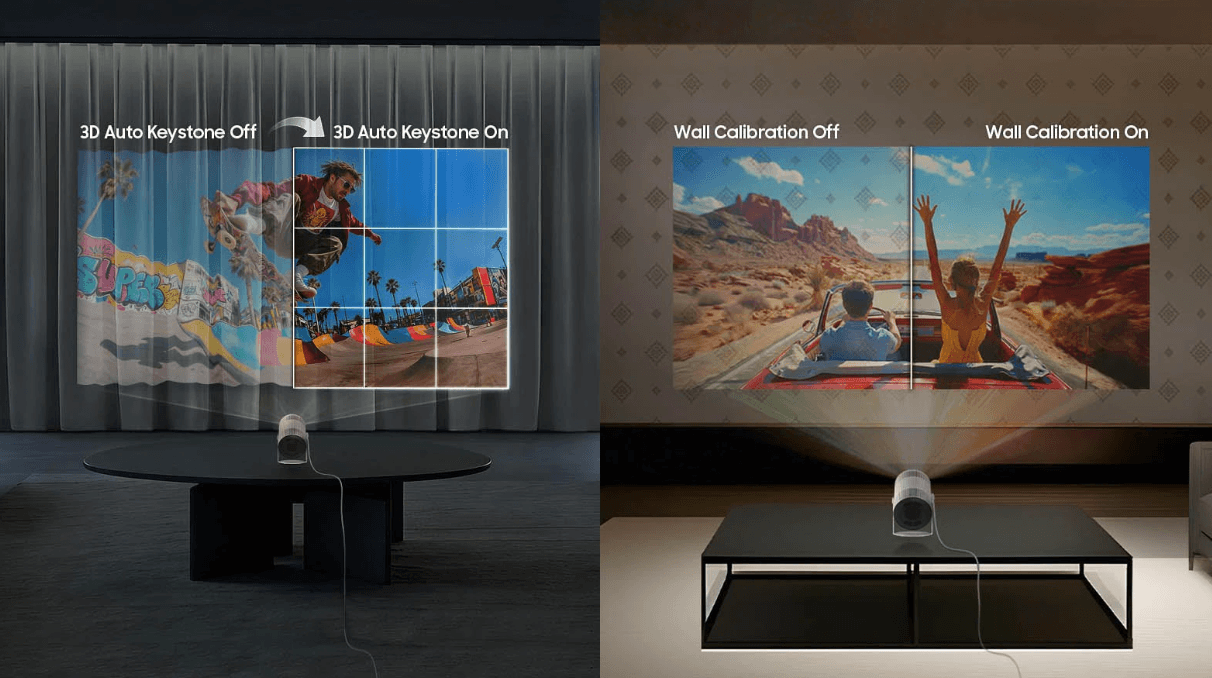
The AI means it can straighten distorted images, compensate for the colours or patterns on the wall, automatically refocus as you move the device, and even shift the image to avoid any objects that might block the projection. According to Samsung, it can even create a perfect image on angled walls, onto curtains, or even the sides of a tent, making it portable in ways that other projectors of its class cannot match.
There are more AI smarts in the shape of Samsung’s Vision AI Companion, which combines Bixby and Gemini to answer questions and surface recommended content, and there are Tap View, Smart View and AirPlay 2 features that make it simple to mirror content from smartphones and tablets. The built-in 360-degree speaker has dual passive woofers and supports Q-Symphony, which means it can synchronize its audio output with external Samsung speakers, if you have any. There’s no integrated battery, but it can be powered by an external power pack for outdoors viewing.
The Samsung Freestyle+ runs the Tizen operating system and it comes with Samsung TV Plus, which offers more than 750 free channels as well as access to all of the big streaming apps. There’s also the Samsung Gaming Hub, which enables cloud gaming without a console.
The original Samsung Freestyle projector was a big hit when it launched back in 2022, but the portable big screen viewing space has become an intensely crowded and competitive one since then. In fact, there are dozens of options to consider if you’re in the market for a portable projector, and many of them have far better specifications in terms of brightness and picture quality, as well as much lower price tags than the $1,199 (around £830) that Samsung is asking for the Freestyle+.
That said, the AI projection smarts could really make a difference for users that need the flexibility to project in cluttered environments with less than ideal surfaces.
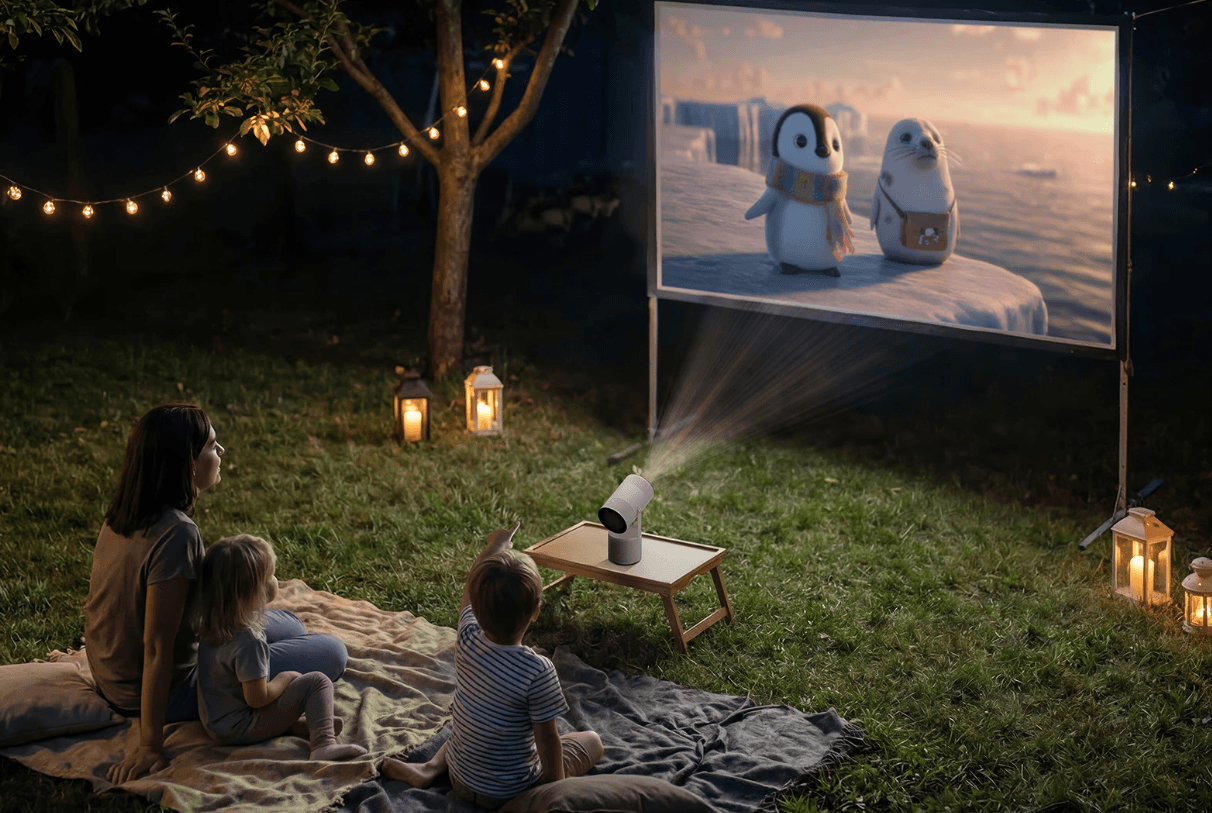
However, the Freestyle+ persists with 1080p in a market where 4K portables are becoming increasingly common, and while the 430 ISO lumens is fine in a dark room, it will wash out badly when there’s ambient light to deal with. There are many alternatives nowadays that can beam 1,000+ ISO lumens.
Clearly, Samsung is targeting a niche audience and the Freestyle+ should cater very well to renters, travelers and others who rarely project images onto the same surface twice, but for everyone else, there may well be better options to consider.
