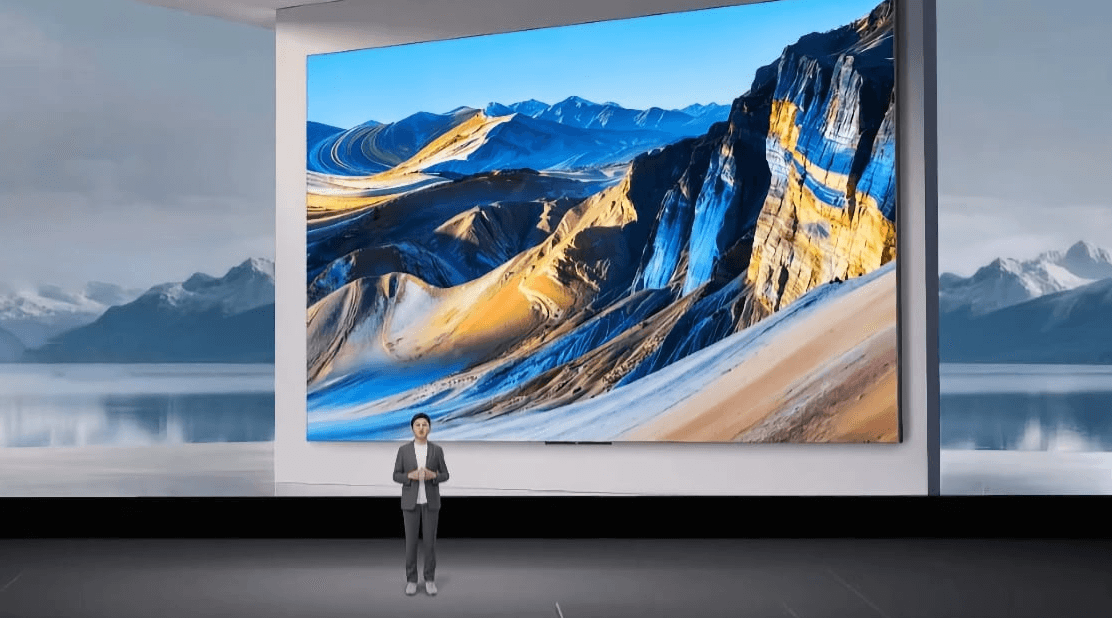
TCL is pushing to make true MicroLEDs a viable purchase for more consumers. It has just unveiled two massive new models that weigh in at a spectacular 163-inches, and they’re certainly not cheap, but also not nearly as expensive as we would have thought.
Until now, MicroLED TVs have always been elite products, exclusively for the rich, with earlier 100-inch-plus models costing in excess of £100,000. But the new TCL Max163M and TCL Max163M Pro are vastly more affordable.
According to the Chinese language website ITHome, the TCL Max163M will set you back 249,999 RMB, which translates to around £27,410. The more premium TCL Max163M Pro costs a bit more, at 349,999 RMB, or £38,375.
While we can’t say they are cheap, that is an astonishingly low price considering what the company was asking for its previous MicroLED TVs. In 2024, when it debuted its first 163-inch MicroLED model in the U.S., it slapped on a $110,000 (£85,000) price tag.
Last year, TCL’s domestic rival Hisense launched its first MicroLED TV, which measured 136-inches and was priced at $100,000. Meanwhile, Samsung's first 110-inch microLED TV was priced at over $150,000 when it launched in 2021, and its smaller 89-inch model also sold for over $100,000.
It remains to be seen if TCL will bring the new TVs to global markets. If it does, it will probably increase its asking prices to factor in shipping and other costs. But still, we imagine they would be the cheapest MicroLEDs money can buy, by a long distance.. In fact, the TCL Max163M and TCL Max163M Pro are priced more in line with premium RGB LED models such as Hisense’s 116UX RGB Mini-LED TV, which is priced at around $30,000.
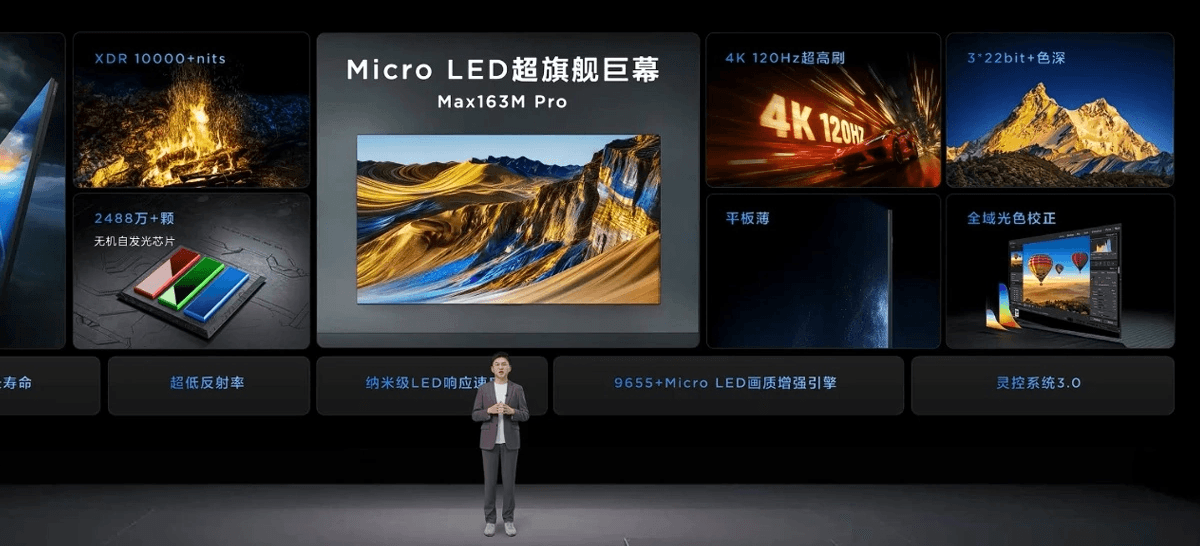
Of course, the TVs are still very expensive, but not much more so than the most premium projectors available today. And consider that they feature what is widely regarded as the best display technology available. With the TCL Max163M you’re getting true blacks, 100% coverage of the BT.2020 colour space, extreme contrast and up to 10,000 nits of brightness, the company said. There is no projector on the planet that can deliver a proper HDR experience, but the MicroLED models should be able to deliver that in spades, matching the picture quality of cinemas.
TCL said the TVs come with a low-reflectivity coating and smart functions powered by its Control System 3.0 software. They feature four HDMI 2.1 ports, one USB 3.0 and one USB 2.0 port. The Pro version ups the stakes with a higher refresh rate, delivering 4K at 120Hz, and its brightness is said to go over 10,000 nits. The company did not say how fast the regular Max163M’s panel is, but we imagine it will be capped at 60Hz.
It’s important to remember the distinction between MicroLED and RGB LED TVs, which are confusingly branded as Micro RGB by many companies. RGB LED TVs are impressive, but they still use old-skool LCD, albeit with a mightily enhanced backlight.
MicroLED is different. There’s no LCD panel – instead, the picture is generated by 28.8 million tiny self-emitting red, green and blue LED sub-pixels. It’s more similar to OLED, plasma, true QNED and QDEL. Experts say the overall picture quality far exceeds the best LCD TVs and even OLED, so TCL’s pricing is exciting news. If it has managed to reduce its manufacturing costs by such a degree, other companies should be able to follow, and that could mean we’re much closer to the technology’s commercialization than previously thought.
