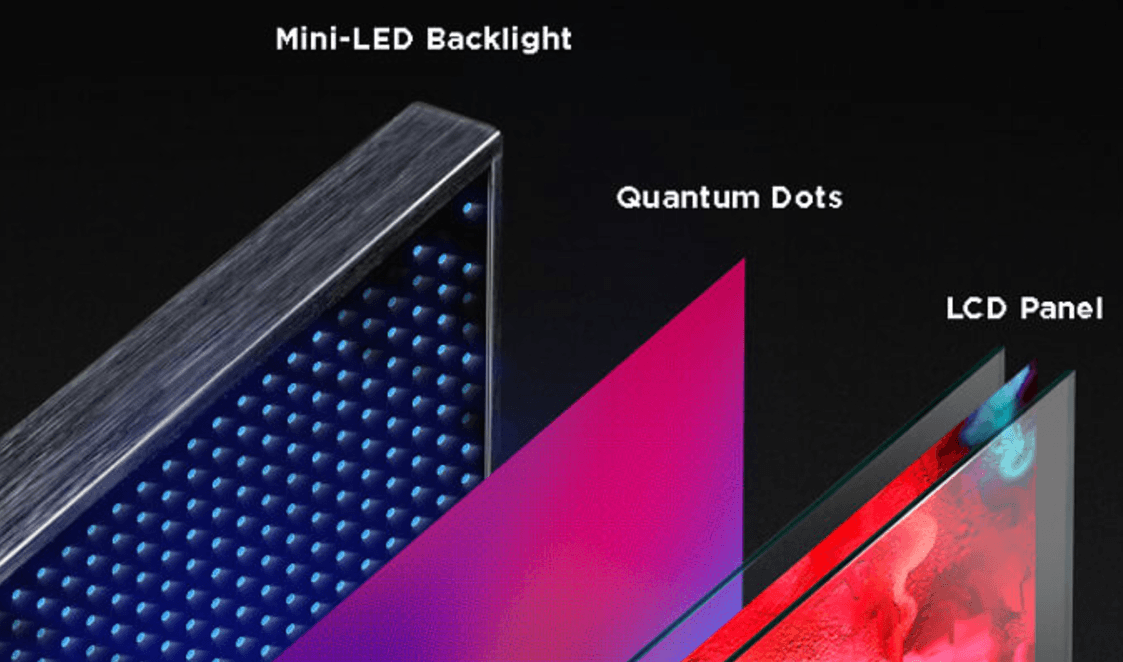
Samsung Electronics, TCL and Hisense were once engaged in a fierce battle for supremacy in the Mini-LED TV segment, but now the companies are all going their separate ways, focusing on different display technologies, Omdia said in its latest industry research.
Back in 2017, the three companies came together as founding members of the QLED Alliance, aiming to create a united front against an OLED display technology they didn’t really believe in. But those days are done, as all three are now betting on more advanced displays.
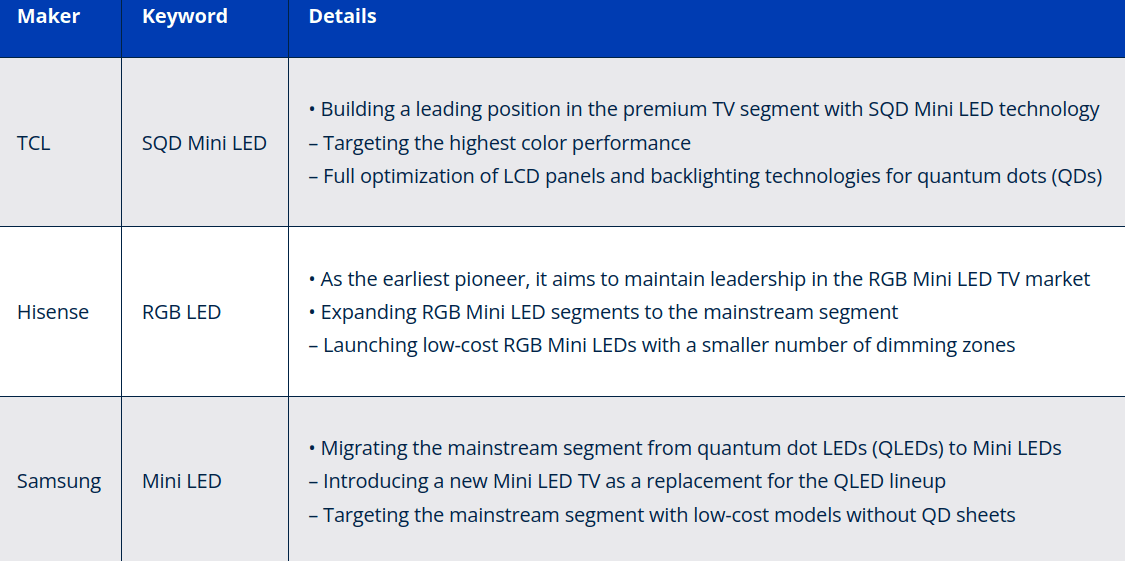
Samsung is all but ready to ditch QLED and Mini-LED entirely after switching focus to RGB LED and especially OLED, which is now found in its flagship TV models like the Samsung S95H. Hisense has made a few OLED TVs in the past but is now going all in on RGB LED, with its flagship Hisense USX and the step-down UR9S and UR8S models all sporting what it calls “RGB-miniLED” panels.
As for TCL, it continues to shun OLED, and while it has made a few of its own RGB LED TVs, it positions its “SQD-miniLED” TV models featuring Super Quantum Dots, such as the X11L, C8L and C7L as its best-in-class this year. TCL is the only TV brand pursuing SQD technology so far, arguing that it offers higher brightness and superior colour depth than anything RGB LED can achieve.
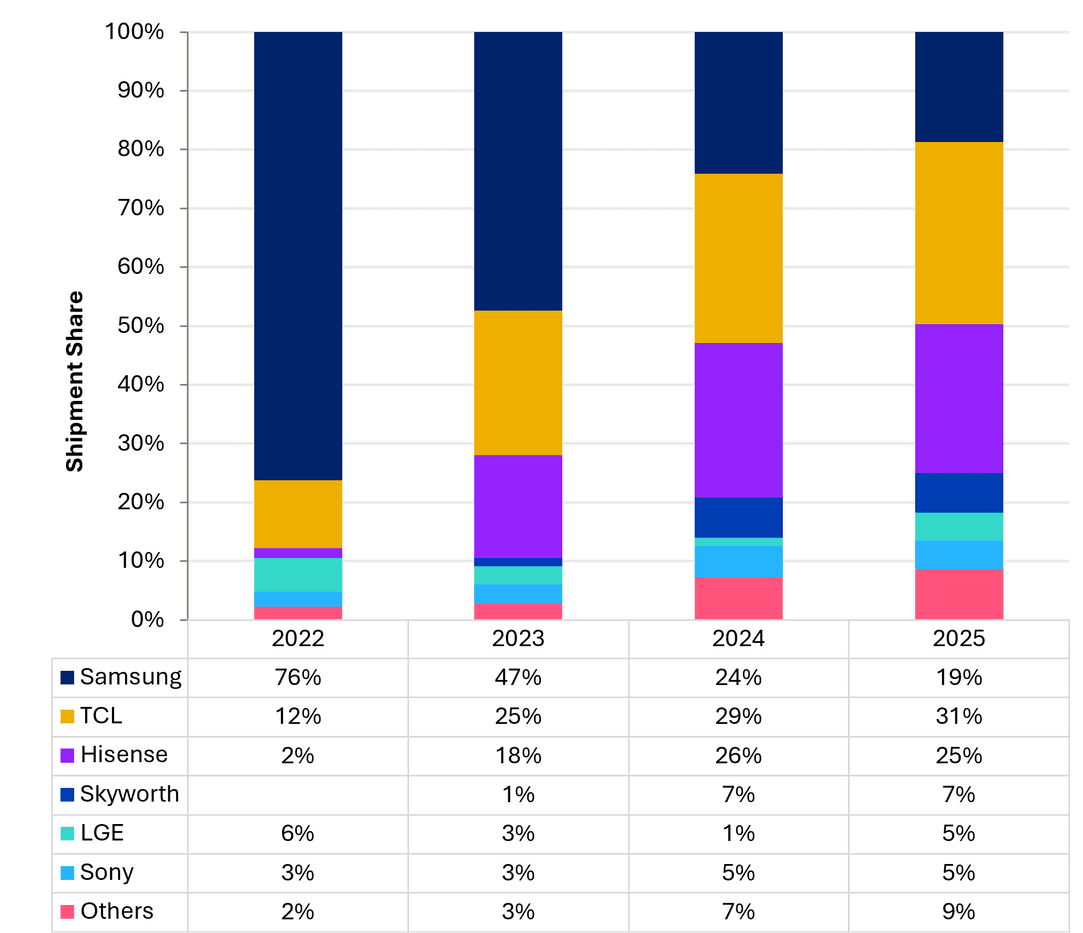
Omdia notes that Samsung, Hisense and TCL were once moving in lock-step, transitioning from standard QLED displays to Mini-LED at the same time in 2017. Back then, Samsung dominated the market segment, and did so for quite a few years, accounting for 76% of all Mini-LED TV shipments in 2022 thanks to the popularity of its “Neo QLED” branded TVs. At the time, TCL had just 12% of Mini-LED TV shipments, while Hisense trailed with a measly 2% market share.
However, with Samsung switching its attention to OLED circa 2023, the tables turned in a remarkably short time, and by 2024, both TCL and Hisense overtook the Korean company in terms of Mini-LED TV shipments, before extending their lead last year. Omdia says this sudden reversal was due to Samsung’s decision to emphasise OLED at the expense of its Neo-QLED models, paired with some significant advances from the Chinese brands. In 2024, TCL and Hisense debuted Mini-LED TVs featuring many more local dimming zones compared to Samsung’s best Neo QLED models, helping to enhance their picture quality.
Samsung hasn’t completely thrown in the towel yet, but it has repositioned Mini-LED as an entry-level display technology with the arrival of a new series of affordable “Mini LED” models to replace its older QLED televisions. According to Omdia analyst Jimmy Kim, Samsung has found a way to lower its manufacturing costs by “eliminating QD sheets and using white Mini-LED packages instead.”
TCL fiercely objects to Samsung’s claim that these are still Mini-LED TVs, and has filed a lawsuit against the company in the U.S. accusing it of misleading consumers. It says that because Samsung’s new “Mini LED” models do not have quantum dots and only have a very small number of local dimming zones, they aren’t actually Mini-LED TVs and should not be marketed as such.
Should Samsung manage to win that case and clear its name, the arrival of the budget Mini LED TVs could help it to regain its lead in the Mini-LED TV segment, Omdia says.
Nonetheless, it’s becoming clear that the importance of Mini-LED is evaporating fast as all three companies aggressively market their premium OLED, RGB-miniLED and SQD-miniLED televisions as superior, must-have products.
