Sony and TCL have signed the dotted line on their agreement to create a joint venture that will take over the legendary Japanese brand’s TV business, having first announced their intention to do so in January.
While there’s a general consensus that the deal is a foregone conclusion, it was still officially just a proposal until executives of the two companies put their names to paper yesterday.
Now it has been made official, we finally have a name for the joint venture – it’ll be known as Bravia Inc., which is a very strong sign that the companies intend to maintain the high standards that Sony’s premium TVs are known for. As per the contract, Sony will have a 49% stake in Bravia Inc., while TCL will hold a slight majority with a 51% share. The company’s TVs will still be branded as “Bravia” models, and it will have its headquarters in Sony’s Osaki office in Tokyo.
In another promising sign, the companies said that veteran Sony executive Kazuo Kii will take the reins as Bravia Inc.’s first CEO. The company will be overseen by a four-person board of directors, with Sony supplying two and TCL providing the other half. As per TCL’s press release, the Chinese electronics giant is parting with a hefty sum. It will pay Sony 102.8 billion yen (around £488.7 million) to take over majority control of its TV and AV businesses.
As part of the agreement, TCL will acquire 100% of Sony EMCS, which is a subsidiary that’s responsible for manufacturing Sony’s home entertainment products. It’s not clear if Sony EMCS will remain a standalone entity or later be integrated with TCL CSOT, which is TCL’s manufacturing subsidiary. Sony also owns a second manufacturing subsidiary called Shanghai Suoguang Visual Products, whose fate is currently up for discussion. It’s not a part of this deal.
Bravia Inc. is expected to begin operations in April 2027 and will be responsible for everything from product development and design to manufacturing and sales. It will span Sony’s TVs, business displays, LED displays, monitors, projectors and audio products, although the release didn’t specify if disc players such as its 4K Blu-ray players are also included in the agreement.
The idea is that Bravia Inc. will tap into the strengths of both companies. TCL will supply the technology components, such as the display panels and LED backlights, and it will also handle the manufacturing side – likely through TCL CSOT, taking advantage of its economies of scale to reduce costs. Meanwhile, Sony will take care of the product design, leveraging its decades of expertise in picture processing and so on to ensure that the products remain top-notch.
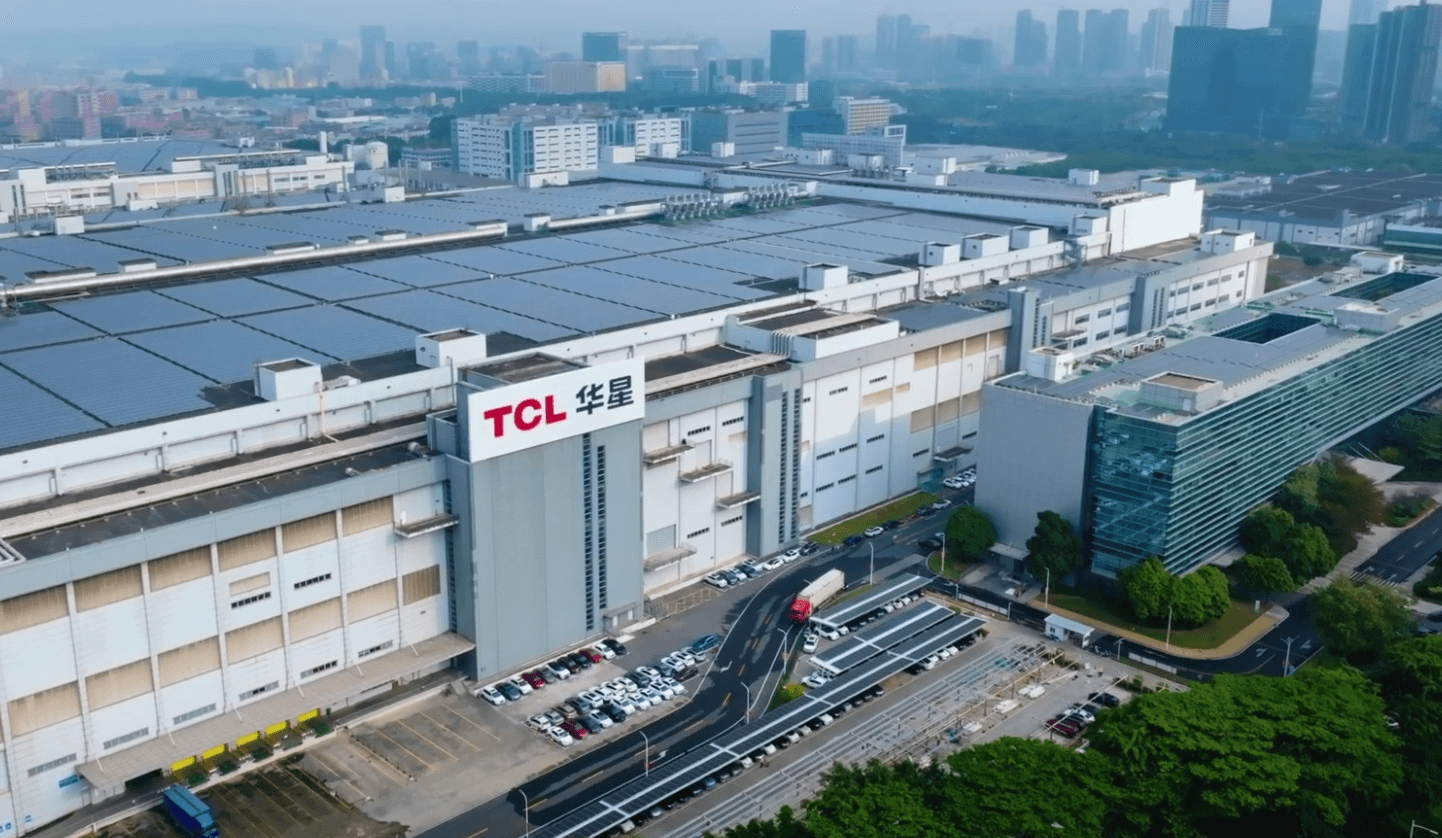
It’s notable that while TCL holds an ever so slight majority in Bravia Inc., both companies have stressed that they’ll be considered “nearly” equal partners going forward. What that means in practise is that, while TCL may have the final say on things, it won’t be able to just ignore what Sony wants completely. The fact that it’s going to be led by a Sony executive is also reassuring, as is the news that the company will be based in Tokyo. It means that Sony’s influence on Bravia Inc.’s future TVs is all but assured.
That’s encouraging because Sony has many faithful customers who would be absolutely distraught if they could no longer buy the company’s legendary TVs. We should also point out that TCL is not stupid – it doesn’t want to destroy a brand that has a decades-long reputation for building some of the best TVs money can buy. TCL has a lot to offer in any case, and the hope is that this arrangement will enable Sony to continue making the high quality products it’s known for, while leveraging TCL’s manufacturing base to hopefully reduce the costs a bit.
TCL said as much in the press release, stating that Bravia Inc. will combine “Sony’s high-quality picture and sound technology, premium brand value, and operational expertise, alongside TCL’s advanced display technology, global scale, manufacturing footprint, end-to-end cost efficiency, and vertically integrated supply-chain capabilities."
That is exactly what we hope to see – Sony’s industry-leading video processing and high-quality products, enhanced by TCL’s scale and its cutting-edge hardware.
While the companies were happy to talk about their vision for the future of Bravia Inc., they notably avoided any discussion of what everyone else that’s watching is talking about – the fate of Sony’s legendary OLED TVs.
Sony’s Bravia OLED models are highly regarded by millions of people in the AV community, because of the company’s commitment to colour accuracy and its expert-level processing capabilities. After all, Sony makes the reference monitors that are widely used by almost every movie maker, and it strives to ensure its TVs match them as closely as possible. That’s why its OLED TVs receive so many rave reviews and are consistently ranked among the best money can buy.
The concern is that TCL seems to hate OLED. Well, that may be too strong a word, but the company is famous for being the only top-tier TV brand that has refused to embrace OLED technology, instead throwing its lot in with “Super Quantum Dots” and RGB LED displays instead.
While the prospect of Sony’s Bravia TVs integrating TCL’s SQD technology is intriguing, there will be many who hope and pray that Bravia Inc. will continue to release new OLED models each year too.
But will TCL agree to do that? At present, it’s not clear, but the omens don’t look great considering that its 51% stake means it gets the final say on the matter. It’s likely that one of the main reasons TCL took on Sony’s TV division is that it believes it can manufacture Bravia TVs at much higher scales, utilising its own facilities to reduce costs. Bravia Inc. will get first dibs on TCL CSOTs panels and the best possible prices. Will TCL agree to pay for LG Display’s and Samsung Display’s notoriously expensive OLED panels too? It has never done so itself, and it’s not clear if it will give Bravia Inc. the green light to do so, either.
If TCL doesn’t allow this, then the Bravia 8 II, Bravia 8 and the A90K QD-OLED TV could be the last Sony OLED TVs we see – at least for now – and that would be extremely sad news for millions of remorseful brand acolytes. We say “for now,” because TCL CSOT is constructing a new inkjet OLED panel factory for smaller displays for monitors and tablets, which may eventually be scaled up to make TV-sized panels. But there are major doubts if that will actually happen.
For now, we can only speculate on the fate of Sony’s OLED TVs. But it seems clear that TCL will surely insist that Bravia Inc. prioritises its own display technology at the very least.
